

More news on this day
Turkish Airlines is set to strengthen its presence in the United Kingdom with the launch of direct services between Istanbul Airport and London Stansted from March 2026, adding a third London gateway and expanding options for travelers across the East of England.
Get the latest news straight to your inbox!
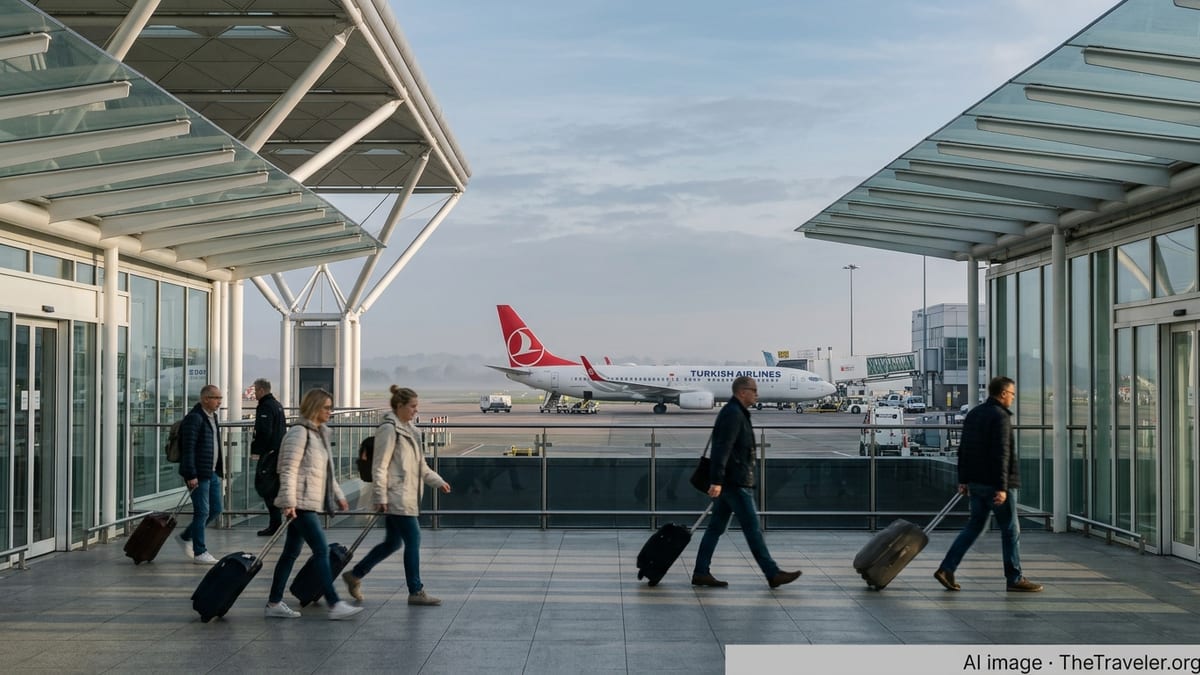
New Istanbul Service From London Stansted
Publicly available information from London Stansted Airport and industry outlets indicates that Turkish Airlines will begin operating flights from the Essex airport to Istanbul Airport on 18 March 2026. The route is scheduled to run 14 times per week, providing a mix of daytime and evening departures designed to connect efficiently with onward services over the carrier’s main hub.
The addition of London Stansted introduces a new option for passengers in north and east London, as well as counties such as Essex, Hertfordshire and Cambridgeshire, who currently rely heavily on Heathrow and Gatwick for long haul and full service international flights. The new operation positions Stansted as a fresh gateway into Turkish Airlines’ global network, with Istanbul acting as the primary transfer point.
Airport statements describe the launch as a significant milestone, noting that the flag carrier will join an established roster of airlines linking Stansted with Turkey, particularly leisure focused operators serving coastal destinations. The arrival of a full service network airline on the core Istanbul route is seen as broadening both business and connecting travel opportunities from the airport.
While detailed schedules and aircraft types have not yet been widely promoted in consumer channels, route filings and industry schedule data show the new flights integrated into Turkish Airlines’ northern summer 2026 timetable, suggesting year round intentions rather than a purely seasonal operation.
Strengthening a Growing UK Footprint
The London Stansted launch will take Turkish Airlines’ UK network to six airports, according to coverage in specialist travel and aviation media. The carrier already serves London Heathrow, London Gatwick, Manchester, Birmingham and Edinburgh, alongside Dublin in Ireland, and has progressively rebuilt and expanded services in the years following the pandemic.
With Stansted added, Turkish Airlines is projected to operate around 170 weekly flights from the UK and Ireland during the peak summer 2026 season. This capacity reflects a strategic emphasis on the UK market, which is viewed by analysts as a key source of both point to point traffic to Turkey and transfer passengers connecting through Istanbul to Africa, Asia and the Middle East.
The decision to open a third London airport underlines the scale of demand on the London to Istanbul corridor. Market observers note that the route is already served by carriers including British Airways, low cost operator Wizz Air and Turkish leisure airlines such as Pegasus and AJet on various London airport pairings. The entry of Turkish Airlines at Stansted is expected to intensify competition on both fares and product for travelers heading to Turkey and beyond.
Industry commentary suggests that the move also responds to strong outbound tourism from the UK to Turkey, which has grown in recent years, as well as increasing inbound visitor and business flows. Istanbul’s role as a global connection point means that the new Stansted flights are likely to be marketed not just as a link to Turkey but as a convenient one stop option to cities across multiple continents.
Implications for London Stansted and the East of England
For London Stansted, the arrival of Turkish Airlines marks an important diversification of its long haul and network airline offering. The airport has historically been dominated by low cost carriers and leisure operators, with most full service long haul traffic concentrated at Heathrow and, to a lesser extent, Gatwick. Reports indicate that airport management views the deal as a vote of confidence in Stansted’s facilities and catchment.
The Istanbul route is expected to appeal to both leisure and business travelers based in the East of England, providing one stop access to destinations across Asia, Africa and parts of the Americas. Public information suggests passengers will be able to connect through Istanbul Airport to more than 300 onward destinations, depending on scheduling and seasonal adjustments.
Local tourism and business groups are likely to highlight the potential benefits of improved international connectivity, including easier access for overseas investors, conference delegates and inbound visitors to the wider region. Enhanced links to a major global hub may also support export focused firms in sectors such as technology, advanced manufacturing and services, which rely on reliable air links for face to face contact.
From an aviation market perspective, the route strengthens Stansted’s position within the London airport system at a time of constrained capacity at Heathrow and ongoing demand growth across the capital. Analysts note that airlines seeking additional London access increasingly look to Gatwick and Stansted to add frequencies and develop new markets.
Competitive Istanbul Corridor and Passenger Choice
The Istanbul to London market is one of the busiest links between Turkey and Western Europe, with multiple airlines already operating from various London airports to both Istanbul Airport and Istanbul Sabiha Gokcen. Existing services from Stansted to Istanbul Sabiha Gokcen are primarily provided by low cost carrier Pegasus, while other London airports see a mix of full service and low cost operations.
The entry of Turkish Airlines at Stansted introduces a full service product on the airport’s core Istanbul route, including business class, inclusive checked baggage and connectivity to the airline’s frequent flyer program. Travel industry analysis suggests that this may attract passengers who prefer a network carrier experience but would like to depart from Stansted rather than travelling across London to Heathrow or Gatwick.
Competition on the corridor is expected to benefit passengers through a combination of increased capacity, wider schedule choice and potential fare pressure, particularly outside peak holiday periods. However, observers also point out that yields on connecting traffic to long haul destinations may be more resilient, as passengers weigh factors such as connection times, loyalty benefits and on board service standards.
For Istanbul Airport, additional UK feed from Stansted supports its role as a transfer hub targeting flows between Europe and long haul destinations. The new flights are anticipated to slot into existing bank structures that allow relatively short connection times for many onward routes, which is a key selling point of the hub and spoke model employed by Turkish Airlines.
Broader Strategic Context for Turkish Airlines
The Stansted announcement fits into a broader pattern of measured expansion by Turkish Airlines across mature European markets. Publicly available network updates show the carrier adding capacity where demand and airport access opportunities align, often using new routes to feed its long haul network rather than relying solely on local point to point traffic.
In the case of the United Kingdom, the airline’s strategy appears focused on deepening its presence in major population centers while maintaining a balanced spread of airports. By serving Heathrow, Gatwick and now Stansted, Turkish Airlines gains exposure to different catchment areas and surface transport patterns across Greater London and the surrounding regions.
Analysts note that the airline’s growth plans also intersect with wider trends in global aviation, including the increasing importance of hub airports positioned between Europe, Asia and Africa. Istanbul’s geographic location, combined with the scale of Turkish Airlines’ network, has positioned the carrier as a significant competitor to Gulf and European network airlines for connecting traffic.
As the March 2026 launch date approaches, further details on schedules, equipment and introductory fares are expected to emerge through booking channels and airline communications. For now, the planned London Stansted service underscores the continued importance of the UK market to Turkish Airlines and highlights Stansted’s evolving role within the wider London airport ecosystem.