

More news on this day
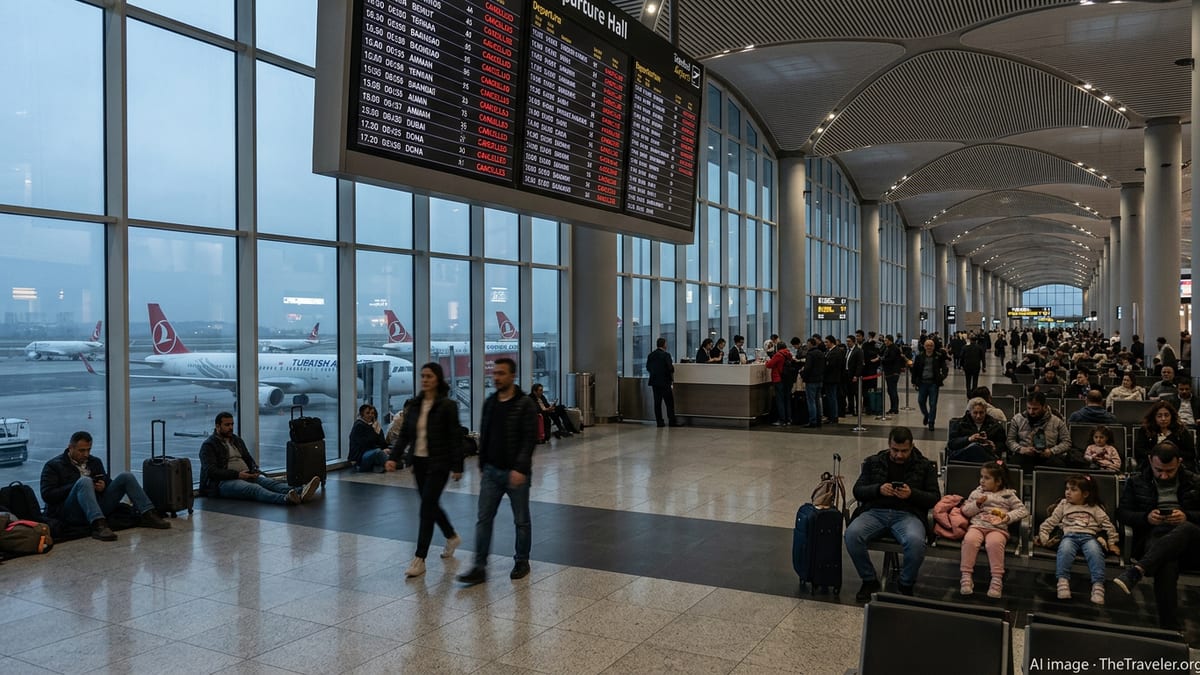
Turkish Airlines has joined a growing list of carriers forced to suspend large parts of their Middle East networks, as airspace closures linked to intensifying conflict between the United States, Israel and Iran trigger sweeping flight cancellations across Lebanon, Syria, Iraq, Iran, Jordan and key Gulf hubs.
What Is Behind the Latest Wave of Cancellations?
The latest disruption follows a sharp escalation in regional hostilities, with joint US and Israeli strikes on Iranian targets prompting retaliatory action and a chain reaction of airspace closures across the Middle East. Notices to air missions issued over recent days have effectively shut skies above Iran, Israel, Iraq, Qatar, Bahrain, Kuwait, Jordan and parts of Syria, while placing tight restrictions on neighboring corridors.
For safety reasons, civil aviation regulators and airlines are avoiding conflict-affected airspace, forcing carriers either to reroute long-haul services at significant cost and delay or to cancel flights outright. Istanbul, Dubai, Abu Dhabi and Doha, normally among the world’s busiest international hubs, have seen hundreds of departures scrubbed in a matter of days as the situation continues to evolve.
Experts say the pattern is similar to previous conflict-driven closures in the region, but the current scale is more severe. With multiple national airspaces fully shut and others only partly open, traditional east west trunk routes between Europe, the Gulf, South Asia and Australasia have been thrown into disarray, stranding hundreds of thousands of travelers on both sides of the conflict zone.
How Turkish Airlines and Other Turkish Carriers Are Affected
Turkey’s Transport and Infrastructure Ministry confirmed that Turkish Airlines, along with AJet, Pegasus Airlines and SunExpress, has suspended all passenger flights to Iran, Iraq, Syria, Lebanon and Jordan until at least March 6 following updated risk assessments. Officials said the decision reflects ongoing dangers from potential missile or drone activity in the region’s skies and the continued enforcement of airspace closure notices.
In parallel, services from Türkiye to Qatar, Kuwait, Bahrain and the United Arab Emirates have been cancelled through March 3, severing short haul links from Istanbul and other Turkish cities to major Gulf hubs. Authorities have left open the possibility that these suspensions could be extended on a rolling basis if security conditions fail to improve over the coming days.
Turkish officials report that a small number of aircraft and crew were initially caught on the ground when Iranian airspace closed, including one Turkish Airlines and one Pegasus jet at Tehran’s Imam Khomeini International Airport. Those crews have since been repatriated, and Turkish carriers are now routing their remaining long haul operations on paths that steer clear of closed or restricted skies.
For now, flights from Türkiye to Riyadh, Jeddah and Medina in Saudi Arabia, as well as to Oman, are still operating, though schedules are thinner than usual and subject to change at short notice. Travelers connecting through Istanbul to or from Asia and Africa should expect longer routings and possible last minute time changes as traffic is funneled through the limited corridors that remain open.
Which Destinations Are Currently Off the Map?
For passengers booked with Turkish Airlines and its domestic competitors, some of the most affected destinations are in Lebanon, Syria, Iraq, Iran and Jordan, where direct flights from Türkiye are suspended for at least the first week of March. Services to Beirut, Damascus, Baghdad, Erbil, Tehran, Mashhad, Amman and other key cities are not operating, and there is no firm restart date.
In the Gulf, scheduled passenger flights from Türkiye to Doha, Dubai, Abu Dhabi, Kuwait City and Manama have largely been halted under national airspace restrictions and airline safety decisions. While a handful of repatriation or special services may still operate under special permissions, travelers should not assume that any previously confirmed booking to these hubs will be honored without reconfirmation.
Beyond Turkish carriers, major Middle Eastern and international airlines are also being forced to cut back. Operators based in the United Arab Emirates and Qatar have restricted their networks as their home airspaces face partial or temporary closures and as nearby routes through Iran and Iraq remain shut. European and Asian airlines are cancelling or rerouting flights to Gulf destinations, Tel Aviv and other points across the wider region, tightening the squeeze on available options even for those merely transiting through.
Industry data gathered over the past several days indicate that thousands of flights have been cancelled region wide since the latest round of strikes began, with some tracking services estimating more than 4,000 flights per day affected at peak disruption. The resulting knock on effects include crew dislocation, aircraft out of position and a backlog of passengers waiting for scarce seats on rerouted services.
What This Means if You Are Traveling Soon
For travelers with tickets over the coming week, the most immediate impact is uncertainty. Many airlines, including Turkish Airlines, have activated flexible rebooking and refund policies for journeys touching affected countries and nearby hubs. However, the flood of itinerary changes and cancellations means call centers and airport desks are under heavy pressure, and it may take time to secure an alternative routing.
Passengers flying from North America or Europe to South Asia, Southeast Asia or Australasia via Istanbul, Dubai, Abu Dhabi or Doha may find their itineraries lengthened or split across multiple carriers. Some flights are being rerouted via safer northern or southern corridors, adding hours of flight time and increasing congestion at secondary hubs that remain open.
Travel planners advise that anyone due to travel in the next few days should monitor their booking closely, using airline apps and email or text alerts, and be prepared for same day schedule changes. Airport overnights are becoming more common as missed connections compound through the system, and hotels near major hubs are reporting surging demand from stranded passengers.
Industry analysts also warn that even if some airspaces reopen later this week, it could take several days for airlines to reset aircraft rotations and restore regular timetables. As a result, the ripple effects may extend well beyond the official end of current closure notices, especially on popular spring holiday routes.
Is It Safe to Book New Trips to the Region Now?
With the security situation highly fluid and governments still updating their travel advisories, experts urge caution for anyone considering new bookings to or through the affected region. Many foreign ministries are now advising against non essential travel to parts of the Middle East and urging citizens already in the region to depart while commercial options remain available.
From a practical standpoint, travelers looking at near term departures should factor in the possibility of sudden airspace closures, diversions or extended layovers. Purchasing flexible or refundable fares, along with comprehensive travel insurance that explicitly covers war and conflict related disruption, can help mitigate financial risk, though policies vary widely and may exclude certain scenarios.
For those whose plans are not time sensitive, it may be prudent to delay travel to directly affected countries such as Iran, Iraq, Syria, Lebanon and parts of Jordan until there is a clearer picture of long term access and safety. Even once airlines announce resumptions, initial schedules are likely to be limited and subject to operational constraints.
In the meantime, regional tourism boards and airlines are bracing for a downturn in visitor numbers, particularly from long haul markets that rely on seamless connections through Istanbul and the Gulf. How quickly confidence returns will depend not only on when the skies reopen, but also on whether travelers feel conditions on the ground have stabilized enough to justify the journey.