

More news on this day
Turkish Airlines has vaulted into the top tier of passenger favourites in 2026, joining Fiji Airways, Gulf Air and a small group of APEX-anointed premium carriers that are turning industry awards into hard currency in the battle for your loyalty miles.
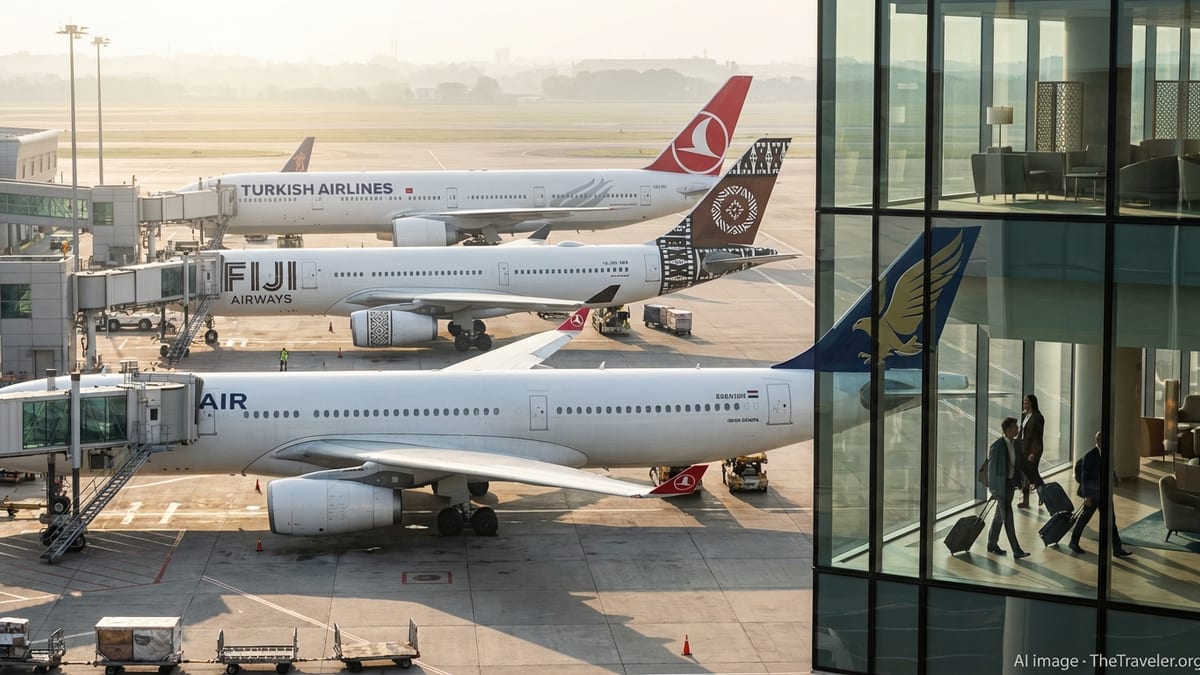
APEX World Class and Five-Star Status Become the New Loyalty Signal
For years, travellers looking to choose an airline have relied on alliances, lounge access and word of mouth. In 2026, a growing number of passengers are quietly adding one more data point before they click “book”: whether an airline carries an APEX World Class or Five Star rating. The Airline Passenger Experience Association’s badges, based on a mix of independent audits and millions of verified traveller reviews, have become a global shorthand for consistent premium service.
At the 2025 APEX/IFSA Global EXPO in Long Beach, the association named ten airlines as 2026 APEX World Class, its most demanding tier. Among them were Turkish Airlines and Fiji Airways alongside heavyweights such as Emirates, Singapore Airlines, Qatar Airways and Japan Airlines. For smaller or emerging carriers, inclusion on that list is a powerful way to stand shoulder to shoulder with the industry’s biggest names in the eyes of mileage-conscious travellers.
Running parallel to World Class is APEX’s Five Star programme, which rates airlines based on passenger feedback across more than one million flights. Gulf Air has secured Five Star Major Airline status for three consecutive years, while carriers from Kuwait Airways to Air Tahiti Nui are using similar five star accolades as proof points that they can deliver a genuinely premium experience even without the scale of a global network giant.
As loyalty programmes become more complex and redemptions harder to find, these third party seals of approval are becoming a new kind of currency. For frequent flyers weighing a status match, a co-branded credit card or a long haul trip on an unfamiliar airline, an APEX label can be the deciding factor when miles and points are otherwise equal.
Turkish Airlines Turns World Class Status into a Global Premium Push
Turkish Airlines’ inclusion in the 2026 APEX World Class roster is more than another trophy in its already crowded awards cabinet. It is formal recognition of a multi year effort to reposition the Istanbul based carrier as a truly global premium competitor, leveraging its vast network and new hub infrastructure to court high value international travellers.
APEX World Class evaluation looks beyond soft service to score airlines across 20 audited dimensions grouped into safety and well being, sustainability, service experience and food and beverage. Turkish Airlines scored particularly strongly, being named best in class for both sustainability and onboard food and beverage execution across the entire group of winners. That combination is crucial for a carrier that wants to appeal to environmentally aware corporate clients without compromising on the culinary flair that has long been part of its brand.
At the same time, Turkish Airlines has been quietly collecting hardware in more focused categories. At the 2026 APEX Content Market in Dubai, it was named Best Entertainment in Europe, a nod to the depth and localisation of its inflight content. For business travellers and frequent leisure flyers, that breadth of entertainment and connectivity is more than a nicety; it can be the difference between working productively at 38,000 feet and a wasted workday in the air.
As Turkish Airlines expands its reach into North America, Asia and Africa, these accolades help address a key barrier to customer choice: perceived reliability. Many travellers know the airline for competitive fares or a convenient one stop itinerary through Istanbul. By promoting its World Class and entertainment wins, Turkish Airlines is signalling that its hard and soft product can match or exceed what passengers expect from long established Gulf and Asian flag carriers, making it a realistic new home for their loyalty miles.
Fiji Airways’ World Class Leap Shows Boutique Carriers Can Win Big
If Turkish Airlines represents scale and global ambition, Fiji Airways is the outlier that proves size is no barrier to becoming an APEX hero. Named an APEX World Class Airline for 2026, Fiji’s flag carrier is now officially ranked among the top ten airlines globally by the association, and is the smallest airline by fleet size ever to achieve that distinction.
The recognition crowns an intensive transformation programme that has touched almost every corner of the business. Fiji Airways overhauled its onboard service, redesigned its premium cabins and retrained its cabin crews, with a cadre of World Class trainers leading a months long rollout. The airline leaned into its island identity, redesigning menus around Pacific Rim cuisine and sourcing fresh local produce to differentiate the onboard experience from more generic competitors on transpacific routes.
APEX’s World Class audits, which assess everything from wellbeing and sustainability to service design and catering, validated that effort. For travellers in Australia, New Zealand and North America choosing how to reach the South Pacific, the World Class badge helps Fiji Airways compete directly with much larger rivals by promising a tightly curated, high touch experience rather than simply a seat from A to B.
That shift matters for loyalty. As a oneworld alliance member, Fiji Airways already plugs into the global mileage ecosystem. Now, with World Class status, it can pitch itself as not just a convenient way to earn or burn points en route to a Fijian resort but as an airline worth making a deliberate detour for, particularly in premium cabins where service differences are most keenly felt.
Gulf Air’s Five Star Momentum and the Rise of Boutique Premium
Gulf Air, the Bahraini flag carrier, has taken a different but complementary path in the APEX rankings. Rather than chasing World Class status, the airline has steadily reinforced its credentials in the Five Star Major Airline category, securing the rating for three consecutive years through 2025. That consistency is significant because the Five Star label is based entirely on verified passenger feedback collected through the TripIt app, rather than only expert audits.
For a carrier of Gulf Air’s size, being grouped within the top tier of airlines worldwide sends a simple message: you can expect a big airline experience from a smaller network. The airline has leaned into a brand promise that blends contemporary service standards with what it describes as authentic Bahraini hospitality, from upgraded cabins to more personalised onboard interactions.
In the context of loyalty, Gulf Air’s Five Star run is helping the airline punch above its weight. Business travellers shuttling between Europe, the Middle East and parts of Asia are increasingly open to building tier status with boutique carriers that offer smoother airport experiences, distinctive regional touches and less crowded premium cabins, even if global lounge and route networks are narrower.
The APEX ranking acts as an external validator for those curious travellers. When they consider crediting flights to Gulf Air’s loyalty programme or using flexible credit card points to sample the airline in business class, the Five Star designation reduces perceived risk. In an era where many major programmes have moved to dynamic pricing and higher mileage requirements, that reassurance can be powerful.
Middle East Heavyweights and the Expanding APEX Elite
Surrounding these surprise heroes is a cluster of Middle Eastern giants that continue to dominate headline categories and help define what “premium” means in 2026. Emirates, for example, left the latest APEX awards with both a World Class designation and the APEX Best Global Entertainment Award for its ice inflight entertainment system, reinforcing its long held reputation as the gold standard for onboard content.
Qatar Airways, another pillar of Gulf aviation, is once again recognised for its culinary focus, taking the 2026 APEX Best Food and Beverage accolade at the global level. The carrier’s investment in premium dining and its Qsuite business class product has helped reshape passenger expectations of what a business cabin can be, forcing competitors to raise their game on everything from privacy doors to multi course menus.
Regional neighbour Saudia, meanwhile, secured APEX World Class recognition for a fifth consecutive year, an achievement that reflects deep, sustained work on safety, service and sustainability. That kind of long term consistency is increasingly important for corporate travel managers and global distribution partners, who are under pressure to align their preferred carrier lists with credible third party standards on wellbeing and environmental performance.
Collectively, these Middle Eastern carriers help anchor the APEX ecosystem of awards and ratings. Their presence alongside newer or smaller entrants such as Fiji Airways and Gulf Air ensures that World Class and Five Star badges remain aspirational, while also illustrating that there is more than one path to premium status and the loyalty revenue that comes with it.
Asia Pacific and Europe: Competitive Pressure Builds Across Regions
The 2026 APEX awards cycle also underscored how competitive the premium landscape has become across Asia Pacific and Europe. In the South Pacific, Air New Zealand was named Best Overall Airline in its region, while Fiji Airways picked up additional Best Cabin Service and Best Food and Beverage honours. For travellers, that creates a corridor of high quality options across the Tasman and into the wider Pacific, escalating the battle for long haul business and leisure traffic.
In East Asia, Singapore Airlines took the title of Best Overall Airline, reinforcing its long time status as a benchmark for service and innovation. Japanese and Korean carriers secured key wins in Wi Fi, food and beverage and cabin service, while EVA Air led in Greater China for both overall performance and entertainment related measures. These results help explain why status rich frequent flyers increasingly view Asia based carriers as aspirational partners when planning big redemptions or tier point runs.
Europe, traditionally more fragmented, is seeing its own quiet reshaping. Turkish Airlines’ Best Entertainment in Europe title gives it an edge in an area where many regional carriers have historically underinvested, and it sits alongside Five Star awards for airlines such as Air Tahiti Nui and Kuwait Airways that connect Europe to niche leisure destinations. The result is a more crowded premium field where geography matters slightly less than an airline’s willingness to invest in product and service.
For passengers, this regional diversification of APEX winners means the decision of where to park loyalty miles is no longer tied solely to home markets or legacy flag carriers. A traveller based in London or Los Angeles can increasingly choose a preferred airline from a global menu of APEX recognised brands, then stitch together itineraries using alliance and codeshare links while keeping most of their spend within a single, high performing programme.
How APEX Data Is Shaping the New Loyalty Economy
Behind the glossy trophies and red carpet photos lies a trove of data that is quietly influencing the economics of airline loyalty. APEX’s ratings draw on more than one million passenger votes each year, covering some 600 airlines worldwide, and are supplemented by deep dive audits for World Class applicants. That volume of feedback gives airlines a granular view of what travellers actually value, from seat comfort and entertainment to on time performance and crew interactions.
Carriers are using that intelligence to target investments that resonate with high value customers. For Turkish Airlines, improvements in sustainability and food and beverage execution help attract environmentally aware premium flyers who are willing to pay more, or to shift their miles, for a greener, better tasting experience. For Fiji Airways, the focus has been on turning its small scale into a differentiator, crafting a sense of place onboard that justifies a premium and encourages repeat visits.
Loyalty programmes are also taking note. As more airlines compete on soft product in addition to schedules and fares, programme managers are designing new earning bonuses, status benefits and partner tie ups around APEX recognised strengths. An airline that leads its region in entertainment or Wi Fi, for example, might offer incremental mileage bonuses for streaming or in app engagement, turning an award winning feature into a revenue driver.
For passengers, the real world effect is a subtle but meaningful pivot away from pure price competition. When there is credible, independently verified evidence that one airline will deliver a smoother, more enjoyable journey than another, many travellers will accept a modest fare premium, especially when they are earning or redeeming miles. In this environment, APEX heroes become natural magnets for loyalty spend.
What It Means for Travellers Deciding Where Their Miles Go Next
For frequent flyers watching these 2026 awards roll in, the practical question is simple: how should this shape where you earn and burn? One emerging strategy is to treat APEX World Class and Five Star designations as a filter rather than a final answer. Travellers can start by shortlisting airlines that carry those badges, then weigh network reach, alliance links and credit card partners to see which carrier best fits their actual travel patterns.
Turkish Airlines, with its vast Istanbul hub and growing North American footprint, is well positioned as a central anchor for travellers who regularly move between Europe, Asia and Africa. Fiji Airways, despite its smaller size, makes strategic sense for flyers in Australia, New Zealand and parts of North America who prioritise high touch service on long haul leisure trips. Gulf Air appeals to those who value boutique style premium cabins and a calmer airport experience over the sheer scale of larger Gulf hubs.
Another trend is the growing willingness of savvy travellers to diversify. Rather than concentrating every mile with a single legacy carrier, they are increasingly pairing one of the big three alliances with a select group of APEX heroes that offer distinctive products on key routes. That might mean keeping a primary account with a North American carrier while funnelling specific long haul journeys to Turkish Airlines or a World Class Pacific airline to maximise comfort and aspirational redemption options.
What is clear in early 2026 is that awards season is no longer mere industry theatre. For a new class of premium and boutique airlines, APEX recognition has become both a scoreboard and a marketing engine, helping them convert service upgrades into sustained loyalty revenue. For travellers, it offers a rare win win: more competition at the top end of the market, and more credible information to guide what has become one of the most important decisions in modern travel planning, where to invest your loyalty miles.