

More news on this day
As Nigeria deepens its strategic partnership with Türkiye, Turkish Airlines is rapidly emerging as a central player in connecting Africa’s largest economy to global tourism flows and trade corridors in 2026, using Istanbul’s hub to turn Nigerian cities into gateways rather than endpoints.
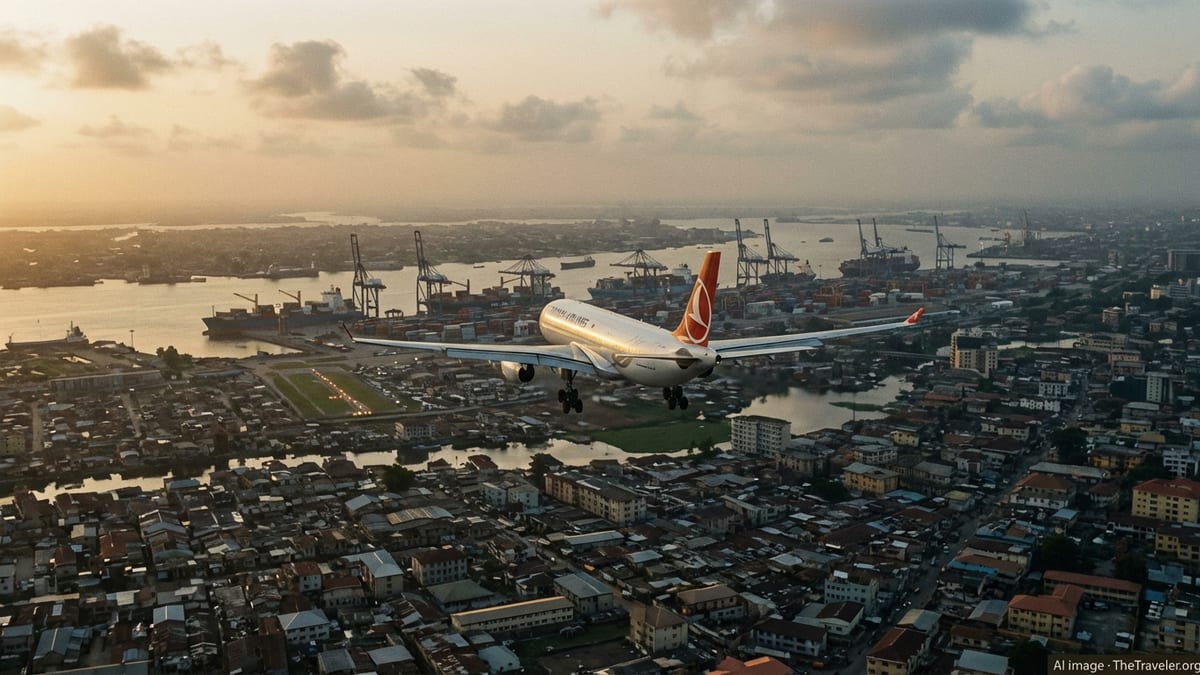
A Strategic Air Bridge in a New Nigeria–Türkiye Era
The Lagos–Istanbul corridor has long been one of West Africa’s busiest intercontinental routes, but 2026 finds it carrying more political and economic weight than ever. Following Nigerian President Bola Ahmed Tinubu’s late‑2025 visit to Ankara and a series of new cooperation agreements signed in January 2026, aviation is moving from being a simple transport link to a key instrument of statecraft and commerce between the two nations.
Trade between Nigeria and Türkiye is currently estimated at about 2 billion dollars annually, with both sides targeting a rapid climb toward 10 billion dollars as new agreements in defense, higher education, halal products and investment promotion take root. Turkish officials and business leaders now routinely describe Nigeria as their most important partner in sub‑Saharan Africa, and the airline network radiating from Istanbul is being quietly re‑engineered to support that ambition.
For Turkish Airlines, which already serves more countries than any other carrier, Nigeria sits at the intersection of its Africa strategy and its global long‑haul ambitions. Frequent nonstops to Lagos and Abuja plug directly into a network that now spans more than 130 countries and 65 destinations across Africa, turning Nigerian passengers and exporters into beneficiaries of a scale few airlines can match.
That combination of political will, trade targets and aviation capacity is why policymakers and analysts increasingly see Turkish Airlines not just as an airline serving Nigeria, but as a connective infrastructure shaping how the country does business with Europe, the Middle East, Asia and beyond.
From Lagos and Abuja to 130 Countries via Istanbul
At the core of this transformation is Istanbul Airport, which Turkish Airlines has developed into a powerful transfer hub. For Nigerian travelers, the model is straightforward: fly north to Istanbul, then disperse across a network that, as of 2026, reaches more than 300 destinations worldwide, including 65 across Africa and dozens in Europe and Asia. In practice, that means a Lagos‑based exporter or Abuja‑based tech entrepreneur can reach markets from São Paulo to Shanghai and Jakarta with one stop and a single ticket.
This hub‑and‑spoke architecture is particularly important for Nigerian small and medium‑sized enterprises, which often lack the volumes to justify dedicated cargo or point‑to‑point passenger routes. By aggregating traffic through Istanbul, Turkish Airlines enables Nigerian businesses to ship smaller loads of textiles, agricultural products or manufactured goods into niche markets across Eastern Europe, Central Asia and the Gulf that have historically been difficult to access from West Africa.
On the passenger side, Istanbul’s dense schedule into Europe and Asia has quietly altered Nigerian travel patterns. Students heading to universities in Central Europe, tourists connecting to Mediterranean resort destinations and business travelers pursuing opportunities in Gulf construction and Central Asian energy now see Turkish Airlines as a default option. For many, flying via Istanbul offers both competitive fares and shorter total travel times compared with more circuitous routings through Western Europe.
The airline’s aggressive Africa strategy further amplifies this effect. With 65 African destinations in its portfolio and additional countries such as Liberia and Guinea‑Bissau due to join the network in 2026, Turkish Airlines is increasingly acting as an intra‑African connector as well as a bridge to the wider world. Nigerian passengers can now transit through Istanbul not only to Europe or Asia, but also to secondary African cities that lack direct links to West Africa, reshaping regional trade and tourism flows.
Tourism: Istanbul as a Two‑Way Gateway for Nigerian Travelers
Tourism is one of the clearest areas where Turkish Airlines is redefining Nigeria’s global reach. Rising incomes in urban centers such as Lagos, Abuja and Port Harcourt have fueled demand for international leisure travel, and Türkiye has moved quickly to position itself as both a destination and a gateway. Istanbul’s mix of history, shopping and halal‑friendly hospitality has proved especially attractive to Nigerian visitors seeking culturally familiar yet distinctly European experiences.
Travel agents in Lagos report that Turkish packages combining a short Istanbul stay with onward connections to Mediterranean beach resorts or central European city breaks are increasingly popular among Nigerian families and young professionals. Competitive fares, relatively streamlined visa procedures for Türkiye and the appeal of a Muslim‑majority country straddling Europe and Asia have all contributed to this trend, placing Turkish Airlines at the heart of a shifting leisure market.
On the inbound side, Nigerian tourism officials are eyeing the airline’s extensive European and Asian network as a tool to draw more visitors into the country’s own under‑developed destinations. From Lagos’ Atlantic waterfront and cultural festivals to safari experiences in Yankari and emerging beach developments along the proposed Lagos–Calabar corridor, Nigeria hopes to tap into Istanbul’s role as a global distribution point for tour operators and independent travelers.
Turkish Airlines’ frequent‑flyer promotions and discounted award tickets to and from African points, valid into 2026, are also nudging more travelers to sample the route. For Nigerian diaspora members in Europe and the Middle East, the combination of loyalty benefits, improving on‑board service and competitive schedules is turning Istanbul into a preferred transit point on family visits and heritage tourism journeys back to Nigeria.
Trade, Investment and the Rise of a Nigerian–Turkish Business Corridor
Behind the scenes, the air links operated by Turkish Airlines are enabling a quiet surge in Nigerian–Turkish business collaboration. More than 50 Turkish‑owned companies now operate in Nigeria, with investments estimated at around 400 million dollars and construction projects valued in the billions. From consumer goods and textiles to power infrastructure and building materials, these firms rely heavily on reliable air connectivity for executive travel, technical teams and high‑value freight.
The business community expects that figure to rise sharply as the new intergovernmental agreements signed in 2025 and 2026 are implemented. Ankara’s Africa Partnership Policy and Abuja’s renewed emphasis on non‑oil diversification dovetail neatly in sectors such as manufacturing, agro‑processing and construction. In each of these industries, the availability of regular flights between Nigerian hubs and Istanbul is a precondition for scaling up operations, whether through joint ventures, technology transfer or sourcing machinery and expertise from Türkiye.
Nigerian exporters, meanwhile, are starting to view Türkiye not just as an end market but as a logistics springboard. Agricultural products such as sesame, cocoa and cashew, along with intermediate goods destined for European or Middle Eastern factories, can move via Istanbul’s cargo facilities with relative ease. Turkish Airlines’ cargo arm, combined with belly‑hold capacity on passenger flights, provides Nigerian shippers with flexible, time‑sensitive options that support just‑in‑time manufacturing and perishable exports.
Officials on both sides say their target of pushing bilateral trade toward 10 billion dollars hinges in large part on connectivity. The Nigerian–Turkish Joint Committee on Economy and Trade, announced alongside recent agreements, is expected to work closely with aviation authorities and the airline industry to keep capacity aligned with commercial demand, reduce bottlenecks and ensure that regulatory frameworks support rather than constrain cross‑border movement.
Boosting Regional Connectivity and Nigeria’s Hub Ambitions
While Turkish Airlines anchors its African strategy in Istanbul, the carrier’s operations are also influencing how Nigeria imagines its own role as a regional hub. Lagos and Abuja are already key gateways for West Africa, and improved links to Istanbul strengthen their position in competition with rivals in Accra, Abidjan and Dakar. Nigerian officials hope that by pairing domestic infrastructure projects with enhanced international connectivity, they can capture a larger share of regional transfer traffic and related investment.
Major projects such as the Lagos–Calabar Coastal Highway, slated to run 700 kilometers along the southern coast, are designed to unlock tourism and trade flows along Nigeria’s shoreline and into neighboring states. As these corridors are developed, airlines with strong intercontinental networks will be well placed to funnel foreign visitors into new resort areas and special economic zones. Turkish Airlines’ familiarity with frontier markets and willingness to pioneer routes across Africa make it a natural partner for such ambitions.
Within West Africa, Istanbul’s role also complements Nigeria’s membership in regional blocs such as ECOWAS. Business travelers from landlocked neighbors increasingly route their journeys through Lagos or Abuja to connect onto Turkish services, effectively turning Nigerian airports into stepping stones to Europe, the Middle East and Asia. If Nigerian regulators can streamline transit processes and enhance airport service levels, Turkish Airlines’ growth could help consolidate the country’s status as a de facto regional hub.
At the same time, Nigeria’s aviation authorities are watching closely as Turkish Airlines extends its footprint deeper into West Africa with new destinations such as Monrovia and Bissau. The more interlinked the region becomes, the more Lagos and Abuja must differentiate themselves through efficient operations, reliable infrastructure and attractive commercial terms if they are to remain the preferred points of origin and transit for Turkish‑operated flights.
Airfares, Access and the Nigerian Passenger Experience
For ordinary Nigerian travelers, the impact of Turkish Airlines’ expanded role is felt most directly in ticket prices, route choices and on‑the‑ground service. Competition with Middle Eastern and European carriers on the Nigeria–Europe and Nigeria–Asia corridors has generally helped keep fares in check, especially during promotional periods. Turkish Airlines’ periodic discounts and mileage offers for African routes into 2026 are part of a broader strategy to lock in loyalty among emerging middle‑class travelers who are highly price‑sensitive.
Passenger feedback from Lagos and Abuja suggests that the airline’s investment in newer aircraft types and upgraded cabins is paying dividends in perception. Travelers often cite relatively generous baggage allowances, improving punctuality and the convenience of single‑stop connections to less obvious destinations as reasons for choosing Istanbul over other hubs. For business travelers, schedule reliability and lounge access at Istanbul Airport are particular draws.
Yet challenges remain. Nigerian flyers continue to voice concerns about inconsistent customer service at busy times, limited Nigerian cuisine options on board and occasional visa‑related complications for those seeking longer stopovers in Türkiye. Travel agents also note that economic volatility and currency fluctuations in Nigeria can quickly erode the affordability of international travel, no matter how competitive the airline’s base fares might be.
Industry analysts say that addressing these pain points will be critical if Turkish Airlines is to maintain its momentum in Nigeria. Tailored products for Nigerian passengers, from culturally sensitive in‑flight offerings to targeted small‑business travel packages, could further entrench the carrier’s position in a market where brand loyalty is still fluid and competition is intensifying.
Security, Soft Power and the Wider Geopolitical Context
Beyond economics, Turkish Airlines’ activities in Nigeria sit within a broader tapestry of security cooperation and soft power projection. Türkiye has emerged as an important defense partner for Nigeria, supplying aircraft, helicopters and unmanned systems as Abuja grapples with insurgency and organized crime. Frequent high‑level exchanges between military and defense officials rely heavily on air links, with Istanbul often serving as a meeting ground for training, procurement and joint planning.
The airline’s presence also amplifies Türkiye’s cultural and educational outreach. Scholarships, academic partnerships and cultural programs have proliferated alongside trade and security ties, and many of the Nigerian students and professionals who participate in these initiatives travel on Turkish Airlines. The journey through Istanbul becomes, in effect, an introduction to Turkish society and a tangible expression of Ankara’s courting of African elites and middle classes.
For Nigeria, this multidimensional relationship has both benefits and risks. On the one hand, diversified partnerships can reduce over‑reliance on traditional Western allies and create new channels for investment, technology transfer and security support. On the other, deeper entanglement with any single external power requires careful management to preserve strategic autonomy, ensure transparent commercial terms and prevent aviation agreements from becoming leverage in unrelated diplomatic disputes.
Diplomats and policy experts say that for now, the balance remains favorable. Turkish Airlines operates firmly within a commercial logic driven by passenger demand and network optimization, even as its growth dovetails with Ankara’s foreign policy objectives. As long as Nigerian regulators maintain a level playing field and continue to encourage competition on key routes, the airline’s expanding footprint is likely to enhance rather than constrain Nigeria’s strategic options.