

More news on this day
Travel between Turkey and Albania has entered a new phase, as Turkish Airlines has relaunched daily flights on the Istanbul–Tirana route, restoring a key air bridge between the Western Balkans and one of the world’s largest global hubs.
Get the latest news straight to your inbox!
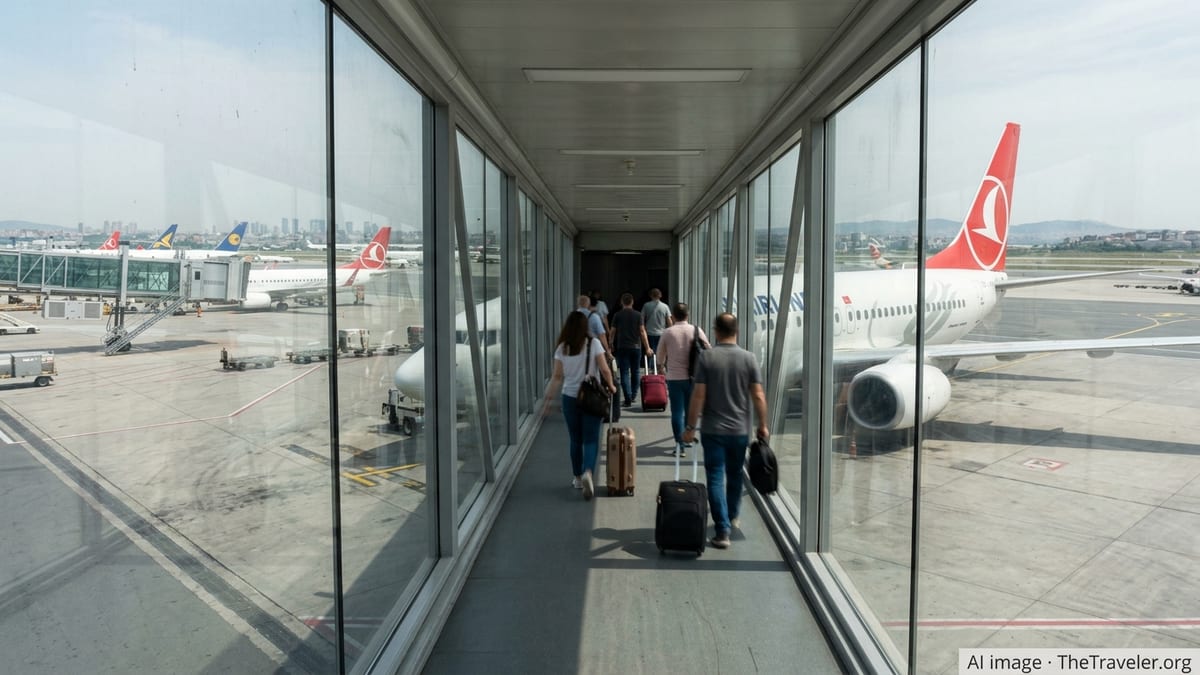
Daily Service Returns on a Once-Busy Corridor
According to publicly available schedule data, Turkish Airlines resumed operations between Istanbul Airport and Tirana International Airport Nënë Tereza on January 23, 2026, after several years of absence on the route. The service is now operating with one round-trip flight per day, using Boeing 737 aircraft and restoring nonstop connectivity that had been missing since 2019.
Reports indicate that the reinstated route is being operated on a daily basis, with seven flights per week linking the Albanian and Turkish capitals. Industry trackers show that the service is scheduled as an evening departure from Istanbul, returning from Tirana later the same night, positioning the route to feed long-haul and regional connections over Turkish Airlines’ hub.
Tirana International Airport has described the arrival of Turkish Airlines as an important expansion of its airline portfolio and a strengthening of ties with one of Albania’s key economic partners. The carrier’s return also comes at a time of heightened demand from Albanian travelers seeking reliable links for both point-to-point trips and onward journeys to other continents.
The relaunch effectively restores a historic corridor that has seen changing operators and fluctuating capacity in recent years. With Turkish Airlines now back on the route with daily flights, the Istanbul–Tirana link is once again positioned as a primary gateway in and out of Albania.
A Strategic Win for Albania’s Global Connectivity
Publicly available information from Tirana International Airport highlights the broader significance of the new daily flights for Albania’s connectivity. The airport notes that regular Istanbul service via Turkish Airlines is expected to contribute to passenger growth, tourism development, and stronger business links between Albania, Turkey, and wider global markets.
The Istanbul hub offers connections to hundreds of destinations across Europe, the Middle East, Africa, Asia, and the Americas. With the restored Tirana flights feeding into this network, Albanian travelers gain one-stop access to long-haul destinations that previously required more complex routings or multiple transfers.
Travel analysts point out that the timing of the relaunch is especially notable given recent turbulence in Albania’s own airline landscape. Over the course of 2025, local coverage described Air Albania reducing and eventually suspending its operations, including its busy Istanbul services, which had long been a mainstay for outbound Albanian traffic. In the months that followed, Pegasus Airlines remained one of the few consistent operators on the route.
In that context, the arrival of Turkish Airlines with daily flights fills a gap in capacity and offers an alternative for passengers seeking full-service connectivity. The move aligns with the carrier’s broader strategy of reinforcing its presence in the Western Balkans while leveraging Istanbul as a one-stop gateway between regional capitals and global destinations.
An Epic Travel Opportunity for Transit and City-Break Travelers
The reinstated Istanbul–Tirana flights open up what many travel observers are describing as an epic twin-city opportunity. With daily frequencies, it becomes easier to design itineraries that pair a short stay in Istanbul with time in the Albanian capital and along the Adriatic coast, or to use Tirana as a jumping-off point for wider Balkan explorations.
For long-haul travelers connecting through Istanbul, the new service adds Tirana back onto the map as a convenient final leg. Turkish Airlines is widely known for its extensive stopover and transit offerings in Istanbul, and although specific benefits depend on fare type and connection times, the simple fact of having a daily Tirana link significantly broadens routing options for passengers coming from North America, Asia, or the Middle East.
On the leisure side, the route strengthens a growing two-way tourism flow. Istanbul’s mix of historic neighborhoods, Bosphorus views, and major cultural sites has long attracted visitors from Albania, while Tirana is increasingly promoted as a colorful, creative city with easy access to beaches, mountain landscapes, and heritage towns. Daily flights make it more practical for travelers to combine both destinations in a single trip, turning a simple point-to-point journey into a multi-stop adventure.
Industry watchers note that this renewed connectivity also lowers the barrier for spontaneous travel. The presence of at least one daily flight in each direction gives travelers greater flexibility in trip planning, from short business visits to extended regional tours that use Tirana and Istanbul as key anchor points.
Competitive Dynamics in a Changing Balkan Air Market
The Istanbul–Tirana relaunch arrives amid shifting competition across the Balkans. In recent years, low-cost carriers and regional operators have expanded in and out of Albania, while traditional flag carriers have reassessed their commitments and partnerships. The changes have created both uncertainty and opportunity within the market.
Publicly accessible corporate disclosures show that in late 2025 Turkish Airlines moved to sell its 49 percent stake in Air Albania, effectively unwinding a partnership that had been central to the Albanian carrier’s launch. Around the same time, local reporting described operational disruptions at Air Albania, with multiple cancellations affecting travelers on the busy Istanbul route.
Against that backdrop, Turkish Airlines’ decision to reenter the market directly with its own metal and a daily schedule signals renewed confidence in the route’s underlying demand. The move also reinforces the trend of major network carriers reasserting themselves on key regional links where connectivity, schedule reliability, and interline agreements are highly valued by passengers.
For Albania, the result is a more diversified air services portfolio, with global network carriers, low-cost operators, and regional airlines all competing for traffic. The return of Turkish Airlines to Tirana adds a full-service player with an expansive long-haul network, which could, in turn, put pressure on rivals to adjust pricing, schedules, or product offerings on overlapping routes.
What Travelers Can Expect on the New Route
Based on published schedules and fare information, the daily Istanbul–Tirana flights are currently operated by Boeing 737 aircraft configured in a typical two-class layout. Travelers can expect the usual Turkish Airlines product on board, including complimentary meals and beverages and access to the airline’s entertainment system on most aircraft types assigned to the route.
From a timing perspective, the evening departure pattern is designed to integrate with long-haul waves into and out of Istanbul, giving passengers from Tirana same-night or next-morning onward connections to a wide variety of destinations. For those originating in Istanbul, the schedule supports short business trips to the Albanian capital as well as weekend city breaks.
Publicly available fare displays show a range of ticket options, from basic economy to more flexible fares with change and refund possibilities. Prices fluctuate by season, demand, and booking window, but the presence of competing carriers on the city pair is likely to help keep the market relatively competitive.
For now, the resumption of daily flights marks a significant step forward in reconnecting Albania with one of the world’s most important aviation hubs. As Turkish Airlines beds in the route and travelers grow accustomed to the new options, Istanbul to Tirana is positioned to become one of the most dynamic short-haul links in the wider region.