

More news on this day
Turkish Airlines has cemented its status as Europe’s premier in-flight experience carrier after securing top regional awards for its entertainment system and onboard Wi-Fi, adding fresh momentum to the flag carrier’s rapid growth across the continent.
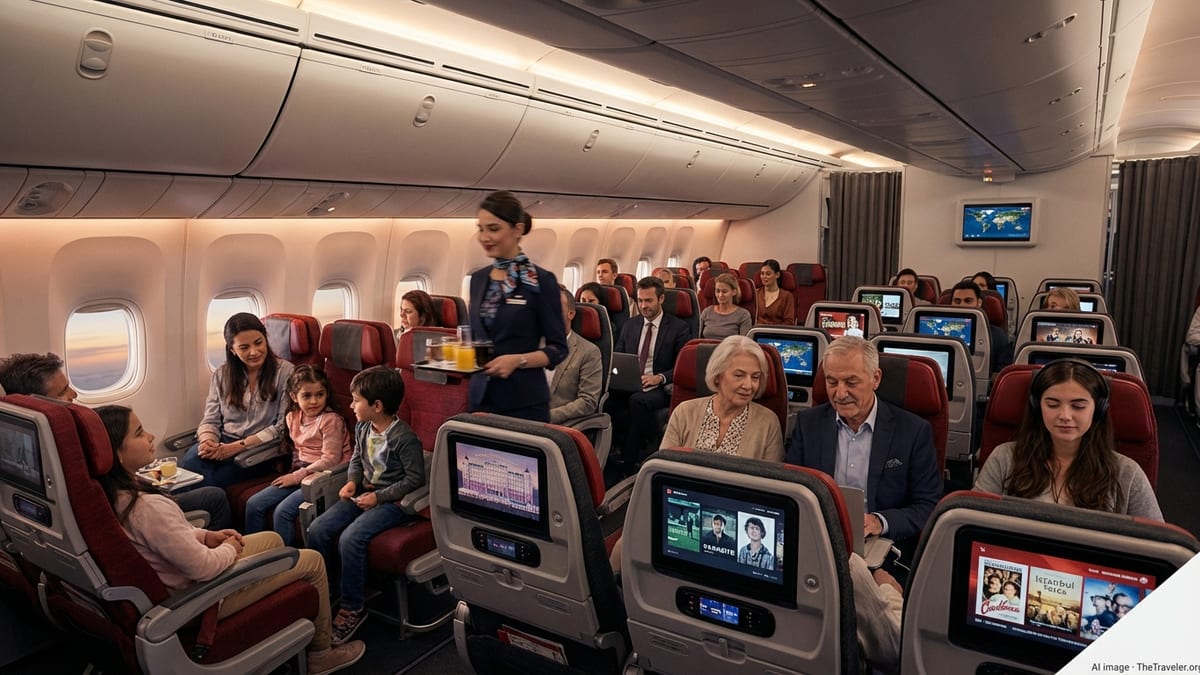
New APEX Titles Confirm a Passenger Experience Powerhouse
Turkish Airlines’ latest recognition comes from the Airline Passenger Experience Association, where the carrier has been honoured with the APEX World Class 2025 rating alongside regional titles for Europe’s Best In-Flight Entertainment System and Europe’s Best Wi-Fi Service. The trio of awards highlights how the Istanbul-based airline has moved beyond traditional full-service strengths such as hot meals and free checked bags to lead in digital and connectivity standards that travellers increasingly view as essential.
APEX ratings draw heavily on verified passenger feedback and independent audits, giving the results particular weight in an industry where awards can vary widely in methodology. For Turkish Airlines, the new accolades build on a multi-year streak: the carrier has repeatedly been named among a small group of APEX World Class airlines, a designation reserved for carriers that excel in safety, service, sustainability and onboard product.
The fresh European wins for entertainment and Wi-Fi effectively position Turkish Airlines at the top of the continent’s in-flight hierarchy in two categories that strongly influence how passengers rate a long-haul journey. They also underscore how the airline is using technology investments to sharpen its competitive edge against both European legacy rivals and fast-growing Gulf and Asian carriers.
Entertainment at 35,000 Feet: A Deep, Localised Library
At the heart of Turkish Airlines’ latest in-flight entertainment award is an expansive digital library designed to appeal to a passenger mix that spans Europe, Asia, Africa and the Americas. The airline’s system offers hundreds of films and series, international and Turkish music, games and children’s content, curated to reflect both global trends and local tastes. That blend has become a key differentiator as the carrier leans on Istanbul’s role as a global connection hub.
Industry analysts note that Turkish Airlines has treated its entertainment platform as a strategic asset rather than a secondary amenity. Frequent updates to the content catalogue, multi-language subtitle options and user-friendly interfaces are all cited as reasons passengers give the airline top scores in post-flight surveys. The system’s design emphasises intuitive navigation, making it easier for travellers unfamiliar with the brand to find content quickly after boarding.
The entertainment investment aligns closely with the airline’s broader branding strategy, which integrates Turkish culture into the journey without sacrificing international appeal. Classic Turkish cinema, documentaries on Anatolian heritage and locally produced series sit alongside Hollywood blockbusters and global streaming favourites, offering a subtle cultural introduction long before passengers see the Istanbul skyline.
Best in Europe for Wi-Fi: Connectivity as a Core Service
The recognition for Europe’s Best Wi-Fi Service underscores how connectivity has shifted from luxury to expectation on modern flights, particularly for business travellers and younger passengers. Turkish Airlines has responded by progressively rolling out upgraded satellite-based systems across its fleet, focusing first on long-haul widebodies and high-density European routes where demand is strongest.
Passengers report that the airline’s Wi-Fi is increasingly stable enough to support messaging, email and cloud-based work tools, with speeds that compare favourably with those offered by many European competitors. While heavy video streaming still faces natural bandwidth constraints common across the industry, the consistency of the connection and relatively transparent pricing have earned the carrier strong satisfaction scores.
Turkish Airlines has also woven Wi-Fi access into its loyalty and cabin segmentation strategies. Complimentary packages are typically offered to business class passengers and top-tier frequent flyers, with paid tiers available across the cabin. This approach not only boosts the perceived value of premium seats but also generates ancillary revenue that can be reinvested in future connectivity upgrades.
World Class Status and a Long-Running Award Streak
The latest in-flight awards slot into a broader pattern of recognition that has seen Turkish Airlines repeatedly named Europe’s best-performing full-service carrier. In independent rankings and passenger-voted surveys, the airline has amassed a string of titles, including multiple “Best Airline in Europe” honours and top marks for both business and economy class catering, as well as seat comfort.
APEX’s World Class designation, held by only a select group of global airlines, has become a recurring accolade for the Istanbul-based carrier. That status reflects not only cabin hardware and service but also safety management, environmental performance and inclusivity standards. For Turkish Airlines, maintaining the rating year after year signals a degree of operational consistency that is increasingly scrutinised by corporate travel buyers and high-frequency flyers.
Analysts point out that such recognition carries commercial weight at a time when travellers are more inclined to compare experiences across regions rather than within national markets. By aligning itself with a small circle of top-tier global brands, Turkish Airlines positions its in-flight offer as a credible alternative to long established Asian and Gulf carriers that have traditionally dominated premium experience rankings.
Culinary Leadership: Food and Beverage as a Signature
Complementing its latest in-flight entertainment and connectivity titles, Turkish Airlines has also earned repeated praise for its onboard dining. Awards for food and beverage execution in Europe highlight a catering strategy that blends restaurant-style presentation with the practical demands of high-density hub operations. The carrier’s long partnership with specialist caterer Turkish Do&Co is widely credited with setting a new benchmark for airline meals departing from Istanbul.
In business class, full multi-course menus, live trolley service on many long-haul routes and dishes influenced by both Ottoman and modern Anatolian cuisine have become part of the airline’s brand identity. Economy passengers, meanwhile, benefit from hot meals on a broad range of flights where many European rivals have moved to buy-on-board models, particularly on medium-haul services.
This culinary emphasis supports Turkish Airlines’ positioning of its in-flight offer as an extension of traditional Turkish hospitality. The airline has invested in training cabin crew to present and describe dishes with confidence, reinforcing the sense of a curated dining experience rather than simple tray service. The result is a product that earns consistently high scores in passenger satisfaction surveys, further underpinning the carrier’s Europe-leading in-flight reputation.
Sustainability, Fleet Renewal and the Future of the Cabin
The in-flight awards arrive as Turkish Airlines accelerates a broad modernisation drive across its fleet and operations. Sustainability-themed honours, including best-in-class recognition for environmental performance from APEX, reflect efforts to pair cabin upgrades with lower-emission aircraft. The airline has placed substantial orders for new-generation narrowbody and widebody jets, with cabin designs configured to support its premium and connectivity ambitions.
New and retrofitted cabins are being equipped with larger high-definition screens, improved seat ergonomics and more accessible power outlets, ensuring that future enhancements to the entertainment and Wi-Fi platforms are fully supported by the hardware. The airline has also highlighted its move toward lighter cabin materials and improved waste management on board as part of its emissions-reduction strategy.
These initiatives form part of a wider sustainability roadmap that includes the use of sustainable aviation fuel on selected services, digitalisation of onboard processes and a focus on reducing single-use plastics. For passengers, many of these efforts are largely invisible, but award recognition in sustainability categories signals that behind the airline’s high-profile in-flight offerings sits a concerted attempt to future-proof its growth.
Istanbul’s Hub Strategy and Europe-Wide Expansion
Turkish Airlines’ dominance in Europe’s in-flight rankings is closely intertwined with Istanbul’s emergence as one of the world’s most connected hubs. The airline’s network spans more countries than any other carrier, with its new-generation home base designed to handle high transfer volumes and support multiple daily frequencies across key European and long-haul markets. High-quality in-flight entertainment and Wi-Fi help smooth tight connections and long layovers by making time on board more productive and engaging.
Recent expansion in the United Kingdom and other European countries demonstrates how the carrier is leveraging its in-flight product to win new passengers on both price and experience. Additional services from secondary cities feed into Istanbul’s hub, where travellers can connect to an extensive network across Asia, Africa and the Middle East, often with a consistent onboard product standard regardless of whether they are flying on a widebody or narrowbody aircraft.
As competition intensifies from low-cost carriers on intra-European routes and from Gulf rivals on eastbound long-haul traffic, Turkish Airlines’ strategy has been to differentiate through a combination of network breadth, competitive fares and an in-flight experience that more closely resembles that of top-tier intercontinental carriers than regional point-to-point operators.
What Europe’s Top In-Flight Award Means for Travellers
For passengers choosing flights within and beyond Europe, Turkish Airlines’ latest in-flight awards translate into a more predictable expectation of what the journey will feel like. Onboard, travellers can anticipate a broad entertainment selection that recognises the region’s cultural diversity, a Wi-Fi service capable of supporting modern digital lifestyles and a food offering that often exceeds what is available on comparable European routes.
Travel industry observers say the airline’s recognition at the top of Europe’s in-flight rankings may also nudge competitors to accelerate their own investments in cabin upgrades, particularly around connectivity. As more carriers race to add streaming-capable Wi-Fi and refresh ageing seatback systems, the benchmark for what constitutes a “standard” economy or business class experience in Europe is likely to rise.
For now, Turkish Airlines’ combination of awards in entertainment, Wi-Fi, catering and sustainability has given the flag carrier a powerful narrative to present to both leisure and corporate buyers. With new aircraft on order and further cabin refinements in the pipeline, the airline appears intent on defending its Europe-leading in-flight position while using Istanbul’s strategic geography to turn those awards into sustained passenger growth.