

First‑time visitors to Turkey often arrive with vivid images in mind: the grand dome of Hagia Sophia, the call to prayer over Istanbul’s rooftops, hot air balloons above Cappadocia and bustling bazaars scented with spice. These scenes are real, yet they only skim the surface of a culture shaped by millennia of migration, empire, faith and everyday rituals. Spend time looking beyond the postcard moments and you discover a complex society whose depth can surprise even seasoned travelers.
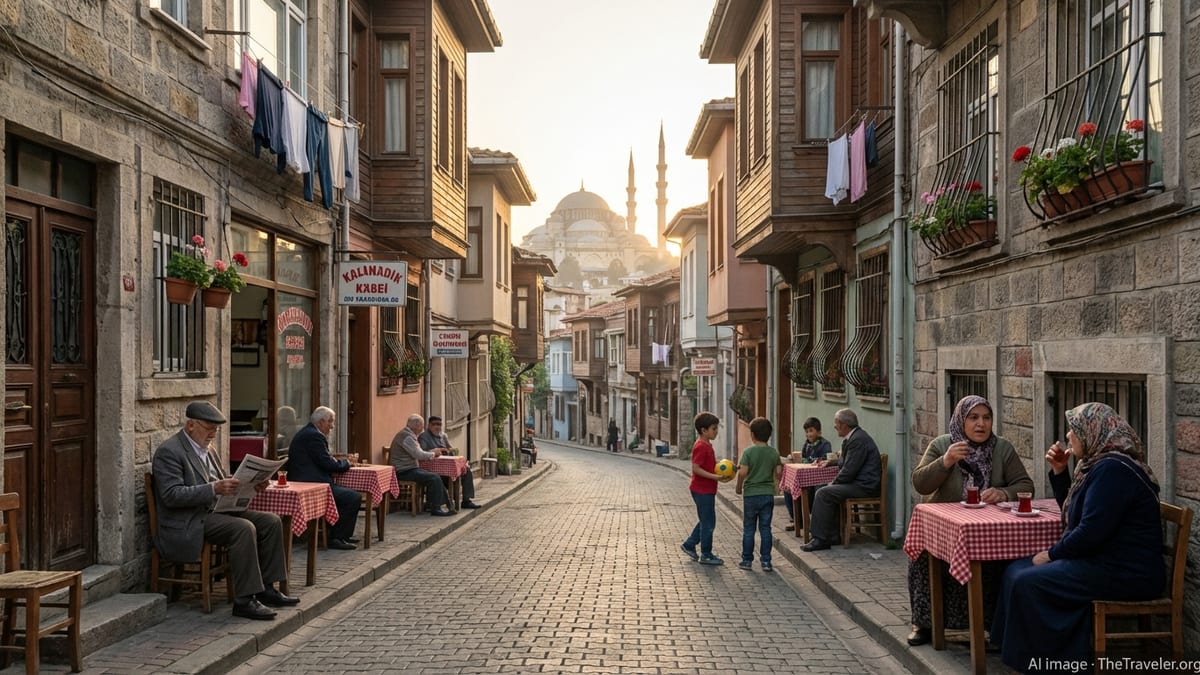
Layers of History Beneath Everyday Life
Modern Turkey stretches across a landscape where civilizations have risen and fallen for thousands of years, from Hittites and Greeks to Byzantines and Ottomans. This is not just background for museums. It shapes how people see their towns, their families and even what they eat. A Turkish city square may hold a Roman column, an Ottoman fountain and a republican monument within a few steps of one another, and locals often navigate this layered past with an ease that visitors may not immediately grasp.
These overlapping histories mean that Turkish identity is rarely simple. Many families trace ancestry to migrants from the Balkans or the Caucasus, or to rural Anatolian villages, even if they live in thoroughly modern apartment blocks. Conversations over tea can easily shift from football scores to distant relatives in Bulgaria or Georgia, or to grandparents who once spoke Greek, Armenian or Kurdish at home. For travelers, recognizing how recent and vivid these histories feel to people is a first step toward understanding the country’s cultural depth.
Public spaces also carry subtle reminders of this long timeline. A modest neighborhood mosque may stand on or near the foundations of older churches or temples, and local legends often blend fact and folklore about saints, dervishes and warriors connected to a particular hill or spring. When you pause to ask about a place rather than only photograph it, shopkeepers and café owners are often eager to share these stories, connecting today’s streets to centuries of memory.
Even the Turkish language reflects this layered past. Everyday vocabulary mixes Turkic roots with words inherited from Arabic, Persian, French, Italian and Greek, echoing trade routes and imperial politics. Visitors who learn a few phrases often find that locals enjoy pointing out these origins, turning a simple “thank you” or “good morning” into a short history lesson.
Hospitality, Generosity and Unspoken Obligations
Most visitors quickly notice that Turkish hospitality is not a cliché but a defining feature of social life. An offer of tea can arrive almost anywhere: from a shopkeeper while you browse, a bus driver at a rest stop or a stranger sitting beside you on a ferry. Accepting is usually about far more than quenching thirst. It signals a willingness to slow down, engage and share a small moment of connection. Saying yes, when you reasonably can, opens doors to conversations and invitations that reveal far more about the country than any guidebook.
Behind this warmth lie deep cultural expectations about generosity and reciprocity. Hosts often insist on paying the bill, pressing extra food on guests or walking them part of the way home. For many Turks, caring for visitors is a matter of honor, and the idea that a guest might leave hungry or feel unwelcome is almost unthinkable. Travelers used to splitting every check may misread this insistence as overbearing, when it usually reflects genuine pride in offering more than is strictly necessary.
At the same time, these generous gestures create unspoken obligations. You are not expected to repay a home‑cooked meal with an equally lavish spread, but small acts of appreciation matter: bringing a sweet treat, complimenting the food sincerely or sending a message of thanks afterward. Simple courtesies such as standing up to greet elders, offering them the best seat or letting them begin eating first show that you understand the local grammar of respect.
Understanding hospitality in Turkey also means realizing that the boundary between private and public spaces can be more fluid than in many Western societies. Neighbors often drop by unannounced, and apartment doors may stay open during the day in smaller towns. Visitors who are invited into a home may find several relatives or friends present, with conversation flowing across the room in overlapping strands. Staying relaxed in these settings, even when you cannot follow every word, signals that you are comfortable entering the social fabric rather than remaining outside it.
Faith, Secularism and Everyday Rituals
Many visitors arrive in Turkey expecting a uniformly conservative Muslim society or, conversely, a strictly secular state. The reality is more intricate. The vast majority of citizens identify as Muslim, yet levels of practice, dress and belief vary widely between regions, generations and social groups. In a single Istanbul street you may see women in headscarves walking beside others in short sleeves, men heading to Friday prayers alongside students who rarely set foot in a mosque. What often surprises travelers is how these differences coexist in daily life with less visible tension than headlines might suggest.
Turkish secularism, shaped in the early 20th century, separates formal religious authority from the state, but does not remove religion from public culture. Religious holidays are national holidays, the call to prayer punctuates city soundscapes, and phrases invoking God appear in casual speech, from expressions of thanks to wishes for safe travel. Even people who describe themselves as not particularly observant may still keep certain rituals for family reasons, such as fasting during part of Ramadan or visiting ancestral graves at religious festivals.
At the same time, Turkey is home to significant religious diversity that many visitors barely notice. Alevi communities, often described as a heterodox or mystical branch of Islam, practice in assembly houses known as cemevis rather than traditional mosques, with rituals that include music and communal meals. There are also historic Christian and Jewish communities centered in cities such as Istanbul and Izmir, maintaining churches and synagogues that have survived for centuries. Recognizing that these groups exist, and that their heritage is woven into the country’s culture, adds nuance to any journey through Turkey’s religious landscape.
For travelers, respectful curiosity goes a long way. Modest dress in and around places of worship, lowering your voice during calls to prayer and asking permission before photographing religious ceremonies all convey sensitivity. Locals are often happy to explain the meaning of a practice if approached with genuine interest rather than judgment. In return, you gain insight into how faith and secular life inform each other in contemporary Turkey, far beyond stereotype.
Family, Gender and the Rhythm of Social Life
Family sits at the center of Turkish society in a way that can surprise visitors from more individualistic cultures. Extended families often live in the same neighborhood or even the same building, and decision‑making about work, marriage and migration can involve several generations. A young professional in Istanbul might consult parents and grandparents before moving abroad, not only out of respect but because these choices are seen as affecting the whole family network.
Gender roles in Turkey are evolving quickly, yet remain shaped by tradition. In major cities, you will see women in professional roles across business, academia and government, and younger couples often share social spaces in ways that feel familiar to visitors from Europe or North America. In more conservative areas, expectations around modest dress, socializing and dating can be stricter. The same woman may dress and behave differently depending on whether she is at work, with friends in a café or visiting relatives in a rural hometown, navigating multiple sets of norms with practiced ease.
Visitors sometimes misinterpret this flexibility as contradiction. In reality, it reflects an ability to move between different cultural codes without seeing them as mutually exclusive. Public displays of affection, for example, are more restrained in many Turkish settings not necessarily because emotions are cooler, but because privacy is highly valued. Warmth and intimacy are often expressed through attentive conversation, shared meals and loyalty over time rather than overt gestures.
Understanding the centrality of family also clarifies why certain topics can feel sensitive. Politics, religion and recent economic hardships are frequently debated among close friends and relatives, but may not be welcome from a passing visitor. Asking open‑ended questions and letting your hosts decide how deeply to go typically leads to more meaningful exchanges than trying to steer discussions toward contentious issues.
Regional Diversity: More Than One Turkey
Look at a map and Turkey may appear as a single, coherent destination. Walk its streets from the Black Sea to the Aegean, from central Anatolia to the southeast, and you quickly realize there are many Turkeys inside one set of borders. Accents, cuisines, music and even body language shift from region to region, shaped by geography and by the different communities that have settled there over centuries.
On the Aegean and Mediterranean coasts, daily life often revolves around the sea, with olive oil‑rich dishes, open‑air cafés and a leisurely evening promenade. In the Black Sea region, steeper terrain, distinctive wooden houses and a wetter climate foster different rhythms and flavors, including hearty corn‑based dishes and strong tea enjoyed in mountain villages. Central Anatolia’s high plateau feels more continental, with colder winters, wheat fields and a culinary tradition that leans toward dumplings, meat stews and flatbreads baked in stone ovens.
Eastern and southeastern provinces add further layers. Here, Kurdish, Arab and other communities share space with Turks, and you may hear multiple languages in a single market. Weddings and local festivals might feature regional dances and songs unfamiliar to visitors who have only spent time in Istanbul. These differences are not simply curiosities for tourists. They carry political and emotional weight for those who call these places home, touching on questions of identity, recognition and rights.
For travelers, acknowledging regional diversity means avoiding sweeping statements about what “Turks are like.” It also rewards curiosity. Trying local specialties, listening to live music in neighborhood venues and paying attention to how people greet one another in different settings all deepen your sense of the country’s internal variety. The more of Turkey you see, the harder it becomes to speak about it in singular terms.
Food, Tea and the Social Art of Eating
Turkish cuisine is one of the country’s most visible cultural exports, yet even here many visitors only scratch the surface. Beyond kebabs and baklava lies a vast repertoire of regional dishes, seasonal vegetables and home‑style recipes that rarely appear on tourist menus. In many households, breakfast is an unhurried feast of cheeses, olives, tomatoes, eggs, jams and fresh bread, a daily ritual that brings family members together before they scatter to work or school.
Lunch and dinner are equally social. Sharing is the norm, with small plates of meze, family‑style platters and baskets of bread placed in the middle of the table. Refusing food outright can be taken as a mild rebuff, so it is often easier to accept a small portion and then decline seconds politely if you are full. Complimenting specific dishes, asking how they are prepared and showing interest in local ingredients often delights hosts, who may respond by telling stories about a grandmother’s recipe or a village where a particular cheese is made.
Tea culture deserves special mention. Served in tulip‑shaped glasses, strong black tea fuels conversations in homes, offices, barbershops and ferry kiosks all day long. It marks transitions between tasks, softens negotiations and fills the pauses in conversation. Turkish coffee, with its thick foam and grounds settling at the bottom of a small cup, carries its own rituals, from how sweet you request it to the playful tradition of fortune‑telling from the remaining grounds. To sit and linger over these drinks is to step into the tempo of Turkish daily life.
Markets and street food offer another window into cultural depth. Simit vendors balancing trays of sesame‑crusted rings, pickle carts, roasted chestnut stands in winter and mussel sellers near the waterfront all follow patterns that have evolved over decades. Buying from them not only provides an inexpensive snack but also supports micro‑economies and traditions that give Turkish cities their distinctive flavor.
Everyday Etiquette Visitors Often Miss
Many aspects of Turkish etiquette are subtle enough that visitors can overlook them without causing serious offense, yet noticing them adds richness to your interactions. Greetings, for example, carry more nuance than a quick hello. Younger people are expected to greet elders first, often with a gentle handshake or a light kiss on both cheeks among family and close friends. In more traditional settings, younger relatives may kiss an elder’s hand and raise it briefly to their forehead as a mark of deep respect.
Respectful body language matters too. Sitting with the soles of your feet pointed directly at someone, especially an older person or a religious figure, can be seen as impolite. In homes, you will almost always be asked to remove your shoes at the door and given slippers to wear inside, a practice that signals both cleanliness and a sense that the home is a shared, cared‑for space. In mosques and some traditional venues, modest dress and quiet voices are expected, and following the crowd’s lead is usually the simplest guide.
Conversation topics also have their own unwritten rules. Light small talk about family, work, food and favorite places in the city is almost always welcome. Sensitive political debates, complex historical disputes and pointed questions about religion are better approached carefully, if at all, especially with people you have just met. That does not mean Turks avoid these conversations; on the contrary, many are passionate and well informed. It simply means that trust and context matter, and a casual café chat with a short‑term visitor may not be the right moment to dive into long‑running controversies.
Finally, it helps to remember that concepts of time and punctuality can be more flexible in everyday social life than in formal business settings. Invitations for “around eight” may mean people drift in closer to nine, and visits can stretch well beyond the stated end. Adapting to this looser rhythm, rather than expecting strict adherence to schedules, usually reduces stress and creates space for the unplanned encounters that make travel memorable.
The Takeaway
Turkey’s appeal is often framed in simple contrasts: East and West, old and new, secular and religious. Spend time in its neighborhoods, homes and shared spaces, however, and those binaries blur into a far more intricate picture. The country’s culture is built from layers of history, diverse communities, deeply rooted hospitality and evolving social norms that cannot be reduced to a single storyline.
For travelers, appreciating this depth does not require expert knowledge of Ottoman history or contemporary politics. It begins with small acts: accepting tea, listening more than you speak, observing how people treat one another and being willing to slow down. In doing so, you are likely to find that the most lasting memories of Turkey come not only from its monumental landmarks but from the human connections that reveal how much lies beneath the surface.
FAQ
Q1. Is Turkey more conservative or more liberal than most visitors expect?
Many travelers find Turkey more varied than expected. Major cities can feel quite liberal in daily life, while smaller towns and some regions follow more traditional norms.
Q2. How important is it to accept tea when it is offered?
Accepting tea is a simple way to show openness and respect. You are not obliged to say yes every time, but agreeing at least once often leads to warmer interactions.
Q3. Do I need to speak Turkish to connect with locals?
You can get by with English in many tourist areas, but learning a few basic Turkish phrases shows goodwill and often transforms brief encounters into real conversations.
Q4. Is it safe to discuss politics or religion with people I meet?
These topics are deeply felt and can be sensitive. It is usually better to let locals raise them first and to listen carefully rather than debate.
Q5. What should I know about visiting mosques as a non‑Muslim?
Dress modestly, remove your shoes, keep your voice low and avoid walking directly in front of people who are praying. Following posted signs and local behavior is the best guide.
Q6. Are cultural norms very different between Istanbul and the rest of Turkey?
Yes, Istanbul is generally more cosmopolitan, but even within the city neighborhoods vary a lot. Other regions have their own customs, foods and social expectations.
Q7. How can I avoid unintentionally offending someone?
Show respect to elders, be modest in dress in religious or rural areas, accept hospitality graciously and avoid making sweeping negative comments about the country or its history.
Q8. Is it acceptable for couples to show affection in public?
Holding hands is widely accepted, especially in big cities. More intimate displays of affection are better kept private to avoid discomfort or unwanted attention.
Q9. What is the best way to experience authentic Turkish food culture?
Seek out small family‑run restaurants, try regional dishes in each area you visit and accept invitations to home meals when they are offered in a context that feels safe and genuine.
Q10. How can I show appreciation for Turkish hospitality?
Simple gestures go far: sincere thanks, small gifts like sweets, respectful behavior toward hosts and staying in touch after your visit if you have formed a real connection.