

More news on this day
Türkiye is coupling the restoration of its century-old railway heritage with one of the world’s most ambitious high-speed and electrified rail expansion programs, aiming to cut emissions, ease congestion and turn historic depots into modern, multimodal gateways for travelers.
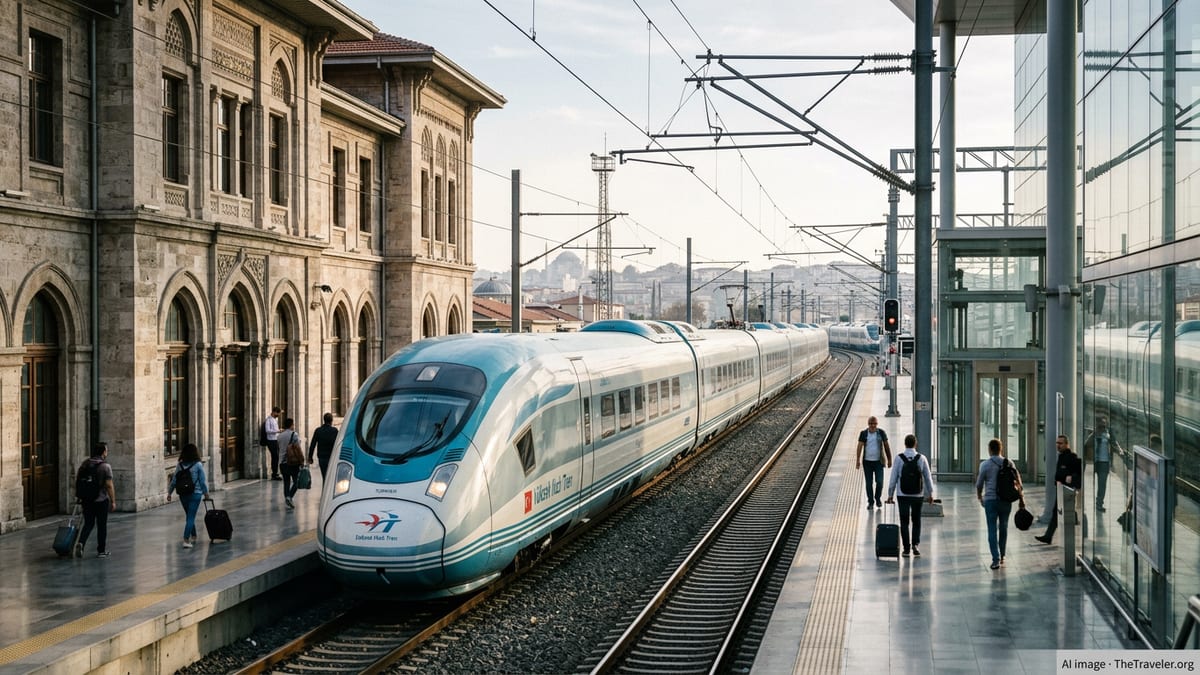
Modernizing Iconic Stations for a Low-Carbon Era
Across Türkiye, historic train stations that once symbolized an age of steam are being reimagined as sustainable transport hubs and cultural landmarks. In Istanbul, long-closed waterfront terminals such as Haydarpaşa and Sirkeci are the focus of an extensive restoration drive that combines conservation with new passenger uses, museum spaces and improved rail access. Authorities say the goal is to keep trains at the heart of city mobility while preserving the grandeur that made these buildings national icons.
Officials from the Ministry of Culture and Tourism and the Ministry of Transport and Infrastructure have emphasized that restoration projects now routinely integrate seismic strengthening, energy-efficient systems and improved accessibility into the refurbishment of heritage stations. Upgrades typically include modern signaling interfaces, step-free access, LED lighting and passive climate-control measures, allowing historic buildings to operate more efficiently without sacrificing their original façades and interiors.
These projects are not limited to Istanbul. Regional centers along the expanding high-speed corridors, including hubs on the Ankara–Sivas axis, are seeing older depots integrated with new high-speed terminals. In some locations, 19th-century buildings are being conserved as cultural or commercial annexes next to streamlined, energy-efficient new concourses that host high-speed and electrified intercity services, creating layered transport complexes that serve both residents and visitors.
The result for travelers is a more seamless intermodal experience, where historic platforms sit alongside modern canopies, and where local commuter, intercity and high-speed services share upgraded, electrified tracks. For Türkiye’s planners, these visible investments in heritage help build public support for a broader rail renaissance centered on climate-conscious travel.
High-Speed Network Expansion Connects Regions
Türkiye’s high-speed rail program has advanced rapidly over the past three years, transforming intercity travel times and shifting demand away from highways and domestic flights. The opening of the Ankara–Sivas high-speed line, inaugurated in April 2023 and progressively ramped up through 2024, extended high-speed operations deep into central Anatolia, cutting journey times and adding new stations such as Yozgat and Sorgun to the network.
The Ankara–Konya and Ankara–Istanbul high-speed corridors, already established as flagship routes, are now being complemented by extensions and new links that will connect additional provincial cities. Construction continues on the Ankara–İzmir high-speed line, a priority project designed to reduce travel between the capital and the Aegean metropolis from around 14 hours on conventional tracks to roughly three and a half hours once the new electrified route is fully commissioned.
New high-speed and fast intercity projects in southern Türkiye are also reshaping east–west connectivity. Electrified lines under construction between Mersin, Adana, Osmaniye and Gaziantep aim to raise speeds to around 200 km/h, shorten routes and ease bottlenecks on corridors that are vital for both passengers and freight. Sections of these schemes are slated to come online progressively before the end of the decade, with upgraded alignments and tunnels replacing meandering legacy tracks.
Taken together, these projects are moving Türkiye toward a contiguous high-speed grid across its most populated regions. Government planning documents envision thousands of additional kilometers of high-speed and “very high-speed” lines by 2053, giving rail a much larger share of long-distance trips and providing a lower-carbon alternative to short-haul flights for domestic travelers.
Electrification Drive Cuts Emissions and Oil Dependence
Parallel to high-speed construction, Türkiye has stepped up the electrification of its conventional rail network as part of its climate and energy-security strategies. According to recent transport updates, the length of electrified railway in the country has risen from just over 2,100 kilometers in 2002 to more than 7,100 kilometers by mid-2024, a more than threefold increase that dramatically expands the reach of electric traction.
This electrification surge is closely aligned with Türkiye’s 2053 transport and logistics master plan and its national energy-efficiency action plan for 2024–2030. Both frameworks prioritize shifting more passengers and freight to rail while reducing dependence on imported fossil fuels. By wiring busy freight arteries and intercity routes, planners hope to pair cleaner, grid-powered locomotives with advances in signaling and capacity management, enabling longer, heavier trains that consume less energy per tonne-kilometer.
On passenger routes, electrified lines enable the deployment of modern multiple units and high-speed sets that accelerate and brake more efficiently, cutting journey times and energy use compared with older diesel-hauled trains. The Ministry of Transport has also highlighted the role of domestically produced rolling stock and components in new electric fleets, promising lower lifecycle emissions and a reduced foreign-cuel and technology bill.
For travelers, the benefits are tangible: quieter trains, fewer diesel fumes at platforms and more competitive schedules that make rail a practical alternative to driving. For policymakers, every kilometer of new catenary wire represents progress toward long-term decarbonization goals and a more resilient, electrified transport backbone that can integrate future renewable power sources.
Local Manufacturing and International Partnerships Underpin Growth
Behind the scenes of Türkiye’s rail expansion is a deliberate effort to grow local manufacturing capacity while leveraging international partnerships. State-owned TCDD Taşımacılık and domestic suppliers have been ramping up production of track components, signaling equipment and rolling stock elements, as Ankara pushes for higher local content in new trains and infrastructure projects.
At the same time, recent contracts highlight the role of foreign expertise in achieving high technical standards on key corridors. In early 2026, European steel producers reported new multi-year orders to supply rails for the Ankara–İzmir high-speed line, describing the project as a major electrified route that will sharply cut journey times and modernize one of Türkiye’s busiest intercity axes. Such deals typically come with technology transfer and training provisions that support Turkish engineers and maintenance teams.
International financial institutions and export-credit agencies have also become increasingly visible in funding packages for high-speed and electrified projects. Their participation not only helps manage upfront costs but also encourages adherence to environmental and social safeguards, including energy-efficiency criteria, noise-mitigation measures and climate resilience standards on bridges, tunnels and viaducts.
As Türkiye positions itself as a bridge between Europe, the Middle East and Central Asia, an upgraded, largely electrified rail network is seen as essential to capturing a larger share of transit trade. Modern freight corridors, connected through revitalized heritage hubs and high-speed passenger lines, are expected to make the country more competitive in logistics while supporting tourism and regional development.
Tourism, Heritage and the Passenger Experience
The intersection of modern rail technology and historic architecture is emerging as a powerful draw for tourists. Restored station buildings, some over a century old, are being promoted as attractions in their own right, with cafés, galleries and museum spaces complementing the steady flow of passengers boarding high-speed and regional services.
New routes such as Ankara–Sivas and enhanced high-speed access to Konya, Eskişehir and coastal cities are shortening weekend getaway times and opening up lesser-known regional destinations to international visitors. Travel agencies have begun packaging high-speed rail segments into itineraries that emphasize sustainability, highlighting electrified trains as a lower-emission way to experience the country’s landscapes and historic towns.
Inside the trains, investments in passenger comfort and digital services are part of the strategy to win travelers from cars and planes. Modern high-speed sets typically offer on-board Wi-Fi, power outlets, quiet cars and family compartments, while upgraded stations feature clearer wayfinding, expanded ticketing options and better integration with local public transport.
For Türkiye, the modernization of heritage stations and the rapid rollout of high-speed and electrified lines is more than a transport story. It is a statement about how the country intends to balance growth with climate responsibility, using its railway legacy as a foundation for a cleaner, better-connected future.