

More news on this day
Air travelers across Türkiye faced fresh disruption this week as more than 20 flights operated by Turkish Airlines, Qatar Airways, Pegasus, Lufthansa and other carriers were canceled or severely delayed, leaving passengers stranded and disrupting connections to Bahrain, Doha, Dubai, Frankfurt, Detroit and other major hubs.
Get the latest news straight to your inbox!
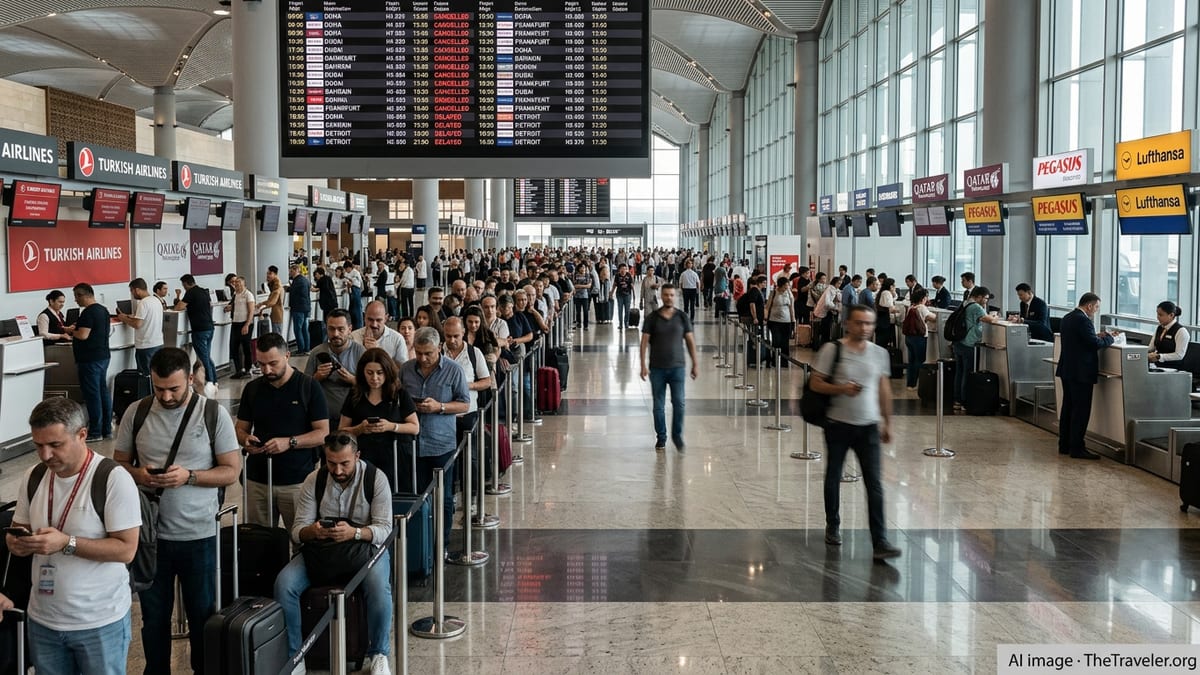
Wave of Cancellations Hits Turkish Airports
Flight operations at Türkiye’s busiest airports were heavily disrupted over the past 48 hours, with Istanbul’s main gateway and Sabiha Gokcen on the Asian side reporting clusters of cancellations and rolling delays. Data from regional aviation trackers and airport boards showed at least 20 departures and arrivals scrubbed on a single day, with many more operating off schedule.
Turkish Airlines, Pegasus and several European carriers, including Lufthansa, were among those forced to trim or reshuffle their schedules. While Istanbul regularly experiences weather-related disruption, this latest wave has been compounded by regional airspace constraints linked to instability in the wider Middle East, turning Türkiye’s role as a connecting hub into a pressure point.
Industry analysts note that even a few dozen cancellations can have an outsized impact in a tightly banked hub system where many flights arrive and depart within narrow time windows. Missed connections quickly cascade into missed long haul services, leaving passengers stranded far from their final destinations.
Airport officials in Istanbul and Antalya have urged passengers to arrive early, monitor their flight status through airline apps, and brace for last minute gate and schedule changes as carriers work to rebalance aircraft and crew.
Qatar Airways Cuts Capacity, Disrupting Doha Links
The disruption in Türkiye is closely tied to Qatar Airways’ sharply curtailed operations through Doha after a security-driven closure of Qatari airspace led the Gulf carrier to suspend or reduce many services. In recent days, Qatar Airways has been operating a limited relief schedule, with hundreds of flights canceled globally and only select long haul routes maintained.
As a key partner for Turkish travelers and a popular one-stop option from Istanbul to Asia, Africa and the Americas, Qatar Airways’ reduced capacity has hit connections especially hard. Passengers booked from Türkiye to destinations such as Bahrain, Dubai and further afield via Doha have reported short-notice cancellations, extended layovers and rerouting via alternative hubs.
Some travelers with itineraries linking Istanbul to European or North American cities through Doha, including routes to Detroit and other major United States gateways, have been rebooked on Turkish Airlines or European partners. Others have found their tickets left in limbo as call centers and airport desks work through a backlog of schedule changes and refund requests.
Travel agencies in Istanbul say that demand for alternative routings that avoid Doha has spiked, with some customers opting to connect via Frankfurt, London or Singapore instead, even when it means longer total journey times.
Pegasus and Regional Carriers Struggle With Knock-On Effects
Low cost carrier Pegasus, which operates a dense network from Sabiha Gokcen, has also been pulled into the turbulence. Recent operational data show a mix of delays and cancellations on key routes linking Istanbul to Gulf destinations, including Doha and Abu Dhabi, as well as to popular leisure markets.
While some of Pegasus’s earlier disruptions this year were attributed to weather and congestion, the current pattern is more entwined with regional overflight restrictions and shifting demand. As passengers are forced off canceled Qatar Airways services, seats on alternative carriers through Türkiye have filled quickly, leaving little slack in the system when aircraft or crews go out of position.
Regional and secondary carriers serving Bahrain, Kuwait and other Gulf states have adjusted schedules repeatedly in response to changing airspace permissions and slot allocations. This has made it more difficult for airlines to guarantee onward connections from Türkiye, and many are advising travelers to build in longer transfer windows or to opt for direct flights where possible.
For budget-conscious passengers who rely on multi-ticket itineraries stitched together across different airlines, the domino effect has been especially painful, as one cancellation can invalidate onward journeys that are not protected under a single booking.
Lufthansa and European Hubs Feel the Strain
European carriers, including Lufthansa, have also felt the impact as Türkiye’s disruptions ripple outward to continental hubs. Frankfurt, a major transfer point for travelers from Istanbul and Antalya bound for North America and northern Europe, has reported pockets of cancellations and delays connected to aircraft coming off disrupted Middle East rotations.
Passengers traveling from Türkiye to cities such as Detroit, Chicago and Toronto via Frankfurt and other European hubs have encountered tight connections and, in some cases, missed onward flights when departures from Istanbul left late or were canceled outright. Rebooking large numbers of disrupted travelers has put extra pressure on already busy transfer desks at Frankfurt, Munich and London.
Airline operations teams in Europe are also juggling altered routings around restricted airspace in parts of the Middle East. These detours can add flight time and fuel burn, forcing carriers to reevaluate marginal routes and, at times, to preemptively cancel services rather than risk extended delays.
For Türkiye-based travelers who previously used Doha or Dubai as their primary long haul gateways, the shifting landscape has made European hubs both more important and more congested, intensifying competition for seats during peak travel periods.
What Travelers in and via Türkiye Should Do Now
With airlines still adjusting their schedules day by day, travel experts are urging passengers starting or transiting their journeys in Türkiye to take a more hands-on approach to their plans. That begins with checking flight status repeatedly in the 24 hours before departure and again on the way to the airport, as some cancellations are being communicated only a few hours in advance.
Travelers booked on itineraries that rely on Doha, Dubai or other Gulf hubs are being advised to contact their airline or travel agent proactively to discuss backup routings through Istanbul, European hubs or alternative Middle Eastern gateways that remain stable. Where possible, opting for through-tickets on a single carrier alliance can provide stronger protection if one segment is canceled.
Consumer advocates in Türkiye also remind passengers that, when flights are canceled or severely delayed, they may be entitled to rebooking, care and assistance, or refunds under a mix of Turkish, European and international regulations, depending on the airline, ticket type and route. Keeping records of cancellation notices, boarding passes and receipts for meals or hotels can be crucial when filing claims later.
Although airlines have signaled that they hope to restore more normal operations as regional conditions evolve, the current wave of disruptions shows how quickly the intricate web of routes linking Türkiye to the Gulf, Europe and North America can be thrown off balance. For now, flexibility, extra time and close monitoring remain key for anyone planning to fly to or from Türkiye in the coming days.