

More news on this day
Türkiye is preparing to use the 4th Istanbul Tourism Fair in September 2026 as a strategic platform to reinforce its status as a global tourism powerhouse and accelerate new partnerships, investments and market growth across the international travel sector.
Get the latest news straight to your inbox!
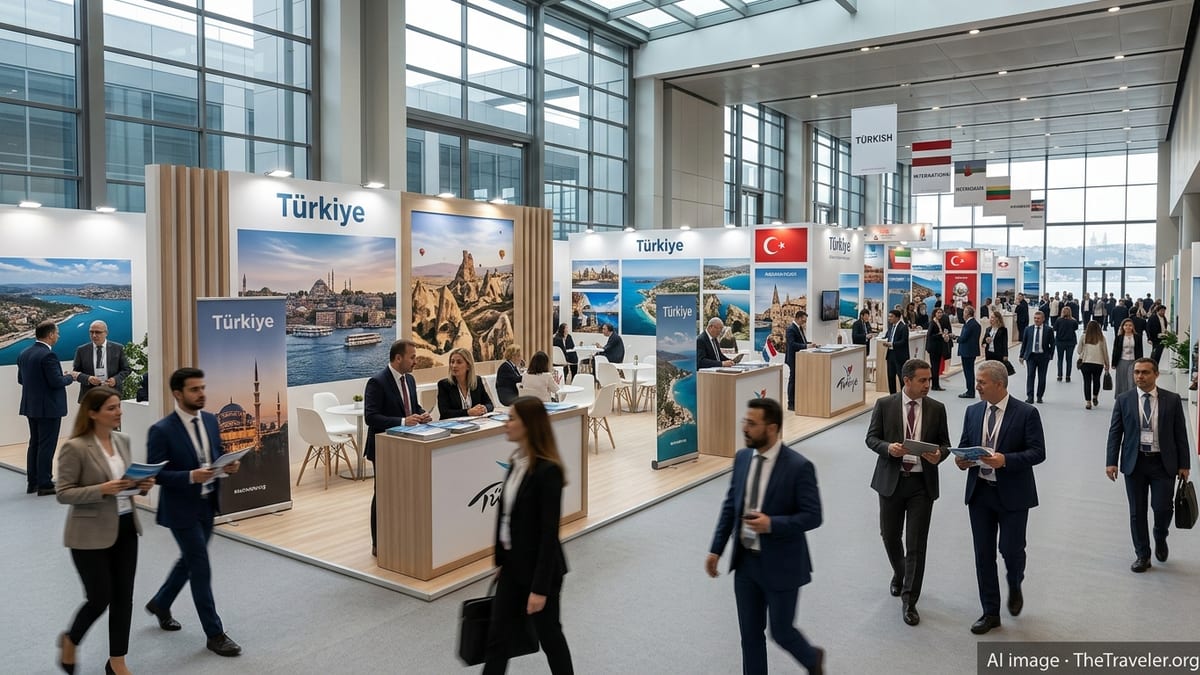
A Growing Fair with Global Reach
Publicly available information indicates that the 4th Istanbul Tourism Fair will take place on 24–25 September 2026 at the Yenikapı Eurasia Exhibition and Arts Center, building on rapid growth in participation at previous editions. The event is organized by Dream Project in strategic partnership with the Association of Turkish Travel Agencies, TÜRSAB, and is positioned as a business-focused marketplace rather than a consumer travel show.
Coverage of the 2025 edition reports that more than 15,000 tourism professionals and hundreds of hosted buyers from dozens of countries met in Istanbul for two days of intensive meetings, product presentations and regional showcases. Organizers suggest that the rising number of international buyers, particularly from Europe, the Middle East, Central Asia and North Africa, has encouraged the expansion of dedicated B2B spaces and scheduled meeting programs for 2026.
According to sector publications, participation has also broadened beyond traditional travel agencies and tour operators to include hotel groups, destination management companies, technology providers, event organizers, regional tourism boards and municipal authorities. This widening mix is seen as one of the key strengths of the fair, turning it into a platform that reflects the full tourism value chain.
The fair’s strictly professional format, closed to the general public, is highlighted by local industry press as an important draw for exhibitors seeking targeted business contacts. Noise restrictions and limited in-stand entertainment hours are described as part of an effort to prioritize negotiations, contract discussions and long-term partnerships over purely promotional activities.
Türkiye’s Strategic Tourism Ambitions
Türkiye has set ambitious tourism goals for the second half of the decade, focusing on higher-value visitors, year-round travel and diversified products beyond traditional sun-and-sea holidays. Ministry strategies and sector analyses outline targets for expanding cultural, gastronomy, congress, health, sports and nature tourism, while steadily increasing average per-capita spending.
Recent investment forums and official reports emphasize that Türkiye aims to leverage its geographic position at the crossroads of Europe, Asia and the Middle East, within short flying distance of a broad catchment of source markets. The Istanbul Tourism Fair is being framed as one of the venues where this vision is translated into concrete partnerships, new air connections, themed tour programs and hotel or mixed-use developments.
Industry commentary notes that events like the Tourism Investment Forum in Istanbul, held under the “Destination Future Türkiye” theme, have already showcased significant interest from global hotel brands, financial institutions and private equity in Turkish tourism assets. The timing of the 4th Istanbul Tourism Fair, only a few years after strong post-pandemic recovery in visitor numbers, is seen as an opportunity to align trade, investment and destination promotion in a single setting.
Analysts also highlight that Türkiye is seeking to reinforce its position in congress and exhibition tourism, with Istanbul marketing itself as a global meeting hub. The growth of sector-specific fairs and international events is cited as evidence that the country views professional tourism gatherings as both a standalone economic driver and a tool for longer-term destination branding.
Unrivalled B2B Collaboration and Networking
Information released ahead of the 4th edition indicates that TÜRSAB will curate a dedicated B2B area at the fair, designed to facilitate structured one-to-one meetings between hosted buyers and Turkish suppliers. This is expected to include pre-scheduled appointment systems, speed-networking formats and themed sessions focused on segments such as cultural routes, city breaks, luxury travel, meetings and incentives, and niche experiences.
Reports from earlier editions describe how regional stands, including those representing municipalities and local tourism boards, use the fair to negotiate new itineraries, twin-destination packages and multi-city cultural routes with domestic and international partners. Panels on cooperation between local governments have underlined how coordinated promotion can help smaller destinations access global markets through Istanbul-based intermediaries.
Travel technology and digital distribution companies are also anticipated to be more visible in 2026, reflecting broader trends in online bookings, data-driven marketing and dynamic packaging. Sector observers suggest that closer collaboration between tech providers and traditional agencies at the fair could facilitate smoother adoption of new tools among small and medium-sized tourism enterprises.
Professional associations, including hotelier groups and convention bureaux, are expected to use the gathering to advance joint marketing campaigns and sectoral initiatives around themes such as sustainable tourism, service quality and workforce development. The fair environment provides a concentrated opportunity to coordinate calendars, align messages and identify co-funded promotional opportunities in priority markets.
Showcasing Sustainability and Year-Round Tourism
Available program previews point to sustainability, resilience and diversification as central themes of the 4th Istanbul Tourism Fair. Panels and conference sessions are expected to address topics including low-impact travel, climate adaptation for coastal destinations, urban crowd management, cultural heritage protection and the integration of local communities into tourism supply chains.
Türkiye’s broader “four-season tourism” objective is likely to guide many of the discussions and product launches on the show floor. Destination stands are preparing to emphasize off-season city experiences, cultural festivals, nature escapes, wellness retreats and regional gastronomy, all aimed at spreading visitor flows more evenly throughout the year and across the country.
Observers note that global tour operators and airlines have shown growing interest in combining Istanbul city stays with lesser-known regions, capitalizing on improved domestic air and rail links. The fair is expected to act as a testing ground for such combined products, enabling partners to refine itineraries and negotiate allocation and pricing ahead of future booking seasons.
Industry commentary also indicates that sustainability credentials are becoming more decisive in B2B negotiations. Hotels and destinations with recognized environmental certifications, energy-efficiency programs or community partnerships are increasingly foregrounding these features in their marketing materials at trade events, a trend that is likely to be visible in Istanbul in 2026.
Positioning Istanbul as a Global Meeting Point
Istanbul’s role as the host city is central to the narrative around the 4th Istanbul Tourism Fair. The metropolis already welcomes major international congresses, cultural festivals and trade events each year, supported by extensive hotel capacity, modern convention centers and strong air connectivity through its main international airport.
Local tourism organizations present Istanbul as a natural meeting point connecting Europe and Asia, where travel buyers from different regions can convene with Turkish and regional suppliers in a single, easily accessible hub. The choice of the Yenikapı Eurasia Exhibition and Arts Center, which has also hosted other large-scale events, reinforces this positioning.
Analysts argue that each new edition of the fair adds to Istanbul’s profile as a knowledge-sharing center for tourism policies, product development and marketing strategies. Panels and side events bring together representatives from municipalities, national tourism boards, private companies and associations who examine global demand shifts and how Türkiye can respond competitively.
As preparations intensify for September 2026, sector coverage suggests that expectations are high for the fair to deliver fresh business, new alliances and a clearer roadmap for Türkiye’s next phase of tourism growth. The combination of a rapidly expanding trade show, ambitious national targets and Istanbul’s global connectivity is being closely watched across the international travel industry.