

More news on this day
Türkiye is accelerating investment in its cruise terminals and coastal cities as it works toward a target of hosting around 2,000 cruise ship calls by 2028, a goal that would consolidate the country’s emergence as a major Mediterranean tourism hub after several consecutive years of rapid growth in sea-borne arrivals.
Get the latest news straight to your inbox!
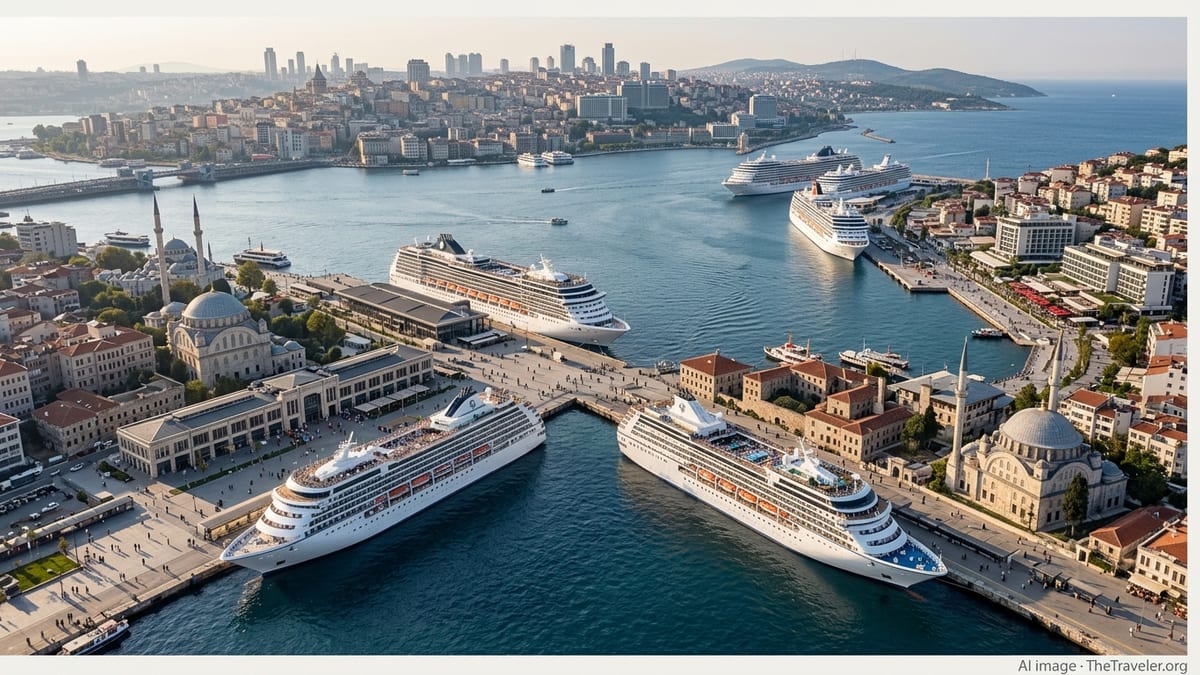
Record Cruise Growth Sets the Stage for Ambitious 2028 Goal
Recent traffic data from Turkish ports indicate that the country is entering a new phase in cruise tourism. In 2025, Turkish ports received roughly 490 cruise ships in the first half of the year alone, an increase of just over 18 percent compared with the same period of 2024, according to publicly available figures. Industry reporting notes that total cruise passenger numbers climbed toward or above the 2 million mark over the first 10 or 11 months of 2025, reaching the highest levels seen in more than a decade.
Coverage in Turkish and international outlets highlights how this surge builds on a strong rebound that began after the opening of Galataport Istanbul in 2021 and the lifting of pandemic-era travel restrictions. Cruise arrivals that once numbered in the low hundreds annually have rapidly multiplied, with the country surpassing earlier short-term targets and prompting planners to look toward a more ambitious horizon for 2028.
Against this backdrop, the frequently cited objective of accommodating around 2,000 cruise ship calls by 2028 is increasingly framed as a realistic benchmark rather than a distant aspiration. If current growth rates continue, sector analysts suggest that Türkiye could more than double its recent annual ship numbers within three years, provided that port capacity, service quality, and destination management keep pace.
Port Investments from Istanbul to the Aegean and the Black Sea
Meeting a 2,000-ship target will depend heavily on the country’s expanding network of cruise-ready ports. Galataport Istanbul, opened in stages beginning in 2021, has been promoted as a flagship facility, with an underground terminal concept that allows the waterfront to remain open to pedestrians even when large vessels are alongside. Reports indicate that Galataport handled well over 150 cruise calls in 2024 and has continued to scale up operations through 2025.
On the Aegean coast, Kuşadası remains the busiest cruise gateway, serving as the main maritime access point for the ancient city of Ephesus and surrounding resorts. Data compiled for the first half of 2025 shows Kuşadası receiving more than 220 ships and well over 300,000 passengers, accounting for a substantial share of Türkiye’s total cruise traffic. Industry publications also reference local targets of around 1 million cruise passengers a year in Kuşadası in the medium term, aligned with the national growth narrative.
Other ports along the Mediterranean and Aegean coasts, including Bodrum, Marmaris, Antalya and İzmir’s Alsancak terminal, are undergoing phased upgrades to handle larger vessels and more frequent turnarounds. At the same time, Black Sea destinations such as Samsun, Amasra and Sinop are being positioned as emerging calls on regional itineraries, adding geographic diversity and helping distribute the forecast increase in ship arrivals as 2028 approaches.
How 2,000 Cruise Calls Could Reshape Local Tourism Economies
Publicly available assessments from tourism and transport bodies estimate that cruise visitors contribute hundreds of millions of dollars a year to Türkiye’s economy through port fees, shore excursions, dining, shopping and overnight stays. As the number of ship calls moves toward the 2,000 mark, observers expect this contribution to rise significantly, particularly in coastal districts heavily dependent on seasonal tourism.
Galataport Istanbul has been cited as a model of how cruise terminals can anchor broader waterfront regeneration, mixing passenger facilities with retail, gastronomy and cultural venues that attract both visitors and residents. In Kuşadası, Bodrum and Marmaris, increased cruise calls are seen as a way to extend the tourism season, filling hotels and supporting local businesses beyond the traditional peak summer months.
However, sector analyses also underline the importance of managing growth carefully. Higher ship volumes can strain local infrastructure, crowd historic sites and increase pressure on natural environments if not accompanied by investment in transport, waste management and visitor flow planning. As a result, many of the current development plans linked to the 2028 horizon emphasize both capacity expansion and more sophisticated destination management strategies.
Infrastructure, Sustainability and Regulatory Priorities
To sustain the projected climb toward 2,000 cruise calls, Türkiye is prioritizing improvements in port infrastructure, including deeper berths, modern passenger terminals, and upgraded security and customs facilities. Public information from sector reports notes ongoing projects in multiple ports aimed at accommodating next-generation cruise ships, which are larger and more technically demanding than earlier vessels.
Sustainability considerations are increasingly prominent in discussions about the sector’s future. Industry coverage points to growing interest in shore power connections, improved waste and wastewater handling, and incentives for cleaner fuels, in line with broader international maritime regulations. While some Turkish ports are still in the planning or pilot stages for such systems, the 2028 time frame is frequently referenced as a natural milestone for rolling out more advanced environmental standards.
At the regulatory level, alignment with international safety and environmental conventions remains central to Türkiye’s strategy for attracting premium cruise brands. Analysts note that predictable port charges, clear scheduling procedures and efficient passenger processing will be crucial differentiators as ports across the Eastern Mediterranean compete for similar itineraries. The country’s central location between European and Middle Eastern markets, combined with these regulatory improvements, is viewed as a key factor behind the confidence in reaching the 2,000-ship benchmark.
What Travelers Can Expect From Türkiye’s Growing Cruise Offer
For travelers, the expansion toward 2028 is expected to translate into more varied routes, longer seasons and increasingly sophisticated shore experiences. Existing itineraries that combine Istanbul with Aegean resort towns and UNESCO-listed sites such as Ephesus are likely to be augmented by calls in lesser-known coastal communities and Black Sea ports, providing a broader sampling of the country’s landscapes and cultural heritage.
As ports invest in upgraded terminals and transport links, passengers can expect smoother disembarkation, clearer wayfinding and easier access to city centers and attractions. New retail and dining developments at or near cruise piers, following the example of Galataport Istanbul, are designed to encourage visitors to spend more time ashore, even on shorter port calls.
Travel industry commentary suggests that Türkiye’s bid to host around 2,000 cruise ships by 2028 is also likely to encourage more lines to use the country as a homeport rather than solely as a transit stop. This could mean more opportunities for travelers to begin or end their voyages in Istanbul or other Turkish cities, combining cruises with extended stays on land. If current investment and growth trends hold, the next three years are set to be decisive in determining how fully Türkiye can convert its geographic advantages into lasting status as a Mediterranean cruise powerhouse.