

More news on this day
Turks and Caicos is tightening its ties with North America as major U.S. carriers including American Airlines, Delta Air Lines, Frontier Airlines and others add new nonstop routes and extra frequencies to the archipelago, positioning the destination for another strong year of tourism growth from the United States and Canada.
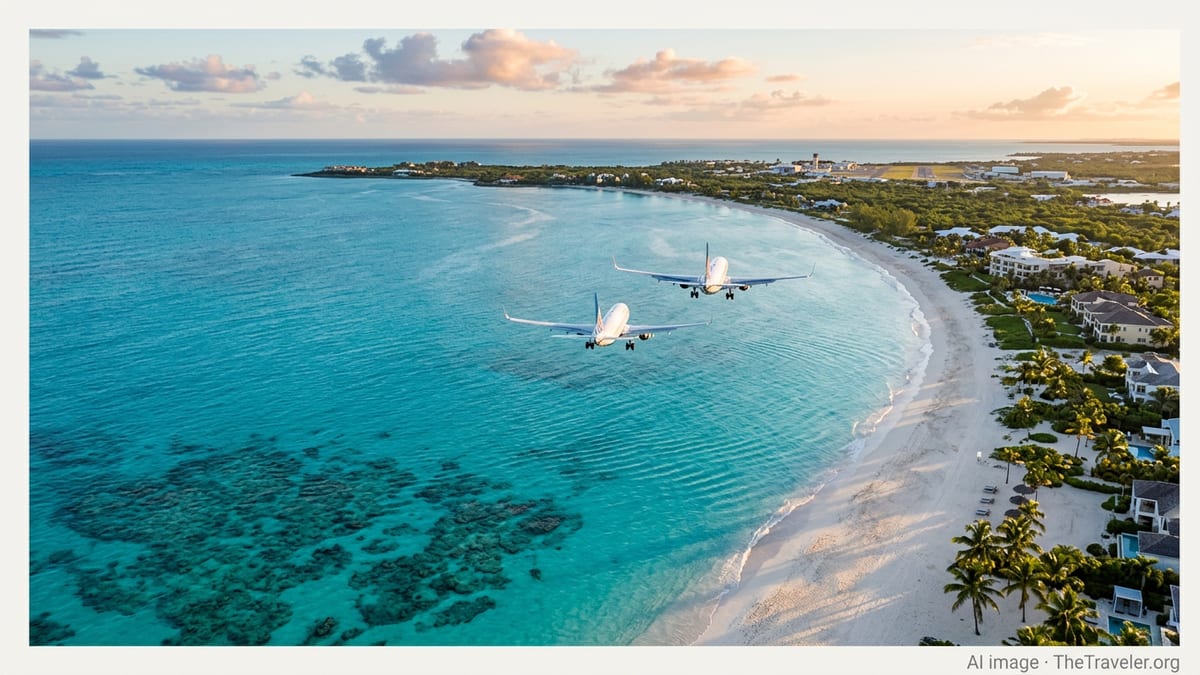
Major U.S. Airlines Deepen Their Commitment to Turks and Caicos
The latest wave of route announcements underscores how central Turks and Caicos has become to the Caribbean strategies of large North American carriers. American Airlines, Delta Air Lines, Frontier Airlines and other competitors are layering new flights on top of existing schedules into Providenciales, the territory’s primary international gateway, and newly accessible South Caicos.
American, the largest U.S. airline in the Caribbean by destinations served, has steadily expanded its Turks and Caicos portfolio from key hubs including Charlotte, Dallas Fort Worth, Miami and Philadelphia, with seasonal service from major northern cities such as Boston, Chicago and New York. That network gives travelers across the United States one-connection access to Providenciales on American metal, a major driver of leisure demand in peak winter months.
Delta Air Lines has also been in expansion mode, adding new seasonal nonstop service between Detroit and Providenciales and boosting capacity on existing routes. Industry data for the current and upcoming winter seasons shows Delta increasing frequencies from Atlanta, its largest hub, and positioning Turks and Caicos as a headline destination in its broader Latin America and Caribbean schedule.
Ultra low cost carrier Frontier Airlines has joined the market with new nonstop service from Atlanta to Providenciales, launched in December 2025 with introductory one way fares advertised from under 100 dollars. The addition of a budget carrier from a major southeastern hub lowers the entry cost for U.S. travelers and injects price competition on a route long dominated by legacy airlines.
South Caicos Welcomes First International Service
The single most symbolic step in the islands’ air connectivity push has been the opening of South Caicos to direct international traffic. In March 2025, American Airlines flight AA 3815 from Miami touched down at Norman B. Saunders Sr. International Airport, marking the first scheduled international commercial service to the small island and adding a second international gateway in the Turks and Caicos system.
The new link, operated by American’s regional partner Envoy Air using Embraer 175 jets, began as a twice weekly service from Miami, strategically timed to connect with American’s wider U.S. network. Tourism officials have framed the route as a catalyst for South Caicos, where new resort developments and boutique hotels are targeting visitors looking for a quieter, more nature oriented alternative to busy Grace Bay on Providenciales.
Local tourism leaders say the South Caicos route is part of a multi island branding drive that aims to disperse visitor traffic beyond the main resort strip. By opening a direct air bridge from the United States to South Caicos, the territory is betting that easier access will unlock investment in accommodation, dining and marine experiences centered on diving, fishing and protected marine parks.
The addition of scheduled international traffic has also raised the profile of the airport itself. Officials have highlighted terminal and operational upgrades that were required to meet international standards, arguing that the project demonstrates the government’s intent to spread tourism benefits across the archipelago rather than concentrating them solely on Providenciales.
Providenciales Sees Capacity Increase From Multiple Carriers
While South Caicos grabs headlines as a new frontier, Providenciales International Airport remains the primary beneficiary of expanded North American airlift. Most international flights into Turks and Caicos still land at Providenciales, which hosts year round service from American, Delta, JetBlue, United, Air Canada and several regional operators, with seasonal and peak period additions layered on top.
Recent schedule filings show Delta ramping up its presence with seasonal Detroit to Providenciales flights, complementing existing service from Atlanta and connections via other hubs. The Detroit route, the only nonstop link between Michigan and Turks and Caicos, targets Midwestern travelers seeking a relatively short flight to white sand beaches and warm water during the northern winter.
Frontier’s Atlanta to Providenciales service adds another option to a key gateway that already benefits from strong coverage by legacy carriers. For price sensitive travelers and families, the introduction of an ultra low cost competitor has the potential to drive down average fares or at least cap increases during popular holiday periods, bringing Turks and Caicos within reach of a broader North American audience.
Other airlines are also fine tuning their schedules into Providenciales. American has signaled incremental growth in weekly frequencies from hubs such as Miami and Charlotte during peak months, while Canadian carriers remain focused on winter leisure demand from Toronto and Montreal. Taken together, the adjustments point to a steady, capacity led strategy rather than a one off spike in flights.
Tourism Strategy: Spreading Demand Across the Archipelago
For the Turks and Caicos government and tourism authorities, the burst of new and expanded routes is less about breaking visitor records and more about reshaping how and where travelers spend their time in the territory. Officials have repeatedly stressed a multi island approach that leverages the diversity of the chain, from resort heavy Providenciales to quieter islands such as South Caicos, North Caicos and Middle Caicos.
The new Miami to South Caicos route fits squarely within that agenda. By bypassing Providenciales entirely, it encourages visitors to treat South Caicos as a primary destination rather than a side trip. Local leaders have paired the airlift announcement with efforts to accelerate hotel projects, marine infrastructure and community based tourism ventures that can absorb the expected rise in arrivals.
At the same time, authorities are conscious of pressure points on Providenciales, particularly at the airport, where terminal congestion and peak period crowding have drawn criticism from repeat visitors. Incremental capacity growth from American, Delta, Frontier and others is being matched with long term planning for airport upgrades and operational improvements designed to smooth the passenger experience while handling more flights.
Tourism planners say the combination of diversified air access, infrastructure investment and product development is intended to protect the islands’ core appeal: uncrowded beaches, clear water and a relatively low rise skyline. The challenge, they acknowledge, is to balance rising visitor numbers from North America with environmental protections and quality of life for residents, even as new routes from major U.S. hubs make Turks and Caicos easier to reach than ever.
North American Travelers Gain More Choice and Flexibility
For travelers across the United States and Canada, the practical impact of these air service changes is a broader menu of options for getting to Turks and Caicos. Nonstop and one stop itineraries are now readily available from major hubs including Atlanta, Charlotte, Dallas Fort Worth, Detroit, Miami, New York, Philadelphia and Toronto, often with multiple competing carriers on core routes.
That competition is particularly evident on links from the southeastern United States, where American and Delta have long dominated but now face new pressure from Frontier’s entry. Lower base fares on some dates, paired with frequent flyer opportunities on legacy airlines, give travelers more room to tailor trips around schedules, budgets and loyalty considerations.
In practical terms, the increased capacity also improves reliability and connectivity. With more flights from major hubs, missed connections and weather disruptions have a lower chance of stranding passengers overnight, and same day rebooking options are more common. For visitors continuing on by ferry or domestic flight to smaller islands, that added resilience can be critical.
As the next winter peak approaches, Turks and Caicos is betting that its strengthened ties to North America’s aviation network will translate into sustained tourism growth. The combination of new routes, expanded frequencies and a deliberate effort to spotlight emerging islands such as South Caicos suggests that the archipelago is entering a new phase in its evolution from niche Caribbean getaway to mainstream, yet still upscale, beach destination.