

More news on this day
A mild but widely felt earthquake rattled the Tuscaloosa area overnight, jolting residents awake across west-central Alabama and renewing scrutiny of the largely hidden seismic faults that lace beneath one of the country’s most tornado-tested regions.
Get the latest news straight to your inbox!
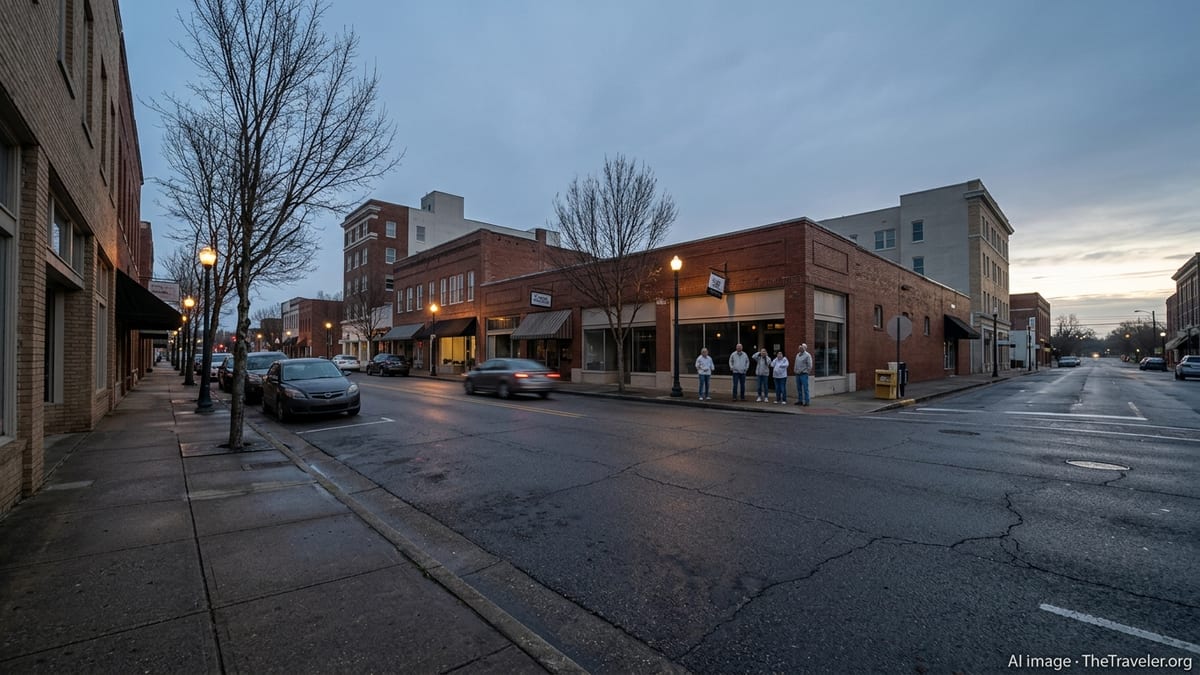
Overnight Tremor Catches a Tornado-Tested Community Off Guard
Initial readings from national seismic monitoring networks indicated a small to moderate earthquake with an epicenter reported near Tuscaloosa in the pre-dawn hours, with shaking lasting only a few seconds. Early estimates pointed to a shallow event, the kind that can be widely felt even at relatively modest magnitudes. Social media posts and local reports described beds shaking, windows rattling, and pets reacting nervously as the tremor passed through.
There were no early indications of major damage or injuries, and by morning power and transportation systems in the region appeared to be operating normally. Yet the psychological impact of an unfamiliar hazard was evident. In a city more accustomed to sirens for severe thunderstorms and tornadoes, the sudden rumble from below rather than above left many residents unsettled and searching online for information about earthquakes in Alabama.
Published coverage noted that minor earthquakes in the broader region are not unprecedented, but they are rare enough around Tuscaloosa that many long-time residents reported never having felt one before. The event quickly climbed regional trending lists, as people across Alabama and neighboring states checked in with family and friends to compare what they had experienced overnight.
For visitors and students who make up a sizeable share of Tuscaloosa’s population at any given time, the quake added an unexpected twist to the usual springtime concern over severe weather. Some hotels and short-term rentals reported early morning inquiries from guests wanting to understand whether more shaking could follow.
Alabama’s Quiet but Active Seismic Neighborhood
Publicly available data from the U.S. Geological Survey and state hazard-mitigation documents show that Alabama sits on the fringe of several significant seismic zones. To the northeast, the Eastern Tennessee seismic zone extends from northern Alabama through the Appalachians into southwestern Virginia, producing frequent small earthquakes that are often too weak to be felt. Farther northwest, the New Madrid seismic zone in the central United States is capable of much larger events that could still be felt across the Southeast.
Within Alabama, historic records highlight scattered but memorable quakes, including a magnitude 4.6 event near Fort Payne in 2003 and occasional low-magnitude tremors in central and western portions of the state. Updated hazard-mitigation plans for Alabama counties note clusters of epicenters dating back to the late 19th century, underscoring that the region’s apparent stability at the surface masks a more complex picture underground.
Geologists point to deeply buried faults associated with ancient continental collisions as likely sources of these earthquakes. Unlike the dramatic surface ruptures seen along plate boundaries in places such as California, most faults in the eastern United States remain concealed beneath thick layers of sedimentary rock. As a result, their precise locations and behaviors are often inferred from the pattern of seismic activity rather than mapped directly at the surface.
Because the crust in the eastern United States tends to transmit seismic energy efficiently over long distances, even modest earthquakes can be felt far from their epicenters. That characteristic helps explain why a brief tremor near Tuscaloosa could be noticed across a broad swath of Alabama, despite causing little or no physical damage.
New Attention on Seismic Risk in a Rapidly Growing Corridor
The Tuscaloosa quake arrives at a time of steady growth and development along the Interstate 20 and Interstate 59 corridors that connect Birmingham, Tuscaloosa, and the Mississippi state line. New residential subdivisions, student housing, medical facilities, and industrial sites continue to expand outward from established city centers. Hazard-planning documents for counties in this region already highlight tornadoes, flooding, and severe storms as primary concerns; earthquakes are often listed as a secondary but notable risk.
Engineers and planners reviewing those documents emphasize that construction in Alabama generally follows building codes developed with high winds in mind, particularly after the devastating tornado outbreak of April 2011. While those standards improve overall structural resilience, they are not identical to the seismic-specific codes used in more earthquake-prone states. The overnight tremor is prompting renewed public interest in how well critical facilities such as hospitals, campuses, bridges, and water systems would perform in a stronger event.
Travelers and temporary residents passing through the region may also be underprepared for shaking compared with those in well-known seismic hot spots. Tourism to Tuscaloosa and nearby lakes and parks tends to peak during football season and spring weekends, when hotels and short-term rentals are full. Emergency-management planners have long noted that clear, simple messaging about multiple hazards is essential in destinations that host large numbers of visitors unfamiliar with local risks.
The latest quake could feed into broader conversations about how the state balances investment in tornado safe rooms, flood control, and other visible defenses with quieter, often less understood measures aimed at seismic resilience. Updated hazard maps and risk assessments scheduled for this decade are expected to incorporate the growing catalog of small events recorded by modern instruments.
What the Tuscaloosa Quake Means for Residents and Visitors
For most people who felt it, the overnight shaking was a stark reminder that the ground in Alabama, though usually steady, is not completely still. Public information from geological agencies stresses that low-magnitude events like this one are far more common than damaging earthquakes and are not, by themselves, a guarantee that a larger event is imminent. At the same time, they serve as real-time drills, encouraging households, campuses, and businesses to think through what they would do if shaking were stronger and lasted longer.
Preparedness advice for the region typically mirrors national guidance: knowing how to “drop, cover, and hold on,” securing tall furniture and heavy objects, and keeping emergency kits that cover multiple hazards, including power outages and disruptions to water supply. In a place where many people already maintain plans for tornadoes and hurricanes, experts suggest that adding earthquakes to the checklist can be a relatively straightforward step.
For the travel sector, the Tuscaloosa event is likely to reinforce the value of clear safety information in hotels, campus housing, and visitor centers. Simple explanations of local hazards, recommended protective actions, and how emergency alerts are delivered can help reassure guests who experience unfamiliar events such as overnight shaking. Some properties in the region have already begun incorporating all-hazards information into welcome packets and digital room guides.
As the aftershocks of concern ripple through central and western Alabama, updated seismic readings and hazard analyses over the coming days and weeks are expected to refine what is known about the fault or faults involved. The overnight jolt may fade quickly from the headlines, but it has already strengthened calls for a more complete understanding of the hidden seismic systems beneath a region better known for storms above the surface.