

More news on this day
Holidaymakers heading abroad this Easter face heightened disruption at two of London’s key gateways, with new data placing Gatwick and Luton among the UK’s worst airports for flight delays.
Get the latest news straight to your inbox!
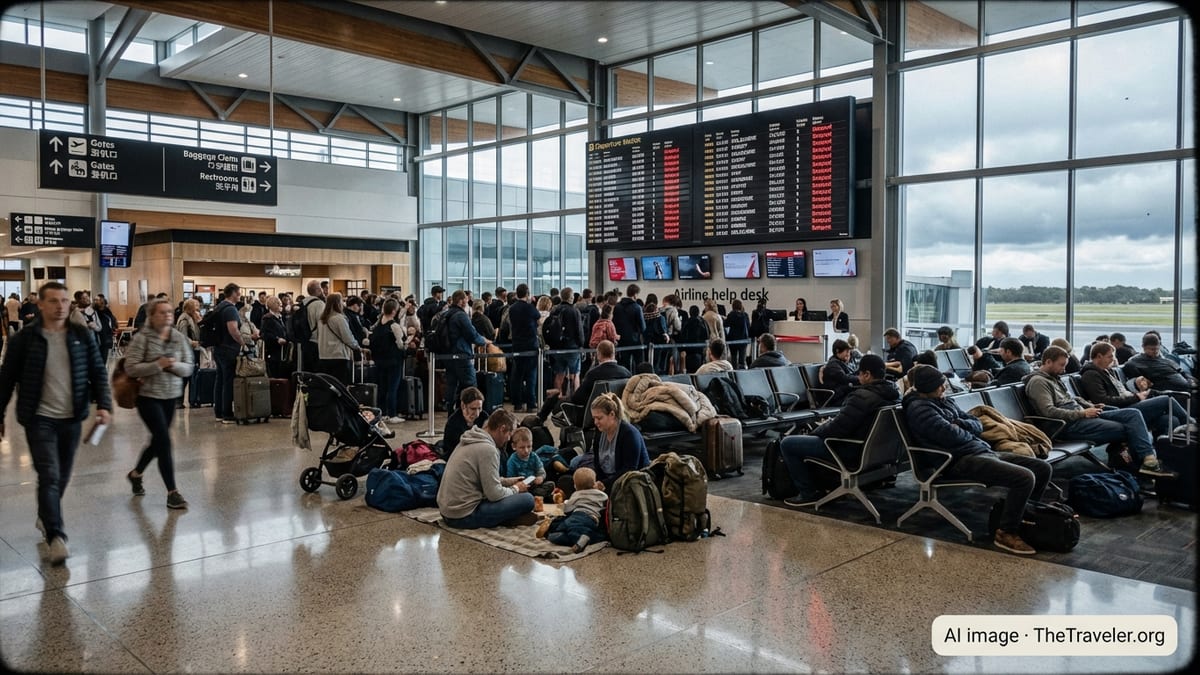
Fresh delay rankings cast shadow over Easter getaways
Recent government aviation statistics and independent analysis of Civil Aviation Authority data indicate that London Gatwick continues to record some of the longest average departure delays of any major UK airport. Figures for 2024 show Gatwick at or near the bottom of national punctuality tables, with typical waits running into the high teens or low twenties in minutes per departing flight. This underpins its classification in several recent studies as the UK’s worst or most disrupted large airport for delays.
London Luton has also emerged as a consistent underperformer. Committee papers and industry briefings referencing Department for Transport data have highlighted Luton among the country’s poorest airports for on-time departures, with average delays around the 20 minute mark. That places it firmly in the lower tier of national rankings and, crucially for travellers, marks it out as a higher risk choice during peak holiday periods such as Easter.
With Easter 2026 falling at the end of March and early April, both airports are preparing for one of the busiest weekends of the year. Industry forecasts point to record passenger volumes across the UK network, intensifying pressure on air traffic control, security screening, and ground handling operations that already struggled to keep flights on schedule last year.
The latest assessments combine historic punctuality data with booking and capacity projections for the upcoming Easter period, allowing analysts to flag the airports where disruption is statistically more likely. Gatwick and Luton feature prominently in these outlooks, grouped with a small number of regional hubs that have posted persistently weak performance.
Why Gatwick and Luton struggle with punctuality
Several structural factors help explain why Gatwick in particular repeatedly appears at the top of delay rankings. It is one of the busiest single-runway airports in the world, operating close to its declared capacity for much of the day. This leaves little margin to recover from minor operational hiccups, weather disruptions, or knock-on delays from earlier flights, so even modest issues can cascade into longer waits for passengers.
Industry commentary has also pointed to staffing challenges and air traffic control constraints as ongoing pressure points. Gatwick’s decision to scale back some air traffic roles after the pandemic, combined with Europe-wide controller shortages and intermittent technical issues in UK airspace management systems, has contributed to higher levels of airborne holding and departure restrictions during peak periods.
Luton faces a different but related set of challenges. The airport has grown rapidly as a base for low-cost and leisure carriers, with intense morning and evening peaks that concentrate departures into tight waves. When combined with limited terminal space and constrained surface access, that growth has made it harder to keep turnaround times tight, particularly when weather or wider network disruptions intervene.
Both airports also act as gateways for popular Mediterranean and North African holiday routes that are heavily trafficked over Easter. Congestion at destination airports, slot restrictions, and European-wide air traffic control measures often affect these routes, feeding back into departures from London and amplifying delay statistics tied specifically to the Easter peak.
Easter 2026: record demand meets fragile resilience
Travel industry forecasts suggest that Easter 2026 could rival or surpass pre-pandemic peaks for outbound holiday traffic from the UK. Aviation consultancies and travel trade bodies report strong demand for short-haul city breaks and sun destinations, driven by an early Easter and competitive fares from low-cost airlines operating out of Gatwick and Luton.
At the same time, recent reports on UK airport resilience have warned that much of the country’s aviation infrastructure remains vulnerable to spikes in demand and external shocks. Gatwick and Heathrow are currently the only UK airports subject to specific resilience standards, and policy reviews have urged the government to extend clearer requirements across more major hubs to reduce the impact of future disruption.
Events over the past two years underscore the fragility of the system. Technical failures at the UK air traffic control provider, Europe-wide IT outages affecting airline and airport systems, and localised issues such as power supply problems have each triggered widespread delays, with Gatwick frequently cited among the most affected airports. Analysts note that the cumulative effect of these incidents is captured in annual delay averages, pushing Gatwick and Luton further down the performance tables.
With this backdrop, aviation data firms and consumer travel platforms are using historical performance at Easter and other peak periods to issue early warnings to passengers. Their guidance consistently highlights Gatwick and Luton as airports where travellers should allow extra time, prepare for possible schedule changes, and consider earlier departures to protect connections.
What this means for Easter passengers from London
For travellers departing from the capital, the latest rankings sharpen the trade-off between convenience, price, and reliability. Gatwick and Luton offer extensive route networks and competitive fares, especially on leisure routes, but the delay statistics suggest a higher likelihood of disruption compared with some rival airports such as London City or certain regional hubs with better punctuality records.
Consumer-facing analyses advise passengers using Gatwick or Luton at Easter to take practical steps rather than avoid the airports entirely. Recommended measures include booking flights earlier in the day, when schedules tend to be less congested, building additional buffer time before cruise departures or long-distance rail connections, and using airline apps for real-time notifications about gate changes and delays.
Travel insurance specialists also highlight the value of policies that explicitly cover missed connections and significant departure delays, particularly for multi-leg itineraries starting at airports with weaker on-time records. Some providers benchmark their risk models on the same delay data that underpin the recent rankings, which in turn influences premiums and coverage terms for passengers flying out of Gatwick and Luton.
Despite the concerning statistics, industry observers note that both airports have invested in terminal improvements, technology upgrades, and staffing for the 2026 season. The key test over Easter will be whether these measures are sufficient to offset underlying structural constraints and external pressures, and whether Gatwick and Luton can begin to climb away from the bottom of the UK’s delay tables in the year ahead.
Calls grow for clearer standards and transparent data
The renewed focus on Easter disruption has intensified debate over how UK airports are regulated and how performance data is communicated to the travelling public. Recent policy reports have argued that extending formal resilience and service standards beyond Heathrow and Gatwick to other major airports could reduce the risk of severe network-wide disruption during peak travel windows.
Consumer groups and travel commentators are also pressing for more accessible, standardised punctuality statistics. While detailed tables from the Department for Transport and the Civil Aviation Authority are publicly available, they can be difficult for ordinary travellers to interpret. As a result, media outlets and specialist analytics firms have stepped in to digest the figures and publish simplified rankings of the best and worst airports for delays, particularly around key holiday periods such as Easter.
In the case of Gatwick and Luton, this secondary analysis is largely responsible for bringing their poor performance to wider attention. By aggregating delay minutes, cancellation rates, and the proportion of flights running more than half an hour late, these rankings provide an easily understood picture of reliability that directly informs public perception.
For now, the latest numbers leave both airports facing unwelcome headlines just as families finalise their Easter travel plans. Whether 2026 marks a turning point in their delay records, or another year among the UK’s worst performers, will become clear as the long weekend’s departure and arrival figures are added to the statistics that shape next year’s rankings.