

More news on this day
Two military drones that crashed in southeastern Finland near the city of Kouvola have been identified as Ukrainian, according to multiple media reports, spotlighting how the war in Ukraine is increasingly pushing high-tech risks into the skies over northern Europe.
Get the latest news straight to your inbox!
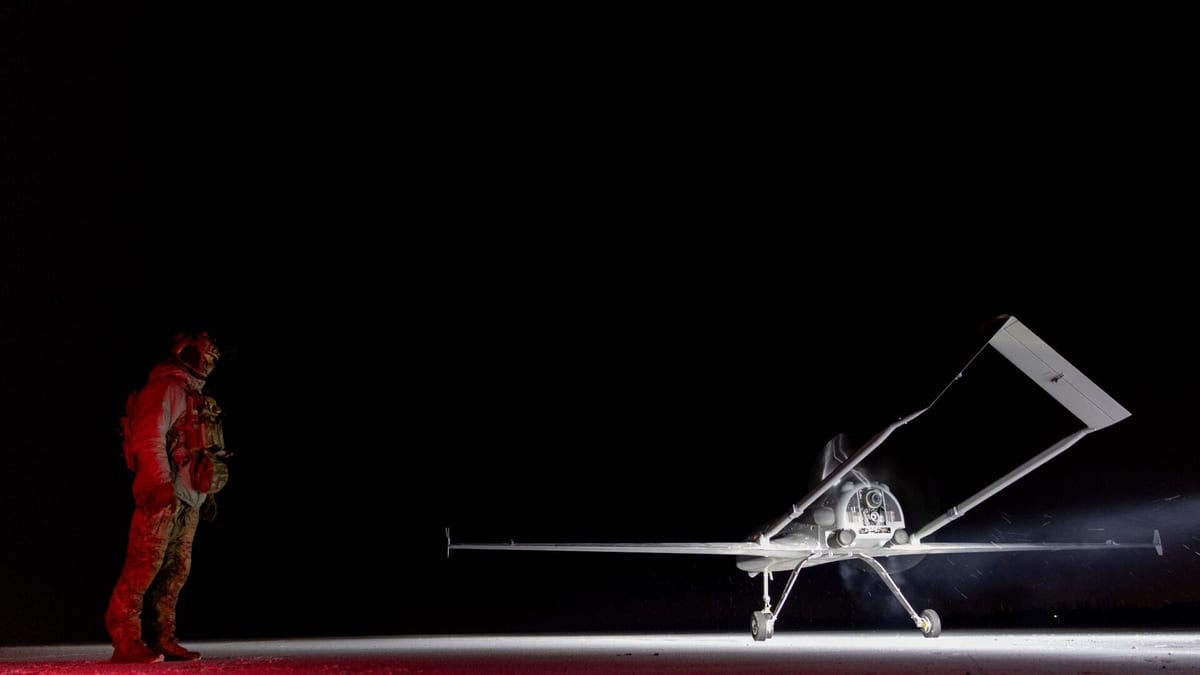
Image by AeroTime
Stray Drones Linked to Strikes on Russian Oil Infrastructure
Publicly available coverage indicates that the drones entered Finnish airspace on Sunday, March 29, during a wider Ukrainian long range campaign targeting Russian energy facilities around the Baltic Sea. Reports describe several unmanned aircraft heading toward oil terminals and infrastructure in Russia’s Leningrad region, including the key export hub at Ust Luga on the Gulf of Finland.
Finnish media accounts state that at least two of the drones went off course and eventually crashed in forested areas near Kouvola, around 80 kilometers from the Russian border. Imagery and technical analysis cited in open sources suggest one of the aircraft was an An 196 Liutyi, a Ukrainian one way attack drone designed for long range strikes.
According to press summaries of comments from Finland’s leadership, the aircraft were assessed as Ukrainian and considered part of operations directed at targets inside Russia rather than Finland. There were no reports of injuries or structural damage on the ground in Finland, with debris reportedly falling in sparsely populated terrain.
The incident follows a pattern of increasingly distant drone operations in the conflict, with Ukrainian systems reaching ports, refineries, and shipyards far from the front line. As ranges increase, the margin for navigational error grows, drawing neighboring states more directly into the operational envelope of the war.
Electronic Warfare and Navigation Jamming in the High North
Analysts cited in European security reporting have connected the stray flights to Russia’s growing use of electronic warfare in the Baltic and Arctic regions. Russian forces are widely assessed to employ powerful jamming and spoofing systems around strategic infrastructure, including ports and military bases, to disrupt satellite navigation signals used by civilian aircraft, ships, and drones.
Public commentary from Finnish officials, summarized in regional media, points to electronic interference as a likely factor that pushed the drones off their intended routes toward Russian targets on the Gulf of Finland. If confirmed, it would mirror other recent episodes in which drones linked to the conflict have strayed into the airspace of non belligerent states after losing precise positional data.
The broader region has already experienced disruptions attributed to electronic warfare, with airlines, commercial shipping, and small aircraft operators reporting anomalies in satellite navigation around the Baltic Sea. The Kouvola crashes add a new layer of concern, demonstrating that uncrewed military systems affected by the same interference can cross borders and descend unexpectedly over NATO territory.
For Finland and its neighbors, the episode raises practical questions about how to manage the combination of dense air surveillance, allied military activity, and hostile electronic measures in a relatively confined space where misrouted drones may arrive with little warning.
Finland’s Airspace Response and Safety Considerations
According to Finnish press accounts, the country’s air force tracked at least one of the drones as it entered national airspace and scrambled F A 18 fighter jets to shadow the aircraft. Reporting indicates that crews had the technical ability to engage but ultimately chose not to fire, opting instead to monitor the drone until it crashed harmlessly in woodland.
Commentary in local media suggests that risk to people and infrastructure on the ground played a central role in that decision. Engaging a relatively small drone over populated areas can spread debris across a wider zone, complicating efforts to predict where fragments might fall. Allowing the aircraft to continue on a stable trajectory until fuel depletion can, in some circumstances, offer a more controlled outcome.
After the crashes, Finnish authorities opened an investigation into the airspace violation and debris recovery, in line with established procedures for unidentified or foreign aircraft incidents. Publicly available information indicates that the drones were unarmed at the time of impact on Finnish soil, reducing the potential for secondary explosions or hazardous materials at the crash sites.
The episode underscores how even unintentional overflights are treated with caution in a region that sits on the edge of an active war zone. Finland’s accession to NATO, completed in 2023, has further raised the profile of any aerial incident along its long border with Russia.
Ripple Effects Across the Baltic and for Travelers
The Kouvola crashes are part of a wider series of drone related incidents in northern Europe since late March, including reported impacts or debris finds in Estonia, Latvia, and other states bordering Russia. In several of those cases, investigations have explored whether drones involved in Ukrainian operations against Russian targets may have veered off course, echoing the questions now under review in Finland.
For travelers, the immediate physical risk from these specific Finnish crashes appears limited, with no disruptions reported to commercial flight schedules or major transport corridors in the area. Airports and civil aviation authorities in the region already operate under heightened surveillance because of the war, and the airspace around key hubs is tightly controlled.
However, the incident highlights how long range drone warfare can intersect with civilian mobility in unpredictable ways. Sudden temporary airspace restrictions, rerouted flights, and localized search operations can ripple through travel plans even when no injuries occur. Travel industry observers note that airlines operating in the Nordic and Baltic region have become accustomed to rapid adjustments in flight paths when military or electronic interference is detected.
More broadly, the Finnish case feeds into a growing debate in Europe about how to balance solidarity with Ukraine’s defense, the realities of cross border drone technology, and the need to keep skies safe for civilian passengers. As drone ranges and numbers increase, travelers in northern Europe may see more frequent advisories and route adjustments as aviation authorities react to an evolving security environment above the Baltic Sea.
Rising Stakes for Regional Security Planning
The identification of the crashed drones as Ukrainian underscores the complicated security calculus facing NATO members that border Russia. On one hand, these countries provide political and logistical backing to Ukraine’s defense against invasion. On the other, they must manage the legal and practical consequences when weapons systems associated with that conflict appear in their own airspace without prior coordination.
Security analysts point out that similar questions have been raised before, including after the crash of a Soviet era reconnaissance drone in Zagreb in 2022 and more recent stray flights over Central and Eastern Europe. Each new incident adds pressure to refine protocols for detection, communication, and public messaging when uncrewed aircraft linked to the war cross into non combatant territory.
For Finland, the latest crashes arrive at a time of broader military integration with NATO partners, including joint exercises, upgraded radar coverage, and closer coordination with air policing missions over the Baltic. The country’s experience with the Kouvola drones is likely to influence future planning on issues ranging from engagement rules to information sharing with neighboring states.
As Ukraine continues to expand its long range strike capabilities and Russia intensifies its own drone and missile use, regional planners expect more complex airspace situations in and around the Baltic. The two lost drones in southeastern Finland, while causing no casualties, provide a stark example of how quickly the technological arms of a distant front can reach into the daily reality of a peaceful member of the alliance.