

More news on this day
U.S. officials say nearly 36,000 American citizens have now made it safely back to the United States from the Middle East, as the escalating war with Iran continues to roil air travel, shut down regional airspace and spur one of the largest rapid repatriation efforts in recent years.
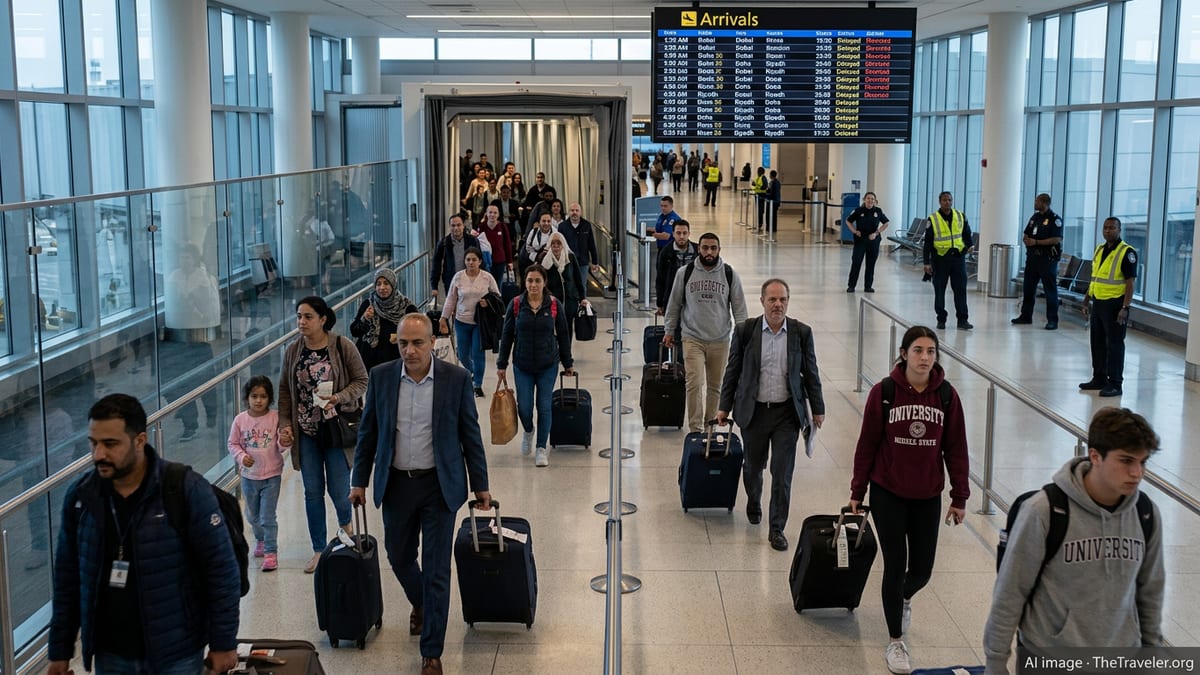
Charter Flights and Scramble for Seats Out of the Region
According to recent briefings from the State Department, tens of thousands of Americans have left the Middle East since the first U.S. and Israeli strikes on Iran in late February, with officials confirming that more than 36,000 have arrived back on U.S. soil. While many secured seats on still-operating commercial services, thousands more relied on government-organized charter flights and coordinated ground routes as regional airspace closures spread.
State Department task forces, operating around the clock in Washington and at embassies across the Gulf, have arranged charter departures from hubs in the United Arab Emirates, Saudi Arabia and Jordan, among others. These aircraft have been supplemented by onward connections arranged through European and U.S. carriers once evacuees reach airports with stable schedules and open airspace.
Officials say the picture is evolving quickly as airlines review security risks and reroute or cancel flights. At peak disruption, large swaths of airspace over Iran, Iraq and parts of the Gulf were closed, forcing carriers to cut services or add hours of detours. That turbulence in the flight network left thousands of travelers stranded in transit hubs from Dubai to Doha, waiting for news of replacement services or U.S.-facilitated charters.
The State Department has also made clear that it is waiving standard cost-recovery requirements for many of the emergency flights, an acknowledgment that Americans were told for days to make their own way out even as options disappeared. Officials now say the priority is to offer safe, predictable routes home rather than burdening travelers with unexpected government bills after a crisis they did not create.
Ground Routes, Crisis Intake Forms and Embassy Support
For travelers stuck in countries where airports were temporarily closed or commercial flights were suspended, the U.S. effort has relied heavily on ground movements to neighboring states. American citizens in Bahrain, Kuwait, Qatar, Oman and Saudi Arabia have been guided toward land routes and secondary airports where charter flights or remaining commercial options could still be secured.
Central to that effort is a regionwide crisis intake form, which the State Department has urged Americans to complete if they are seeking assistance. The form allows consular teams to map where citizens are located, assess their level of risk and contact them directly with information about specific flights, convoys or bus transfers. Officials say that in some cases, Americans have had only a few hours’ notice to assemble at safe meeting points before departing in escorted groups for departure airports.
Embassies and consulates from Tel Aviv and Jerusalem to Abu Dhabi and Doha have shifted into emergency mode, with staff working extended shifts to field calls, process travel documents and issue security alerts. The government’s 24-hour helplines in Washington are handling surging call volumes, from parents of students on study-abroad programs to dual nationals weighing whether to leave family members behind.
Despite those efforts, the State Department acknowledges that not every American requesting help has chosen to board a government-arranged flight when one became available. Officials say a significant share have declined offers, either because they found alternative commercial options, preferred to wait out the crisis in place, or were reluctant to leave local family members who do not hold U.S. passports.
Travel Chaos for Tourists, Students and Business Travelers
The sudden escalation of conflict has caught a diverse mix of travelers across the Middle East, from spring-break tourists in the United Arab Emirates and heritage travelers in Israel to oil and gas workers, consultants and students scattered across Gulf universities. Many reported days of uncertainty as airline apps refreshed with rolling cancellations, check-in counters closed with little warning and hotel stays unexpectedly stretched.
Tourism-dependent destinations such as Dubai, Abu Dhabi and coastal resorts in Oman saw thousands of visitors trying to rebook flights simultaneously once news of expanding airstrikes and airspace closures spread. Airport lounges and departure halls filled with passengers camping on the floor near power outlets, huddled over phones as they tried to reach airline call centers or confirm a spot on a U.S.-facilitated charter.
Study-abroad and exchange programs have been particularly disrupted, with some universities instructing students to leave immediately and promising to shift coursework online. In multiple cases, student groups were placed onto coordinated flights arranged through both private security firms and U.S. government channels, underscoring how education travel often relies on layered contingency plans in politically volatile regions.
Business travel has also seized up, with multinational companies activating their own evacuation and relocation protocols. Corporate security teams have been working with consular officials, airlines and private operators to relocate staff from high-risk locations to temporary offices in Europe or back to headquarters in the United States. For some firms, those moves come only months after travel had begun to normalize following previous regional crises.
Private Security Firms Fill Critical Gaps
Alongside the U.S. government’s efforts, private security and risk management firms have emerged as crucial players in getting Americans out of the region. Companies specializing in crisis response say they have collectively moved several thousand people, including U.S. citizens and other foreign nationals, using a patchwork of charter jets, commercial seats and cross-border ground convoys.
These firms typically work on retainer for corporations, universities or high-net-worth individuals, but in severe crises they sometimes coordinate with embassies and local authorities to fill gaps when official options are overwhelmed or slow to materialize. In the current Middle East conflict, that has meant everything from arranging last-minute seats on business jets leaving Dubai, to organizing overnight bus journeys from smaller Gulf states into major hubs with functioning airports.
Executives at one large U.S.-based security provider say demand spiked immediately after the first strikes on Iran, with calls coming from stranded tourists, medical professionals on assignment and families visiting relatives in the region. In several instances, the firm reported bundling together travelers from different clients and even different nationalities to maximize use of limited aircraft capacity.
Travelers relying on these services often pay a premium, but many describe the expense as the price of certainty in a rapidly deteriorating security environment. For Americans without such resources, the State Department emphasizes that its charter and ground options are designed to provide a baseline of accessible, safe passage out of danger zones, even as private operators offer additional layers of support for those who can afford them.
Lingering Risks for Americans Still in the Middle East
Despite the headline figure of nearly 36,000 Americans safely back home, U.S. officials caution that thousands more remain across the Middle East, some by choice and others because they have not yet found a safe window to depart. Ongoing missile and drone attacks, shifting front lines and sporadic protest activity continue to complicate movements within and between countries.
The State Department has maintained a rare, regionwide advisory urging U.S. citizens to leave many parts of the Middle East while commercial options still exist, and to avoid travel to conflict zones entirely. Americans who decide to stay are being encouraged to register their whereabouts, keep travel documents current, prepare in case of sudden airport closures and follow local security guidance closely.
For those planning future trips, travel experts now advise monitoring government advisories and flexible booking policies much more closely, especially for itineraries involving multiple regional connections. While some Gulf hubs remain open and relatively stable, the speed with which this conflict disrupted even the most well-served routes has become a stark case study in how quickly leisure or business travel can turn into an evacuation challenge.
As the war with Iran drags on, the U.S. government says it will continue to operate a mix of charter flights, ground movements and consular support designed to keep exit routes available. Officials stress, however, that conditions can change with little warning, and that Americans in the region should act sooner rather than later if they intend to join the tens of thousands who have already made it back to the United States.