

More news on this day
U.S. air travel demand is roaring into 2026, with air ticket sales and passenger volumes hitting new records that underline the resilience of travelers and the continued recovery of the aviation sector despite higher costs and lingering operational constraints.
Get the latest news straight to your inbox!
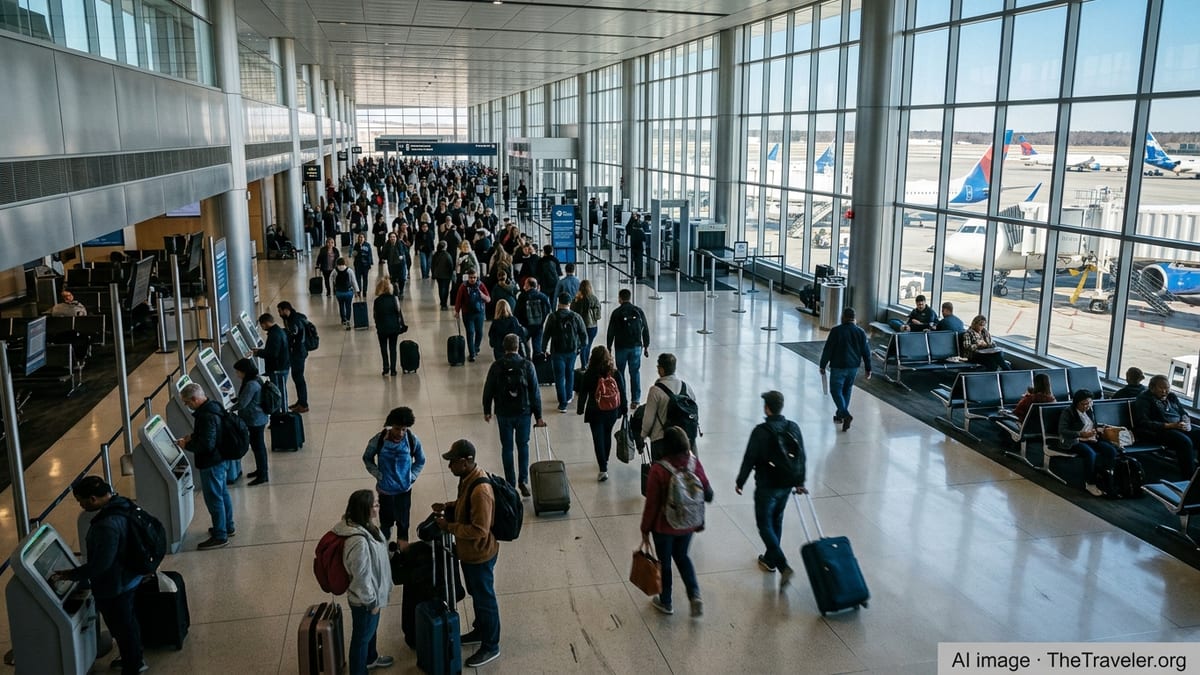
Record Ticket Sales Signal a Red-Hot Start to 2026
New data from Airlines Reporting Corp. and industry coverage show that U.S.-based travel agencies sold around 10 billion dollars in airline tickets in January 2026, marking the highest monthly total ever recorded since the organization began tracking comparable data. Reports indicate that this milestone was driven by roughly 28 million tickets issued, reflecting strong demand from both leisure and corporate travelers.
Trade and industry publications note that the January figure builds on a record 100.4 billion dollars in ticket sales through U.S. agencies in 2025, itself the strongest year on record. Analysts say the latest numbers suggest that high demand is no longer just a post-pandemic rebound, but an embedded structural trend supported by a healthy labor market, rising incomes and a steady return of business travel.
Coverage of early 2026 booking trends also indicates that air ticket sales are remaining above 2025 levels on a week-by-week basis, even as consumers face elevated airfares and persistent inflation in other parts of the economy. Observers describe the pattern as a clear signal that Americans continue to prioritize travel spending, especially on experiences and long-haul trips.
Passenger Volumes and TSA Data Underscore a Historic Travel Cycle
The surge in ticket sales is mirrored by traffic at U.S. airports. Transportation Security Administration data compiled by travel and business outlets show that 2025 already set a new record, with more than 904 million travelers screened at U.S. checkpoints and multiple single-day highs above 3.1 million passengers during the summer and Thanksgiving peaks.
Industry forecasters point out that early 2026 checkpoint volumes are tracking ahead of last year’s pace, reinforcing expectations that the United States is entering another record year for passenger traffic. Trade association talking points and federal forecasts project that days with more than 3 million travelers will become commonplace before the end of the decade, effectively turning what was once a rare holiday surge into a routine feature of the travel calendar.
At the airport level, this unprecedented throughput is visible in both major hubs and secondary markets. Reporting highlights that large airports such as Atlanta, Dallas, Denver, Chicago and Los Angeles saw historic traffic in 2025, while smaller facilities from Northwest Arkansas to Fort Wayne and Indianapolis are also disclosing new annual or monthly records tied to population growth and expanding route networks.
Global Data Confirms North America’s Strong Demand
Global passenger statistics published by the International Air Transport Association show that worldwide air traffic growth remained solid through 2024 and 2025, with overall passenger demand expanding by more than 5 percent last year. Within that context, North American carriers continue to account for more than one-fifth of global passenger traffic and remain among the most profitable in the world.
In a March 2026 briefing on January performance, the association reported that global air passenger demand grew nearly 4 percent year over year at the start of the year, with North America contributing steady, if slower, growth compared with faster-expanding regions such as Asia Pacific. The figures support the view that the U.S. market is in a mature but still expanding phase, with revenue underpinned by high load factors and a strong premium cabin segment rather than rapid gains in basic passenger counts alone.
Long-term projections released in February 2026 indicate that North American air travel is expected to continue growing at around 2.5 to 3 percent annually over the next two decades, supported by demographic trends, stable economic growth and deep international connectivity. Although that pace trails some emerging markets, it is considered robust for a region that already operates one of the world’s densest and most complex aviation networks.
Capacity Constraints, Rising Costs and Infrastructure Strains
Behind the headline growth figures, the industry is grappling with a series of constraints. IATA’s latest market performance updates highlight that aircraft order backlogs worldwide remain historically high, with more than 17,000 jets in the pipeline. That backlog, paired with lingering supply chain and labor challenges, is limiting how quickly airlines can add seats to meet demand in North America and beyond.
At the same time, jet fuel prices have climbed since late February 2026, according to business and energy reporting that links the increase to geopolitical tensions and disruptions in key oil-producing regions. These higher input costs are pushing operating expenses upward, even as airlines try to keep fares competitive and stimulate more travel. Publicly available corporate updates from major U.S. carriers suggest that strong ticket sales and robust forward bookings are counterbalancing much of this cost pressure.
Infrastructure is another pressure point. Federal forecasts and airport planning documents show that many U.S. airports are investing heavily in terminal expansions, new security lanes, baggage systems and air traffic control upgrades to manage sustained growth. Projects at hubs such as Charlotte and regional airports like Northwest Arkansas illustrate a broader push to expand capacity, but many of these improvements will take years to complete, leaving airports to manage record crowds within legacy facilities during peak seasons.
Resilient Traveler Behavior and Outlook for the Rest of 2026
Despite higher costs and busier terminals, consumer behavior in early 2026 points to resilient enthusiasm for air travel. Analyses of booking data from major online travel platforms, highlighted in recent travel reports, show that travelers are adjusting their strategies rather than scaling back trips. More passengers are choosing shoulder-season departures, experimenting with midweek or off-peak travel dates and taking advantage of flexible work arrangements to avoid the most congested days.
Domestic leisure demand remains the backbone of the market, but industry coverage notes a clear rebound in international and long-haul travel from the United States, especially to Europe and parts of Asia where capacity has been restored. Business travel, while changed by remote work, continues to rebuild as conferences, trade fairs and client visits return to in-person formats.
Looking ahead, forecasts from aviation agencies and industry associations suggest that 2026 is likely to surpass 2025 as the busiest year in U.S. aviation history, provided that economic conditions remain broadly supportive and geopolitical risks do not significantly disrupt fuel supplies or route networks. With ticket sales already at record levels in January and global demand still climbing, the U.S. air travel market appears firmly on a growth trajectory, setting the stage for another year of packed flights and full departure boards.