

More news on this day
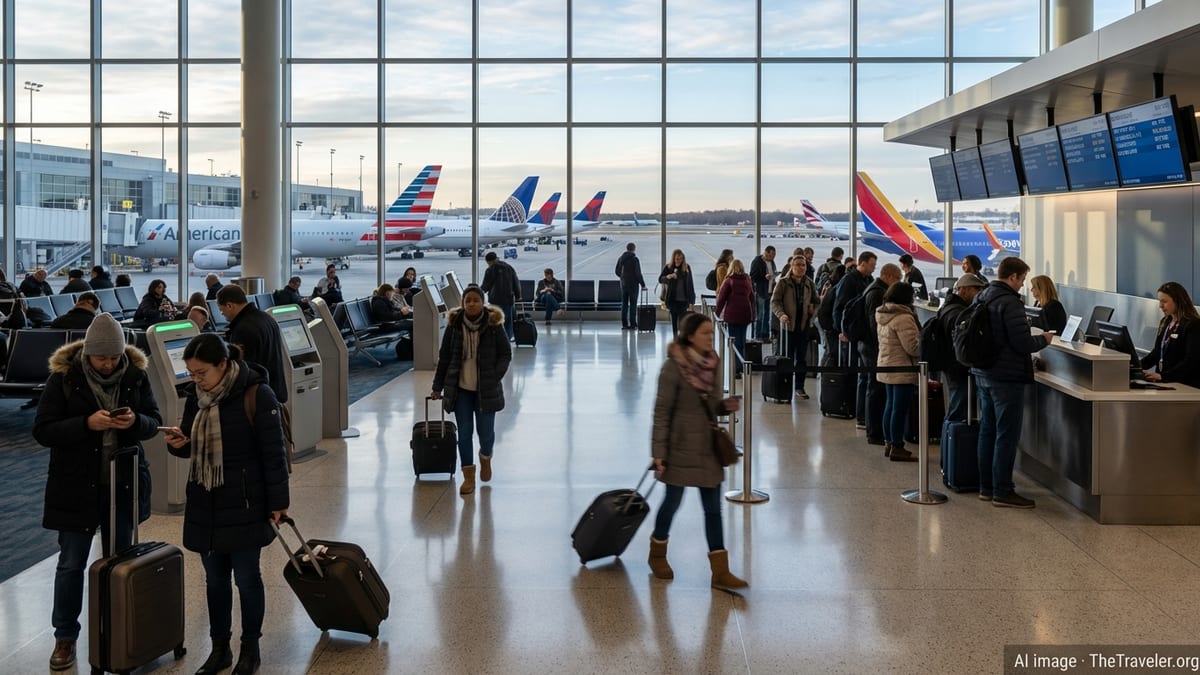
U.S. airline ticket sales surged in January 2026, signaling a robust start to the year for carriers and travel agencies as pent-up demand, easing economic concerns and a strong holiday finish combined to push more Americans back into the air.
Momentum Builds After a Record 2025
The January surge comes on the heels of a milestone year for the U.S. travel trade. Airlines Reporting Corp., which settles tickets sold by nearly 10,000 U.S.-based travel agency locations, reported that agency airline ticket sales reached $100.4 billion in 2025, the highest annual total ever recorded and a 1 percent increase on 2024. That record set the stage for a strong handoff into 2026, with both leisure and corporate channels entering the new year on firmer footing.
Passenger volumes also closed 2025 on an upswing. ARC data shows 292.9 million passenger trips issued through U.S. agencies last year, up 3 percent from 2024, with international itineraries growing faster than domestic. December alone brought $7.2 billion in ticket sales and 20.4 million passenger trips, each up 7 percent year over year, underscoring how much momentum had built by the time airlines and agencies entered the January booking window.
Industry analysts say the combination of a record revenue base and positive volume trends helped prime the market for a brisk start to 2026. With many consumers delaying big-ticket trips earlier in 2025 amid inflation and economic jitters, travel retailers report that a portion of that demand has re-emerged in the form of early-year bookings for spring and summer.
“What we saw at the end of 2025 was a clear acceleration in both sales and passenger trips through the agency channel, particularly for international travel,” one senior executive at a major U.S. airline said in an interview. “January is building on that strength, not starting from scratch.”
January Booking Surge Driven by Leisure and Long-Haul Travel
Early agency and airline reports from January point to broad-based gains across leisure segments, from domestic sun-and-ski trips to long-haul vacations to Europe, Asia and Latin America. Tour operators and large leisure-focused agencies describe a wave of early planning by travelers who want to lock in airfares and seats for school holidays, key events and milestone trips later in 2026.
International demand appears to be a standout. In 2025, international passenger trips sold through U.S. agencies grew 4 percent, outpacing the 2 percent growth in domestic trips. That pattern, executives say, has extended into January 2026, as more Americans look beyond U.S. borders and take advantage of expanded airline schedules and competitive transatlantic and transpacific fares.
Travel counselors report especially strong bookings to Western Europe, Mexico, the Caribbean and select Asia Pacific gateways, building on global figures from the International Air Transport Association that showed worldwide passenger demand up more than 5 percent in 2025, with international travel growing faster than domestic. Major U.S. carriers are leaning into that trend with additional capacity on popular routes and a focus on high-yield cabins.
Domestic leisure demand, while slower to grow than international in the back half of 2025, has shown renewed resilience in early 2026. Lower average economy fares on some routes and targeted promotions for off-peak departures in January and February have stimulated bookings among cost-conscious travelers, even as household budgets remain under pressure from elevated living costs.
Corporate Travel Recovery Adds Tailwind
The January spike in ticket sales is not solely a leisure story. Corporate travel demand, which lagged the leisure rebound for much of the post-pandemic period, is showing clearer signs of recovery as companies finalize 2026 travel budgets and resume more in-person meetings, conferences and client visits.
ARC’s 2025 data already hinted at this shift, showing modest but steady gains through corporate-focused agencies alongside robust online travel agency activity. In January, several large U.S. carriers have reported stronger forward corporate bookings than they anticipated heading into the year, particularly in finance, pharmaceuticals, technology and professional services.
Travel management companies say booking patterns are beginning to normalize. Instead of concentrating trips into a few peak months, corporate clients are spreading travel more evenly across the calendar, leading to a healthier and more predictable demand curve for airlines. The return of large-scale conventions and trade shows in cities such as Las Vegas, Orlando and Chicago is adding volume, especially on domestic trunk routes and short-haul international flights.
Even so, executives caution that the corporate segment has not yet returned to pre-pandemic levels in either frequency or spend per traveler. Remote and hybrid work arrangements, combined with stricter internal policies on non-essential trips, are likely to keep a lid on total business travel. For airlines, that reality underscores the importance of the leisure and blended “bleisure” traveler, who may combine personal and professional travel in a single itinerary.
Capacity Constraints Keep Fares Supported
While demand is surging, the supply side of the equation remains constrained. IATA’s full-year 2025 figures show that global capacity, measured in available seat kilometers, rose 5.2 percent, just behind the 5.3 percent growth in passenger demand. Load factors reached a record 83.6 percent globally, indicating that airlines are filling a larger share of seats even as they add flights.
North American carriers, including the largest U.S. airlines, were among the slowest growing regions in capacity terms last year. Aircraft and engine delivery delays, maintenance capacity bottlenecks and labor shortages limited how quickly carriers could restore or expand schedules, especially on domestic routes where smaller regional jets have been in short supply.
These constraints are likely to persist into at least the first half of 2026, which means airlines are entering the year with historically high load factors and limited slack in the system. With demand rising faster than capacity in key markets, analysts expect average ticket prices to remain supported, even if headline fares fluctuate from month to month due to competition and seasonal factors.
For consumers, that dynamic translates into fewer last-minute bargains and a greater incentive to book early, particularly for peak periods such as spring break, summer holidays and major global events. For carriers and agencies, it helps sustain revenue growth in January and beyond, even if per-passenger yields moderate slightly as lower-fare inventory is introduced to stimulate shoulder-period travel.
Shifting Mix of Domestic and International Bookings
One of the most notable trends carrying into January 2026 is the changing balance between domestic and international travel in U.S. agency sales. During the early stages of the post-pandemic recovery, domestic flights dominated as travelers opted for shorter, simpler itineraries. Over the past year, that pattern has shifted steadily toward cross-border and long-haul trips.
ARC’s 2025 figures show domestic trips booked through U.S. agencies at 183.2 million, up 2 percent, compared with nearly 110 million international trips, up 4 percent. International bookings now account for a larger share of total agency-issued passenger trips than they did at the beginning of the decade, buoyed by reopened borders, expanded route networks and a desire among travelers to “make up for lost time” with more ambitious itineraries.
January booking reports suggest that this rebalancing is continuing. Large network carriers say they are seeing strong advance demand for transatlantic and transpacific services deep into the northern summer, as well as for flights to secondary European and Asian cities served through alliances and joint ventures. Smaller U.S. airlines with a primarily domestic footprint, by contrast, are leaning into competitive pricing and schedule reliability as they compete for a more price-sensitive customer base.
For U.S. airports, the shift has operational implications. Gate and runway capacity at major international hubs remains tight, and many have limited ability to add more long-haul movements in the near term. That is encouraging some carriers to push more connecting traffic through secondary hubs and to build out service from mid-sized cities where demand is rising but infrastructure is less constrained.
Digital Channels and NDC Reshape How Tickets Are Sold
The January surge in ticket sales is playing out across an industry that is changing the way it retails. Digital channels, from online travel agencies to airline websites and mobile apps, continue to capture a large share of volume, but traditional brick-and-mortar agencies and corporate travel management firms remain critical, particularly for complex and high-value itineraries.
Within the agency ecosystem, the adoption of modern retailing standards is accelerating. In December 2025, ARC reported that New Distribution Capability transactions accounted for more than one fifth of all tickets settled through its system, up from roughly one fifth a year earlier. That share is expected to climb further in 2026 as more airlines deploy dynamic offers, bundled ancillaries and richer content through both direct and indirect channels.
For January, agents say the ability to access airline-specific bundles and personalized offers is helping to close sales with travelers who are increasingly focused on value and flexibility. Features such as seat selection, baggage options and changeability, once strictly add-ons, are now central components of the shopping conversation and can influence a traveler’s choice of carrier or itinerary.
At the same time, the rapid evolution of retailing technology is creating pain points. Some agencies report challenges integrating multiple airline content sources into a single workflow, and smaller firms in particular are grappling with training and system investment needs. As ticket sales grow, those operational pressures become more acute, even as agencies benefit from the higher revenue flowing through their businesses.
Economic Crosswinds and Consumer Behavior
The strength in January ticket sales comes against a mixed economic backdrop in the United States. While inflation has eased from its peak, prices for many goods and services remain elevated, and interest rates are higher than in the pre-pandemic years. Consumer confidence wobbled at several points in 2025, contributing to a mid-year soft patch in domestic air demand before a stronger finish.
Yet surveys and booking data suggest that travel remains a priority for many households. Travelers are adjusting how they spend rather than whether they travel, shifting budgets from discretionary retail purchases toward experiences, including vacations and family visits. This substitution effect has been a key driver of resilient demand heading into 2026.
In practice, that means more careful itinerary planning and a sharper focus on price-to-value. Travelers are willing to trade non-essential extras or choose mid-range accommodations if it allows them to purchase the flights they want. Flexible work arrangements are also enabling some travelers to depart midweek or stay longer at their destinations, smoothing demand patterns and, in some cases, enabling them to capture lower fares.
Airlines are responding with fare families and targeted promotions that segment travelers by flexibility needs and willingness to pay. The result is a complex pricing environment that can appear opaque to consumers but allows carriers to maximize revenue per seat while still offering entry-level prices that keep planes full.
Outlook: Can the Surge Be Sustained Through 2026?
As January draws to a close, the central question for the U.S. airline industry is whether this surge in ticket sales can be sustained across the rest of 2026. Early signs are promising. Forward booking curves for the spring and summer peak periods are generally ahead of last year, particularly on international routes, and airlines are signaling cautious optimism in recent investor communications.
Much will depend on the broader economic and geopolitical environment. A stable labor market, continued progress on inflation and an absence of major shocks would support further growth in air travel demand. Conversely, a sharper economic slowdown or sustained volatility in fuel prices could pressure both consumer demand and airline profitability, even if ticket sales volumes remain relatively high.
Operationally, the industry still faces capacity and supply chain constraints that limit how quickly carriers can respond to surging demand. Fleet renewal programs, especially the introduction of more fuel-efficient narrowbody and widebody aircraft, are moving forward but remain vulnerable to production delays. Until those bottlenecks ease, airlines are likely to continue prioritizing high-yield routes and carefully managing seat inventory.
For now, though, January’s strong performance provides a welcome signal for U.S. carriers, travel agencies and the broader tourism economy. After a record-setting 2025 in agency ticket sales and a powerful year-end finish, the early 2026 booking surge suggests that Americans’ appetite for travel is far from sated, setting the stage for another busy year in the skies.