

More news on this day
U.S. airlines are gearing up for what is expected to be a record-breaking spring travel season, with 171 million passengers forecast to fly between March 1 and April 30, a fresh high that is testing airport infrastructure, staffing and government agencies just as political tensions in Washington are again threatening to disrupt operations.
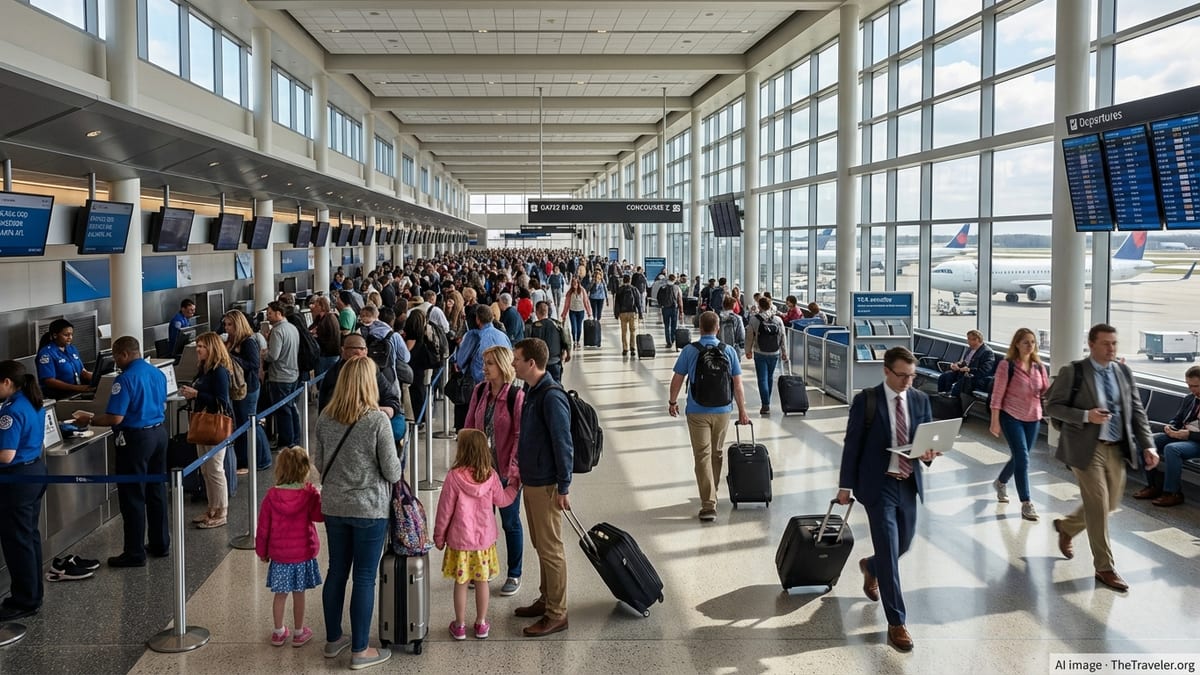
Record Demand Sets the Tone for Spring 2026
The latest forecast from industry trade group Airlines for America projects that U.S. carriers will handle about 2.8 million passengers per day this spring, up roughly 4 percent from last year’s already busy season. To meet that demand, airlines plan to operate around 26,000 daily flights and offer approximately 3.5 million seats, increasing capacity by about 2 percent compared with 2025.
The spring travel window from March through April has become a bellwether for the broader air travel rebound, driven by pent up demand for leisure trips, a steady return of business travel and a growing preference for shorter breaks spread throughout the year. Despite signs of economic uncertainty and higher borrowing costs, ticket sales have remained resilient, with recent data showing that first quarter air ticket revenue from U.S. travel agencies in 2025 edged above 2024 levels and passenger trips continued to rise.
Federal statistics underline how close the system is running to its limits. Government data show that U.S. passenger volumes have hovered just below all time highs reached in 2024, even as seasonal dips appear in some months. For airlines, the challenge this spring will be balancing robust demand with operational reliability and cost pressures on everything from labor to fuel.
How Airlines and Airports Are Ramping Up
Carriers are responding to the spring surge with a mix of added capacity, larger aircraft and schedule fine tuning on popular routes. Major airlines have spent the past two years aggressively hiring pilots, flight attendants, mechanics and airport staff to avoid the staffing shortfalls that contributed to widespread disruptions earlier in the decade. Many are also leaning more heavily on technology, using dynamic scheduling tools to match aircraft size to demand and rerouting spare jets to cover weather or maintenance related delays.
Airports, meanwhile, are racing to keep pace. Facilities such as San Diego International, which broke its annual passenger record in 2025 and opened a new Terminal 1 with 19 gates, are expanding gate capacity, gate power and security lanes to handle more peak hour departures. Across the country, airports have been adding new routes, renovating concourses and introducing more self service bag drops and biometric boarding gates to keep crowds moving.
Operational performance shows some payoff. Transportation Department data for 2025 indicate that airlines managed to increase total flights while keeping cancellation rates low, with several low cost carriers reporting some of the smallest shares of scrubbed flights. Baggage handling metrics have also improved modestly, as carriers invest in tracking technology and revamped baggage systems designed to cut down on mishandled bags during peak periods.
Government Strains and Security Bottlenecks
The record forecast comes at a politically delicate moment. Airlines have been pressing federal officials to ensure that security screening, customs and trusted traveler programs keep pace with demand, particularly as a partial government shutdown once again threatens to slow key services. Industry executives warn that staffing shortfalls among Transportation Security Administration officers and customs agents could quickly ripple into longer lines and missed flights if not addressed before the busiest spring break weeks.
Airlines for America has renewed its call for the Department of Homeland Security to restore full operations for programs such as Global Entry, which provide expedited clearance for pre vetted travelers. Any slowdown in processing new applications or renewing memberships risks pushing more frequent fliers back into regular screening lanes, exacerbating congestion at hub airports already stretched by crowds.
Regulators are also under pressure to maintain oversight of safety and consumer protection as traffic grows. The Department of Transportation continues to track on time performance, cancellations and complaints closely, publishing monthly reports that highlight carriers with the best and worst records. With more passengers in the system, any spike in delays or customer service issues during the spring rush is likely to draw swift scrutiny from lawmakers and regulators.
What Travelers Should Expect at the Airport
For travelers, the record numbers are likely to be felt most acutely in crowded terminals, tighter overhead bin space and longer lines at security and boarding. Airlines and airports are encouraging passengers to arrive earlier than they might have in the recent past, especially for morning departures when business travelers and vacationers converge. Two hours remains the baseline guidance for domestic flights, but many hubs are advising three hours for international departures and for families traveling during peak spring break weekends.
Technology has become the front line tool for navigating the crowds. Most major airlines now push real time gate changes, boarding alerts and baggage tracking through their apps, and some airports have introduced virtual queue systems that let passengers reserve a window for security screening. Travelers who check in early, confirm seat assignments and monitor their flights on mobile devices are better positioned to react quickly to schedule shifts or weather disruptions.
Pricing remains volatile. While average ticket prices in some recent months have softened compared with the highs of 2022 and 2023, strong demand on peak spring routes to beach destinations, national parks and major cities means that last minute fares can still spike. Industry analysts suggest that travelers locking in tickets several weeks in advance and remaining flexible on travel days are most likely to secure manageable prices and better schedule options.
Strategies to Minimize Disruption This Spring
Travel planners say that a few strategic choices can make a significant difference during a record spring season. First, choosing nonstop flights where possible reduces the risk that a single delay cascades into missed connections. Morning departures are still statistically less prone to long delays than afternoon or evening flights, because they are less exposed to knock on effects from earlier disruptions across the network.
Second, packing lighter and relying on carry on luggage can help travelers avoid the busiest check in and baggage claim areas. With overhead bins at a premium, however, those boarding later in the process may still be asked to gate check bags, so clearly labeled luggage and essential items kept in a small personal bag remain important safeguards. Travelers with tight schedules may want to consider paying for early boarding or checking a bag in advance to minimize last minute stress at the gate.
Finally, experts recommend building in buffer time on both ends of a trip. With air traffic running near record highs, even a relatively modest storm system or air traffic control constraint can trigger delays across multiple regions. Allowing extra time between flight arrival and important events, and avoiding the last flight of the day on critical legs, can provide a margin of safety in a system that will once again be operating close to full capacity this spring.