

More news on this day
A protracted funding standoff over the Department of Homeland Security is increasingly disrupting U.S. airport operations, with unpaid security staff, improvised staffing measures and mounting delays affecting thousands of travelers across the country.
Get the latest news straight to your inbox!
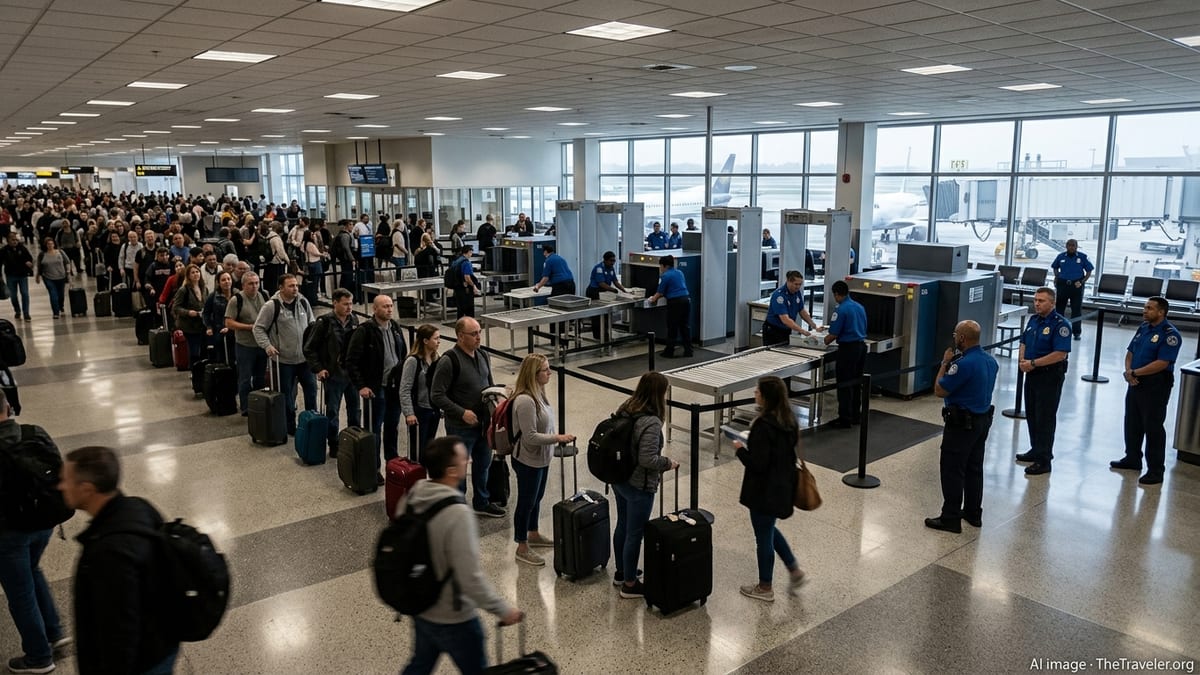
DHS Shutdown Enters Weeks, Leaving Critical Staff Unpaid
Publicly available information shows that the Department of Homeland Security has been operating under a partial shutdown since February 14, 2026, after congressional negotiators failed to agree on new appropriations. The lapse directly affects agencies that underpin day to day airport operations, including the Transportation Security Administration and elements of the aviation security apparatus.
Under contingency plans, the vast majority of DHS employees have been classified as essential and ordered to remain on duty without pay. Reports indicate that this includes tens of thousands of TSA officers responsible for screening passengers and baggage at more than 400 airports nationwide. While terminals remain open and flights continue to operate, the prolonged uncertainty around pay has begun to ripple through staffing levels at some of the nation’s busiest hubs.
Coverage of the shutdown’s impact notes that TSA screeners, Coast Guard personnel and cyber security staff are working through multiple missed pay periods, with some workers turning to short term loans and relief efforts. Travel industry observers warn that as the impasse stretches on, absenteeism among front line security staff is likely to increase, amplifying visible strain at airport checkpoints.
Long Security Lines and Localized Disruptions at Major Hubs
The most immediate impact for travelers has been at security checkpoints, where wait times have climbed sharply at certain high volume airports. Published coverage from national outlets and local media describes multi hour lines at hubs such as George Bush Intercontinental Airport in Houston, where on some days only a fraction of security lanes have been staffed for extended periods.
Reports from travelers and aviation analysts point to a combination of sick outs, attrition and difficulty backfilling overtime shifts among unpaid TSA officers. Even modest increases in call outs can quickly cascade into long queues during the morning and evening peaks, when passenger volumes are highest. At several airports, security lines have at times stretched into ticketing halls, forcing airlines to rebook passengers who were unable to clear screening in time for departure.
Not all airports are affected equally. Some medium sized facilities report relatively normal operations, with airport authorities and local TSA leadership redistributing staff and adjusting lane configurations to match demand. However, the patchwork nature of the response means that travelers face highly uneven experiences across the network, with routine waits at one airport and severe delays at another on the same day.
ICE Officers Brought In as Stopgap, With Limited Effect
In an attempt to ease pressure on security checkpoints, the administration has moved to deploy Immigration and Customs Enforcement personnel to a number of large airports. According to published news accounts, ICE officers began appearing at facilities such as Houston’s Bush Intercontinental and other major hubs this week, working alongside TSA at security areas and in parts of the terminal.
Available reporting indicates that the measure has had limited impact in reducing wait times. ICE agents are not trained passenger screeners, and their presence has primarily allowed TSA to reassign a small number of experienced officers to the most congested lanes rather than fundamentally increasing screening capacity. Travelers at affected airports continue to report waits of several hours at peak times, despite the added personnel.
Aviation security specialists note that rapid redeployments of law enforcement staff can help with crowd control and secondary checks but cannot easily substitute for specialized screening skills. Equipment operation, image interpretation and adherence to aviation security protocols require dedicated training that cannot be replicated in a compressed timeframe, particularly under the pressures of a high traffic terminal.
Airlines and Airports Warn of Mounting Operational Risks
Major U.S. airlines and airport operators have become increasingly vocal about the risks posed by an extended Homeland Security funding lapse. According to industry statements summarized in business and aviation media, carrier executives have urged lawmakers to restore stable funding for TSA and related functions, warning that inconsistent screening capacity threatens both schedules and customer confidence at a time of strong travel demand.
Some airlines have already begun adjusting operations to account for security bottlenecks, including recommending earlier arrival times, adding buffer to turnaround schedules and selectively retiming flights out of the most congested airports. Airport authorities, in turn, are working to expand communication with passengers via social media, terminal signage and announcements to help travelers anticipate longer queues and prepare accordingly.
Travel advocacy groups caution that the strain on security operations comes on top of existing challenges in the national airspace system, including weather disruptions, crew availability and infrastructure constraints. When security delays are layered onto these factors, the result can be rolling knock on effects that spread through the network over the course of a day, even if only a handful of major hubs experience acute disruptions at any given time.
Travelers Adjust Plans Amid Uncertainty Over Negotiations
With no clear date for a budget resolution, travelers are increasingly building extra time and flexibility into their plans. Consumer travel outlets report that many passengers are arriving at airports far earlier than they would have before the shutdown, in some cases three hours or more ahead of domestic departures, to guard against unexpectedly long lines at security.
Data from booking platforms and airline commentary suggest a modest uptick in itinerary changes, as some travelers opt for flights at off peak hours or choose connections through airports that have so far reported fewer disruptions. Others are reconsidering nonessential trips altogether, preferring to postpone travel rather than risk missed flights or extended time in crowded terminals.
Policy analysts note that the current standoff follows earlier shutdown related disruptions to air travel in recent years, reinforcing concerns about the vulnerability of essential transportation services to political deadlock. As negotiations over Homeland Security funding continue, the daily experience of moving through U.S. airports is emerging as one of the most visible barometers of the stalemate, with millions of passengers directly exposed to its consequences.