

More news on this day
Major U.S. airports are urging passengers to arrive significantly earlier than usual as a combination of Transportation Security Administration staffing shortages, record spring travel demand and a prolonged Department of Homeland Security funding standoff fuels hours-long security lines in multiple cities.
Get the latest news straight to your inbox!
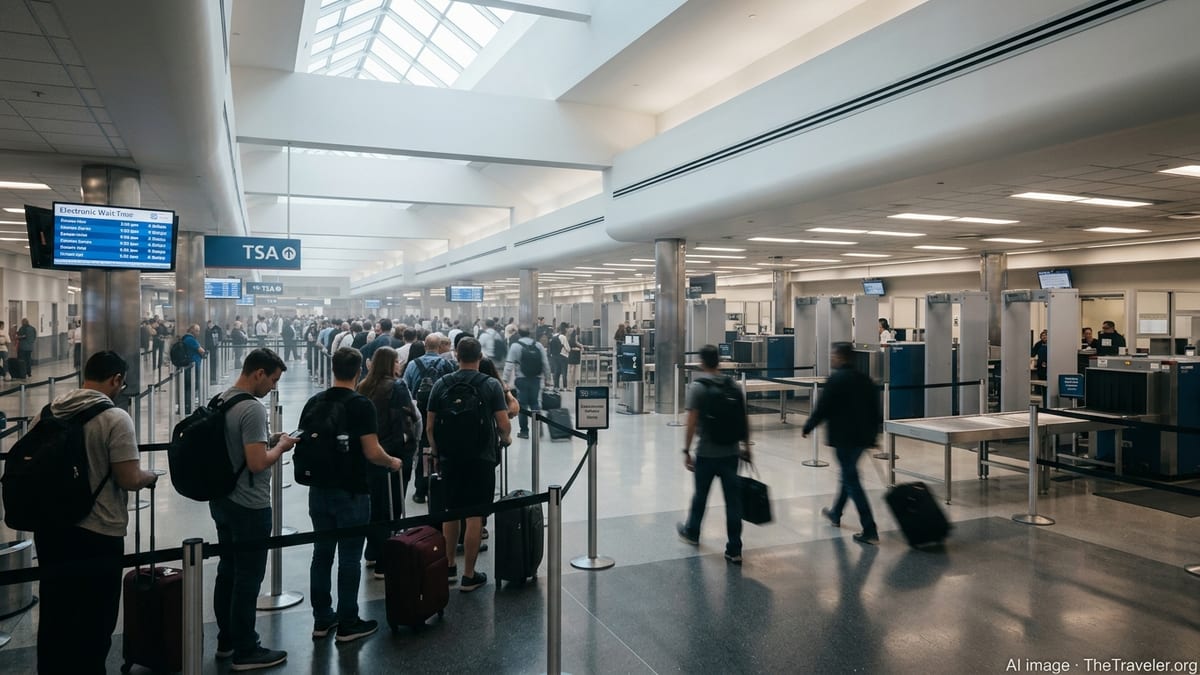
Hours-Long Waits Turn Early Arrivals Into a Necessity
Security wait times topping three hours have been reported at several busy airports in recent weeks, disrupting spring break travel and forcing many passengers to miss flights despite arriving well ahead of departure. Airports in Houston, New Orleans and Atlanta are among those acknowledging longer-than-normal queues as passenger volumes swell.
At Houston’s William P. Hobby Airport, public updates in early March described standard security wait times stretching to roughly three and a half hours during peak periods, with lines backing up through the terminal. In New Orleans, social media posts and local coverage documented security queues snaking out of the terminal and into parking structures as spring break crowds converged.
While not every airport is seeing extreme delays every day, widely shared images and first-hand accounts show that sudden spikes can occur with little warning. Wait times can swing from under 20 minutes to more than an hour within the same morning, leaving travelers who follow traditional guidance of arriving two hours early for domestic flights increasingly vulnerable to last-minute bottlenecks.
Travel forums and local reports indicate that some passengers who arrived three hours before departure at heavily impacted airports still struggled to clear checkpoints in time, particularly during early-morning departure banks when most flights leave in short succession and security staffing is stretched thin.
Airports Raise Official Guidance for Check-In and Security
In response, airport operators are publishing more conservative recommendations for when travelers should reach the terminal. Houston Airports, which oversees Hobby and George Bush Intercontinental, has advised passengers to arrive three hours early for domestic departures and four hours early for international flights while staffing remains constrained and spring break demand persists.
Louis Armstrong New Orleans International Airport has similarly urged travelers to plan to be at the airport at least three hours before scheduled departure, warning that Transportation Security Administration staffing shortages are leading to longer-than-average lines at checkpoints. Local and national coverage shows that at some points, travelers in New Orleans have been asked to allow four to five hours before departure to account for unpredictable queues.
Atlanta’s Hartsfield-Jackson, the world’s busiest passenger airport, has also promoted earlier arrivals through public messaging and media briefings. While not all checkpoints have experienced the same level of congestion as in Houston and New Orleans, guidance circulating among airlines and local travel advisories in Atlanta emphasizes that passengers should build in more time than usual, especially during early-morning and late-afternoon peaks.
Across the country, airlines and airport communications teams are echoing updated recommendations, advising travelers to treat the longer guidance as a minimum rather than a worst-case scenario. The message is consistent: arrive earlier than you think you need to, particularly if you are checking bags, traveling with children or relying on standard screening instead of expedited security lanes.
Government Shutdown Deepens TSA Staffing Pressures
The operational strain comes against the backdrop of an ongoing Department of Homeland Security shutdown that began in mid-February, leaving many TSA officers working without pay or with heightened uncertainty about future compensation. Public statements, congressional testimony and recent analyses indicate that attrition at TSA has accelerated compared with prior years, with more officers leaving the agency as the funding impasse drags on.
Reports from union representatives and travel industry outlets describe increased sick calls and difficulty filling shifts at some airports, contributing to intermittent checkpoint closures and reduced lane capacity. In cities such as Houston and New Orleans, coverage indicates that fewer open lanes have compounded the impact of surging passenger numbers, concentrating travelers into long, slow-moving lines.
Federal updates suggest that national deployment teams have been dispatched to certain high-traffic airports to provide temporary relief, but these reinforcements have not fully offset the impact of local shortages. As a result, some airports continue to warn that screening operations may fluctuate from day to day, and even hour to hour, as staffing levels, travel demand and operational constraints intersect.
Industry observers note that the shutdown has landed during one of the busiest stretches of the travel calendar, with spring break demand building into the Easter and early summer seasons. Without a resolution to the funding dispute, many analysts expect that TSA-related disruptions could reappear or intensify around upcoming peak travel periods.
Record Demand Meets Limited Capacity at Checkpoints
Separate from the shutdown, U.S. air travel demand has rebounded to or surpassed pre-pandemic levels, according to transportation statistics and airline traffic reports. Domestic carriers are operating fuller schedules to leisure destinations, and major hubs are handling strong connecting traffic to international markets as travelers take advantage of a wider range of routes.
This surge feeds directly into TSA checkpoints, where each incremental increase in passenger volume can significantly extend processing times if staffing does not rise in tandem. Data published by federal transportation agencies shows that passenger volumes during recent spring periods are among the highest on record, even as airports across the country manage terminal construction, runway work and other infrastructure projects.
Many facilities have made long-term investments in upgraded security lanes and new screening technologies designed to speed processing, but those gains can be diluted when officer numbers are limited. Publicly available TSA wait-time dashboards and airline advisories show that even airports with newer equipment can experience sharp spikes when multiple wide-body departures, large conferences or regional events funnel thousands of travelers through checkpoints within short windows.
Analysts point out that the recent disruptions are not evenly distributed. Some medium-size airports and off-peak flights remain relatively smooth, while others experience severe congestion tied to specific times of day. This patchwork has made it harder for travelers to rely on historical experience, pushing more of them to err on the side of caution by arriving earlier than they did in previous years.
What Travelers Can Expect in the Months Ahead
Air travel experts and consumer advocates generally anticipate that calls for earlier arrivals will remain in place at least through the end of the spring break season, and possibly into the busy summer months, unless there is a clear improvement in TSA staffing and a resolution to DHS funding. Current guidance at some affected airports is framed as temporary but open-ended, with no firm date attached for a return to pre-disruption recommendations.
Passengers can expect airports to continue updating wait-time estimates through official apps, terminal signage and social media channels, but those figures may still lag behind real-time conditions when lines grow quickly. Travel commentary suggests that travelers with early departures, tight connections, oversized baggage or special assistance needs are among those most exposed to the effects of sudden surges.
Given the ongoing uncertainty, many airlines are encouraging customers to factor in potential security delays before booking tight itineraries, especially when connecting to international flights. Some carriers have broadened day-of-travel flexibility or recommended that travelers purchase earlier departure times to reduce stress around congested periods.
For now, the combination of a strained security workforce and near-record passenger volumes means the traditional two-hour rule of thumb for domestic flights is under pressure at multiple major U.S. gateways. Until staffing stabilizes and demand moderates, travelers are being told to treat extra time at the airport as an essential buffer rather than an optional precaution.