

More news on this day
The United States government has quietly signed off on a controversial Southwest Airlines trial that brings professional cleaners on board to focus only on premium extra-legroom seats between flights, triggering a fresh wave of criticism over what advocates say is a stark new line between higher-paying and economy travelers.
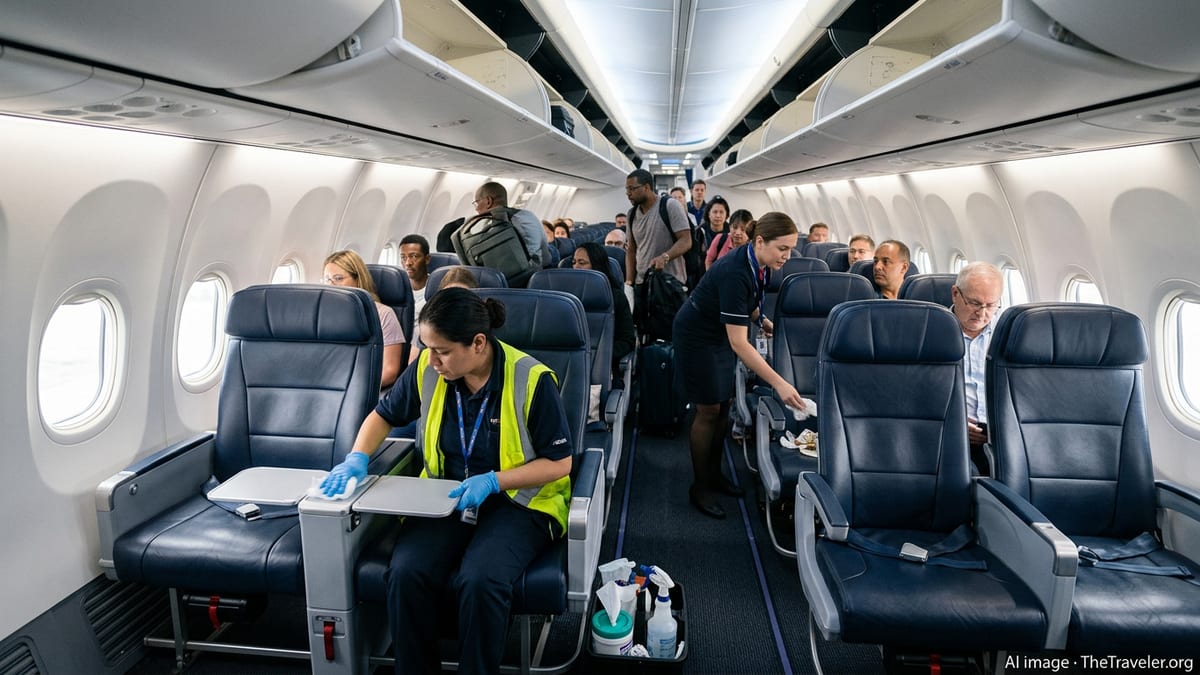
A New Test in the Skies
According to industry briefings and airline memos shared with regulators, Southwest is experimenting with a turnaround procedure in which contracted cleaning crews board during short ground stops to service only the front rows and extra-legroom seats designated as premium, while the rest of the cabin continues to receive a quicker, lighter tidying by flight attendants. U.S. transportation officials, who oversee airline health, safety, and consumer protection, have allowed the trial to proceed as a limited operational test.
The program is being rolled out on select routes and time blocks, giving Southwest and federal observers a chance to compare customer feedback, turnaround times, and cleaning costs across aircraft where the trial is in effect and those following standard procedures. Officials say the goal is to evaluate whether targeted cleaning in high-yield sections can improve customer satisfaction among premium flyers without significantly degrading the experience for the rest of the cabin.
Behind the scenes, regulators have framed the effort as part of a wider attempt to modernize airline operations after years of pandemic-era sanitation protocols and ongoing staffing shortages. By concentrating professional cleaning where customers pay the highest fares, they argue, carriers could unlock new revenue while still meeting basic cleanliness standards elsewhere on board.
‘Titanic Class’ and Unequal Treatment Concerns
The early backlash has been swift. A leading Southwest flight attendants’ union leader publicly likened the move to a “Titanic class” service model, warning that more intensive cleaning for premium rows and less attention for standard seats could harden perceptions of a two-tier system in what has traditionally been a single-class cabin. Worker representatives say the optics are particularly damaging for a brand that long marketed itself as egalitarian and no-frills.
Passenger groups and public-health advocates have also questioned the logic of paying special attention to only one part of the cabin. They argue that virus transmission, allergens, and general grime do not respect fare classes, and that signaling one group of customers as more deserving of hygienic surroundings is bound to deepen anxieties among budget travelers who already feel squeezed by new fees and boarding changes.
Consumer advocates note that the United States has previously chastised Southwest for customer service failures during mass cancellations and scheduling disruptions, and they view the cleaning trial through that lens. To them, the premium-focused test suggests that the airline, with the tacit consent of regulators, is prioritizing monetizable comfort over consistent baseline standards for everyone on board.
Shifting Business Model After Open Seating Ends
The cleaning experiment lands amid a transformational moment for Southwest. Earlier this year, the airline ended its trademark open-seating policy after more than five decades, moving to assigned seats and introducing a more conventional hierarchy of boarding groups and premium options. That shift has already drawn criticism from longtime fans who say the carrier is abandoning the very quirks that once set it apart from larger rivals.
Analysts say the introduction of a visibly superior cleaning regime in premium rows is another signal that Southwest is leaning into segmentation, carving its cabin into tiers even if it does not yet offer a formal business class. Paired with higher fees for extra-legroom seats and more complex boarding procedures, the new cleaning pattern could become one more differentiator between travelers who pay more and those who do not.
For regulators in Washington, the trial also serves as a test of how far airlines can go in differentiating service levels without running afoul of consumer-protection rules or provoking a political backlash. Officials insist that all passengers must continue to receive a minimum standard of safety and cleanliness, yet they have also acknowledged that airlines need new revenue streams and operational efficiencies in an era of volatile fuel prices and rising labor costs.
Regulators Walk a Fine Line
U.S. transportation authorities have so far defended their decision to allow the experiment to proceed, emphasizing that they retain the power to halt or modify the program if data show that service in non-premium sections falls below acceptable thresholds. Inspectors and policy staff are monitoring complaint volumes, social media sentiment, and on-time performance statistics from test flights, alongside direct reports from flight crews.
Officials argue that targeted cleaning is not inherently discriminatory if all passengers benefit from an aircraft that, overall, remains safe and reasonably tidy. They have compared the trial to long-standing practices in which airlines offer upgraded meals, wider seats, and priority boarding to higher-paying customers, noting that differentiated service is already a core feature of commercial aviation.
Still, they acknowledge that cleanliness carries a particular emotional weight for travelers, especially in the wake of the COVID-19 pandemic, when disinfecting procedures were heavily promoted as a universal safeguard. Any perception that the government is endorsing a rollback of those standards for economy passengers, while preserving extra attention for premium buyers, could quickly become a political liability.
What It Means for Travelers
In the short term, passengers booked in Southwest’s premium extra-legroom rows on select flights may notice cleaners boarding during tight turnarounds to wipe down tray tables, vacuum footwells, and refresh headrests in their section, while aisles farther back receive only the usual quick sweep by cabin crew. Those in standard seats might not experience a dramatic drop-off in cleanliness, but they are likely to be more aware of the gap.
Travel experts say the controversy may influence booking decisions, with some customers opting to pay more for premium seats in hopes of a cleaner environment, while others choose to avoid airlines that appear to divide basic hygiene along price lines. The reputational risk for Southwest is significant: its long-time value proposition has been centered on simple, friendly service that felt roughly equal throughout the cabin.
If the data ultimately show faster turnarounds and higher satisfaction scores among premium customers without a spike in complaints from other passengers, Southwest and its regulators may expand the program or inspire copycat trials at other U.S. carriers. If not, the episode could become a cautionary tale about how far airlines and the government can push service differentiation before travelers rebel against what they see as unequal treatment in the shared space of an airplane cabin.