

More news on this day
U.S. transportation regulators have closed a high-profile disability complaint over Southwest Airlines’ handling of passengers with severe nut allergies, effectively clearing the carrier of wrongdoing while reigniting debate over how airlines accommodate travelers with food-related medical conditions and manage their pre-boarding policies.
Get the latest news straight to your inbox!
Disability Complaint Closed Without Penalty
According to recent federal filings and published coverage, the U.S. Department of Transportation has ended an enforcement action that centered on whether Southwest Airlines unlawfully failed to offer pre-boarding to passengers with serious nut allergies. The closure means the government will not impose a civil penalty, bringing formal proceedings in this case to an end.
The complaint, originally brought under federal consumer protection and disability statutes, argued that a severe allergy to peanuts or tree nuts should qualify as a disability requiring early boarding so passengers can wipe down seating areas and minimize exposure to allergens. Regulators had examined whether Southwest’s practices met standards under the Air Carrier Access Act and related regulations that prohibit discrimination against passengers with disabilities.
Publicly available information indicates that the agency ultimately concluded that Southwest’s existing procedures, including the opportunity to request assistance at the gate and on board, were sufficient to resolve concerns in this particular dispute. The outcome leaves Southwest with no new binding order to expand its pre-boarding access for allergy-related cases, even as other carriers move toward more explicit accommodation policies.
The decision has drawn close attention from disability advocates and allergy organizations, which had framed the case as a test of how far federal regulators would go in defining food allergies as a protected disability in commercial aviation settings.
Southwest’s Unique Boarding System Under the Microscope
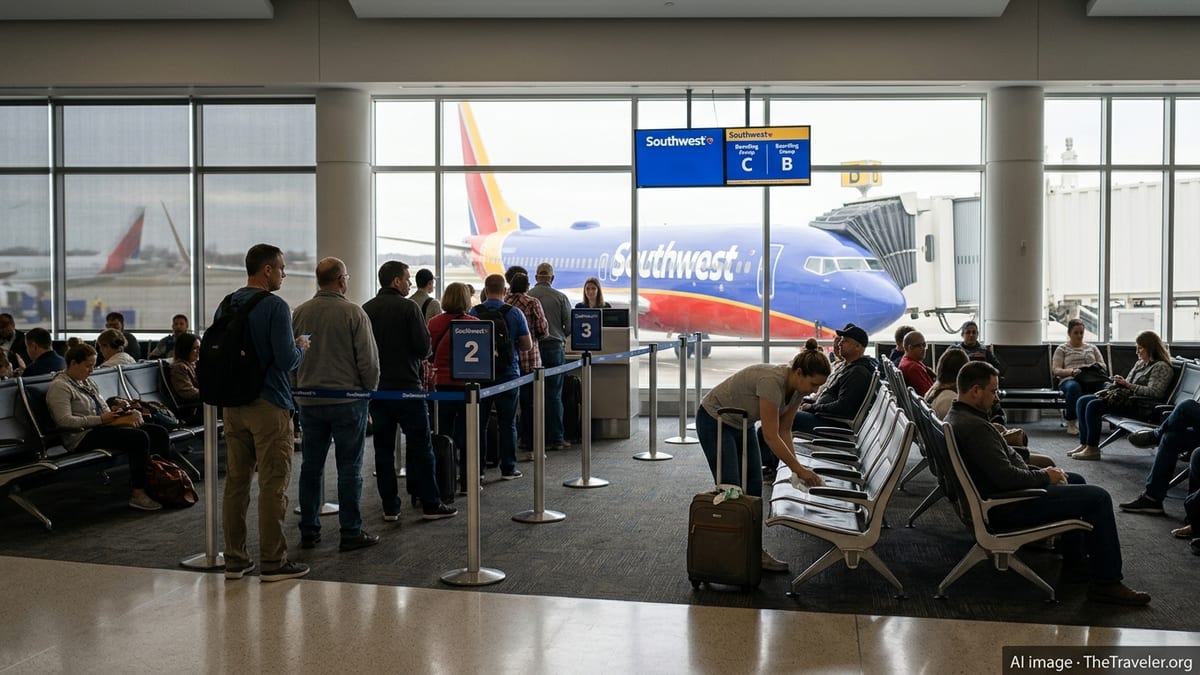
Southwest’s open-seating system has long made its pre-boarding policy unusually consequential. Instead of assigned seats, passengers line up by group and number, and those boarding first can choose from the widest range of seats, including locations that may feel safer for travelers monitoring exposure to potential allergens.
For years, Southwest has allowed some passengers with disabilities, along with their companions, to board before the general groups. Reports from travelers indicate that this category can include customers with mobility impairments, visual or hearing disabilities, and certain medical conditions documented at the gate. In the nut allergy case now closed, complainants argued that severe food allergies should clearly fall within that early-boarding protection.
Southwest has previously cautioned in public filings that broadening mandatory pre-boarding to any self-identified food allergy could raise operational and policy challenges across the industry, especially when combined with high passenger volumes and limited turnaround times. Company submissions in the dispute pointed to what they described as inconsistent policies among U.S. carriers on allergy-related pre-boarding.
The latest regulatory outcome effectively preserves Southwest’s discretion under existing rules, allowing the carrier to continue handling allergy-related boarding requests case by case, rather than under a new, more expansive federal mandate.
Advocacy Groups Question Signals Sent to Allergy Travelers
While the enforcement case has been closed, advocacy groups for people with food allergies are treating the decision as part of a broader and still-unresolved debate about air travel safety. Organizations focused on severe allergies have long highlighted scenarios in which residual nut dust on armrests, tray tables, or seat belts may present elevated risks for some travelers.
Reaction in allergy and disability communities, reflected in advocacy statements and online forums, suggests concern that clearing Southwest without additional conditions could discourage some carriers from formalizing stronger pre-boarding guarantees for allergy sufferers. Supporters of stricter rules argue that a clear right to early boarding for those with documented severe allergies would be a relatively low-cost accommodation with potentially significant health benefits.
Others, including some airline and airport stakeholders, continue to raise questions about verification standards and the potential for perceived abuse of pre-boarding access. They emphasize the challenge of balancing genuine medical needs with efficient boarding on heavily trafficked routes, especially at peak travel times.
For travelers with allergies, the practical implication of the latest development is that there remains substantial variability in how carriers handle pre-boarding and cabin cleaning requests, reinforcing the need to check each airline’s current policy before flying.
Growing Scrutiny of Southwest’s Disability and Complaint Record
The closure of the nut allergy complaint also arrives as Southwest faces wider attention to its disability-related performance. Recent government complaint data show that the carrier received thousands of disability-related grievances in the most recent reporting year, including a smaller subset tied to allergies, service animals, and medical accommodations.
Regulators publish an annual breakdown of disability complaints by airline, and Southwest’s figures place it among the highest-volume carriers for both overall passengers and reported accessibility issues. Industry observers note that large absolute complaint totals can partly reflect network scale, but they also serve as an indicator of friction points for travelers who depend on consistent accommodations.
Consumer advocates point out that allergy-related disputes have become more visible in recent years as airlines adjust snack offerings, roll out new cabin layouts, and experiment with premium seating products. Even relatively minor changes, such as the reintroduction of certain nut-based snacks in premium sections, have prompted public criticism from allergy-focused organizations worried about cross-contact in the cabin.
Southwest’s own regulatory filings acknowledge that disability and accessibility complaints remain a continuing area of oversight risk, with potential for future investigations or enforcement actions if patterns emerge that suggest systemic non-compliance.
What Travelers With Nut Allergies Can Expect Going Forward
For passengers planning trips within the United States, the latest developments mean that rules have not sharply changed overnight. Travelers with severe nut allergies still face a patchwork of carrier-specific policies, and advocates continue to recommend advance planning, medical documentation, and early contact with airlines where possible.
Publicly available guidance from regulators and medical groups generally encourages travelers with life-threatening allergies to carry prescribed medications, notify airlines of their condition ahead of time when possible, and request accommodations such as early boarding to clean surfaces or move seats away from visible allergens. However, the ability to guarantee those steps varies by airline, airport, and flight crew.
For Southwest specifically, reports from recent travelers indicate that some customers with documented severe nut allergies continue to secure pre-boarding after speaking with gate staff, while others describe more limited flexibility depending on airport staffing and how busy a particular flight is. The closed complaint is unlikely to remove all ambiguity, and passengers may still experience inconsistency from one station to another.
As the peak spring and summer travel periods approach, the outcome of the case is expected to remain a reference point in ongoing discussions about how U.S. carriers balance efficient boarding, open-seating models, and the safety needs of travelers whose medical conditions make exposure to common allergens a serious concern.