

More news on this day
A new funding deadlock in Washington has pushed the Department of Homeland Security into a partial shutdown, rippling from airport security lines to disaster zones and cyber defense centers as frontline personnel work without pay and critical planning grinds to a halt.
How the Homeland Security Standoff Reached Breaking Point
The current crisis stems from a collapsed spending deal for the Department of Homeland Security, which formally lost its full-year funding in mid-February after weeks of escalating clashes between congressional Democrats and Republicans. Lawmakers had previously agreed to separate the DHS budget from other spending bills following public outrage over a fatal shooting by federal agents in January, but that compromise unraveled as negotiations turned into a broader fight over immigration enforcement and oversight.
The immediate trigger was the Senate’s failure to advance a DHS appropriations bill before the funding deadline, followed by an unsuccessful attempt to pass a short-term extension to keep the department open. With lawmakers departing Washington for a recess and no bridge deal in place, the department was forced to begin shutdown procedures, sending furlough notices to thousands of employees while ordering many others to report for duty without pay.
At the center of the standoff are demands from Democrats for tighter controls on Immigration and Customs Enforcement and Customs and Border Protection, including expanded body camera use and stronger rules governing when agents can enter private property. Republicans have accused Democrats of jeopardizing national security and everyday services by refusing to approve a bill that had already passed the House, warning that the resulting shutdown would hit agencies like the Transportation Security Administration, the Federal Emergency Management Agency, and the Coast Guard hardest.
While a previous law has insulated some border enforcement operations from immediate cuts, the rest of DHS now finds itself in limbo. Key agencies are attempting to sustain essential missions on skeleton budgets and improvised workarounds, even as political leaders trade blame and signal that the stalemate could stretch well beyond the current week.
Airports Under Strain as TSA Works Without Pay
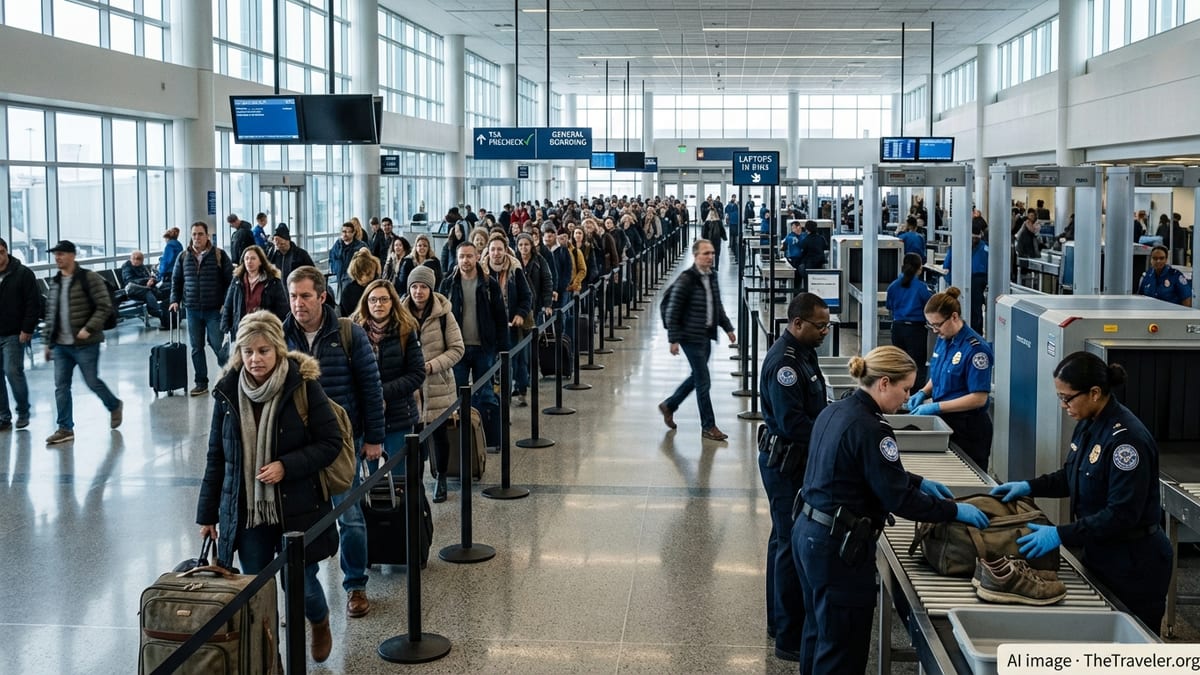
For travelers, the most visible fallout is unfolding at the nation’s airports, where TSA officers are required to report to work even as paychecks stop. Nearly all of TSA’s roughly 60,000 employees are deemed essential, meaning security checkpoints remain open but staff are effectively working on credit, relying on eventual back pay once the shutdown ends.
Memories of past shutdowns loom large. During the record government closure several years ago, increased sick calls among unpaid officers led to longer lines, sporadic checkpoint closures, and cascading flight delays at major hubs. Transportation officials and airport executives are now racing to avoid a repeat, but union leaders warn that financial stress will mount with each missed paycheck, potentially driving more officers to seek temporary work elsewhere or leave the agency altogether.
Early reports from large airports suggest that operations are still functioning, but with noticeable strain at peak times. Some travelers are arriving earlier than usual, wary that security lines could spike without warning if even a small share of staff are unable to work an unpaid shift. Airport authorities in major hubs have begun issuing advisories recommending additional time for check-in and screening, particularly for morning departures and holiday-period travel.
Behind the scenes, TSA leadership is reshuffling schedules, leaning on overtime, and temporarily redeploying personnel to the busiest checkpoints to hold service at acceptable levels. These measures can keep lanes moving in the short term, but they come at a cost to morale and fatigue. If the shutdown drags on, frequent travelers could see a gradual erosion in reliability, with longer queues, more missed connections, and rising frustration among both passengers and front-line screeners.
Disaster Response Slows as FEMA Pauses Planning
While airport lines are the most visible sign of stress, some of the most consequential impacts are unfolding far from the terminals, in the coordination centers and field offices of FEMA. Many of the agency’s emergency responders are also classified as essential and will continue to deploy when floods, wildfires, or hurricanes strike. But a sizeable portion of administrative, planning, and recovery staff have been furloughed or placed in a holding pattern as long-term projects are put on ice.
Senior FEMA officials have warned that a prolonged lapse in funding could hobble the agency’s ability to prepare for and manage major disasters. Training exercises, pre-disaster mitigation programs, and long-term recovery planning are among the first activities to be curtailed, even though they are critical to reducing damage when catastrophic events occur. Delays in processing recovery grants and reimbursements can slow rebuilding efforts in communities still struggling from past storms or fires, undermining public confidence and local resilience.
The timing is particularly sensitive given the growing intensity of climate-driven hazards. In recent years, FEMA has faced overlapping emergencies, from late-season hurricanes to severe winter storms and record wildfires. Without full staffing and normal procurement authority, the agency may find it harder to stage supplies, move personnel preemptively into high-risk regions, or coordinate seamlessly with state and local partners ahead of the next major event.
For residents in vulnerable areas, the shutdown may not be immediately visible, but its effects can surface quickly when new emergencies strike. Response times could lengthen as overworked core teams juggle fresh crises with an already heavy caseload of ongoing recovery efforts. Local officials, who depend on federal guidance and support, may encounter slower approvals and more uncertainty just when they most need clarity.
National Security and Cyber Defenses in a Holding Pattern
Beyond airports and disaster relief, the partial shutdown is testing the resilience of the broader homeland security architecture. Agencies responsible for cybersecurity, infrastructure protection, and intelligence sharing are attempting to continue core functions with reduced staffing, even as their leaders warn that adversaries do not pause their operations simply because Congress has failed to agree on a budget.
The Cybersecurity and Infrastructure Security Agency, which coordinates defenses against hacking campaigns and cyber intrusions targeting everything from hospitals to airports and pipelines, has cautioned that funding disruptions can erode readiness. While many incident response teams and watch centers remain active, planning initiatives, modernization projects, and outreach to state and private-sector partners are among the activities facing delays. Interruptions in training and technology upgrades could leave critical systems more exposed over time.
Intelligence sharing and joint operations among DHS components and other federal and local agencies also risk being hampered. When some personnel are furloughed and others are working unpaid, routine coordination, interagency briefings, and preventive operations are often scaled back to the bare essentials. That raises concerns about missed warning signs, slower responses to emerging threats, and reduced capacity to test and secure physical infrastructure such as ports, rail hubs, and major event venues.
Officials stress that there is no indication of an imminent breakdown in core security operations, and major counterterrorism and border security functions continue to run. However, they describe a growing gap between what the system is currently managing and the level of vigilance they believe is advisable in an environment of constantly evolving threats, including cyberattacks, violent extremism, and sophisticated criminal networks.
Frontline Workers Caught Between Duty and Uncertainty
Across DHS, from airport screeners and Coast Guard crews to Secret Service agents and emergency managers, the human toll of the shutdown is becoming increasingly apparent. Tens of thousands of employees are either furloughed or working without pay, forced to juggle rent, childcare, and loan payments while continuing to shoulder high-risk responsibilities that cannot simply be paused.
Unions representing TSA officers, federal law enforcement personnel, and other DHS staff have described a mix of pride and exhaustion. Many employees see their work as a public trust and feel compelled to show up regardless of politics. At the same time, some recount revisiting the hardships experienced during previous shutdowns, when colleagues resorted to selling personal belongings, draining savings, or taking temporary jobs to cover basic expenses.
Leaders at several agencies warn that repeated funding crises erode not just morale, but long-term staffing levels. Recruiting and retaining skilled employees becomes harder when potential hires see headline after headline about shutdowns and forfeited paychecks. For specialized roles in cybersecurity, aviation security, and emergency response, where private-sector alternatives often pay more, the risk is that DHS may struggle to compete once the immediate crisis passes.
While back pay is guaranteed by law once a shutdown ends, that promise does little to help workers cover bills due this week or next. Advocacy groups are renewing calls for Congress to shield critical security and safety agencies from political brinkmanship, arguing that the current approach effectively uses frontline employees as leverage in policy fights far above their pay grades.
Travel Behavior Shifts as Passengers Weigh Risks and Delays
For domestic and international travelers, the DHS shutdown introduces a new layer of uncertainty to trip planning in and out of the United States. While the aviation system is still operating, frequent fliers and corporate travel managers are closely watching for signs that staffing stress might begin to translate into significant delays or cancellations at major hubs.
Some airlines are quietly adjusting schedules to build in more buffer time at busy airports, anticipating slower security or boarding processes during peak hours. Industry analysts note that even a modest increase in unscheduled absences among unpaid federal workers can have an outsized impact on operations at high-volume terminals, where a single closed checkpoint lane or delayed security shift can ripple across dozens of departures.
Travel advisors are urging passengers to add extra time at the start of their journeys, particularly at airports that have historically been sensitive to staffing shortages. Business travelers with tight connections are being encouraged to book earlier flights when possible, while leisure travelers are increasingly factoring shutdown-related uncertainty into their decisions about when and where to fly.
In the broader tourism sector, including hotels and attractions that depend on consistent visitor flows, the shutdown adds to a climate of caution. So far, there are few signs of mass cancellations linked directly to the DHS funding lapse, but industry groups warn that a prolonged disruption could dent traveler confidence, especially if scenes of long lines and last-minute delays become a recurring feature of televised news coverage.
Coast Guard, Secret Service, and Other Quiet Casualties
Beyond the headline agencies, several other DHS components are facing acute strain that is less visible to the traveling public but no less significant. The Coast Guard, which conducts search and rescue missions, maritime law enforcement, and port security, is continuing its most critical operations while suspending some activities not directly tied to saving lives or national security. Thousands of active duty, reserve, and civilian personnel are working without pay, raising concerns about morale and retention in a service that already struggles with recruitment.
The Secret Service, responsible for protecting the president, visiting foreign leaders, and major national events, is in a similar bind. Protection details remain on duty, but training, equipment upgrades, and certain investigative work can be delayed or scaled back. Over time, agency veterans warn, this can erode readiness and place additional pressure on agents who already face high burnout rates.
Other parts of DHS, including citizenship and immigration services and various grant and research programs, have reduced or suspended some nonessential functions. That can mean slower processing times for immigration benefits, delays in grants for state and local security initiatives, and interruptions in research aimed at improving threat detection technologies and disaster resilience.
Collectively, these pressures underscore how deeply embedded DHS has become in the everyday workings of the country’s security, transportation, and emergency systems. A funding lapse does not simply dim the lights in a Washington office building; it reverberates outward into seaports, border crossings, stadiums, and small towns relying on federal expertise and support.
What Travelers and Communities Should Watch Next
As the shutdown continues, attention is shifting from immediate disruptions to the question of how long the impasse might last and what a prolonged standoff would mean for travel and safety. Lawmakers have floated various off-ramps, from short-term extensions to more comprehensive bargains that pair DHS reforms with broader immigration or border policy changes, but neither party has yet signaled a clear path toward compromise.
Travelers will be watching for signs that staffing shortages are beginning to affect wait times at checkpoint bottlenecks, particularly around upcoming holiday periods or major events that draw large crowds to specific airports. Airlines and airports are likely to provide updated guidance as patterns emerge, but within the current fog of uncertainty, the most practical step for passengers remains simple: arrive early, stay flexible, and be prepared for plans to change.
Communities vulnerable to storms, floods, or wildfires will be monitoring FEMA’s capacity closely, especially if severe weather systems appear on the horizon. State and local officials are already pressing Washington for clarity on how long they can expect reduced federal staffing in regional offices and whether existing grant and recovery timelines will slip further as the shutdown drags on.
For now, essential DHS missions are still being carried out, held together by a workforce that is absorbing the shock of political gridlock. The deeper question, voiced with growing urgency by security and emergency experts, is how many more cycles of brinkmanship the system can endure before the stress begins to show not just in airport lines and backlogged paperwork, but in the nation’s overall readiness to confront the next crisis, whatever form it takes.