

More news on this day
America’s latest budget showdown has pushed the Department of Homeland Security into a partial shutdown, leaving airport workers unpaid, disaster planners in limbo, and critical security operations scrambling to stay ahead of evolving threats.
How a Political Standoff Turned Into a Homeland Security Shutdown
The current crisis grew out of failed negotiations in Congress over how to fund the Department of Homeland Security for the rest of the fiscal year. Lawmakers had already relied on short-term stopgap measures after a broader government funding deal unraveled in late January. At the center of the dispute is not how much to spend on homeland security, but what conditions should be attached to immigration enforcement after several high-profile fatal encounters involving federal agents.
As temporary funding for DHS expired in the early hours of Saturday, February 15, 2026, Congress had not approved either a full-year appropriations bill or another short extension. That lapse triggered an automatic partial shutdown across much of the department. While certain core security functions are legally required to continue, tens of thousands of employees are now working without pay or have been told to stay home until funding is restored.
Republican leaders argue that Democrats are using DHS funding as leverage to force far-reaching reforms on Immigration and Customs Enforcement and Customs and Border Protection. Democrats counter that additional safeguards and oversight are non-negotiable in the wake of recent deadly shootings by federal agents, and accuse Republicans of refusing to accept basic accountability measures. With both chambers now on a Presidents’ Day recess until at least February 23, the shutdown is likely to stretch for days, if not weeks.
The result is a complex and uneven freeze. Some agencies under DHS, like FEMA and the Transportation Security Administration, are directly exposed to the funding lapse. Others tied to separate appropriations or contingency funds can operate more normally, at least in the short term. For travelers, communities facing severe weather, and local police who depend on federal support, the political arguments in Washington are already translating into practical uncertainty on the ground.
What a Partial DHS Shutdown Actually Means
The Department of Homeland Security is a sprawling entity that includes 22 component agencies and offices, from the Coast Guard and TSA to the Secret Service, FEMA, and cybersecurity teams. A full shutdown of such a department is almost impossible under U.S. law. Instead, the government follows detailed contingency plans that distinguish between “excepted” activities that must continue to protect life and property, and “non-excepted” operations that must pause when money runs out.
In practice, that means many DHS employees deemed essential are still reporting for duty but are not receiving paychecks. These include TSA officers at airport checkpoints, air marshals, Coast Guard crews, Border Patrol agents in areas where separate funding has not yet kicked in, certain FEMA staff monitoring active hazards, and analysts in the Cybersecurity and Infrastructure Security Agency. Their work is allowed to continue on the assumption that back pay will eventually be authorized once Congress restores funding.
Other workers, including a significant share of administrative staff, policy personnel, trainers, planners, and support teams, have been furloughed. They are barred from doing their jobs, even on a voluntary basis, until appropriations resume. That split is designed to maintain immediate safety, but it gradually erodes the systems and planning that underpin effective homeland security. Over time, postponed training, delayed grants, and backlogs in procurement and maintenance can weaken frontline operations.
The current shutdown is occurring during what experts often call a high-demand season for homeland security. Winter storms are still battering parts of the country, hurricane preparedness work is ramping up along the coasts, and international travel is strong as Americans take advantage of lower off-peak fares. Against that backdrop, the funding lapse has added new friction to already stretched systems.
Airports Under Strain as TSA Works Without Pay
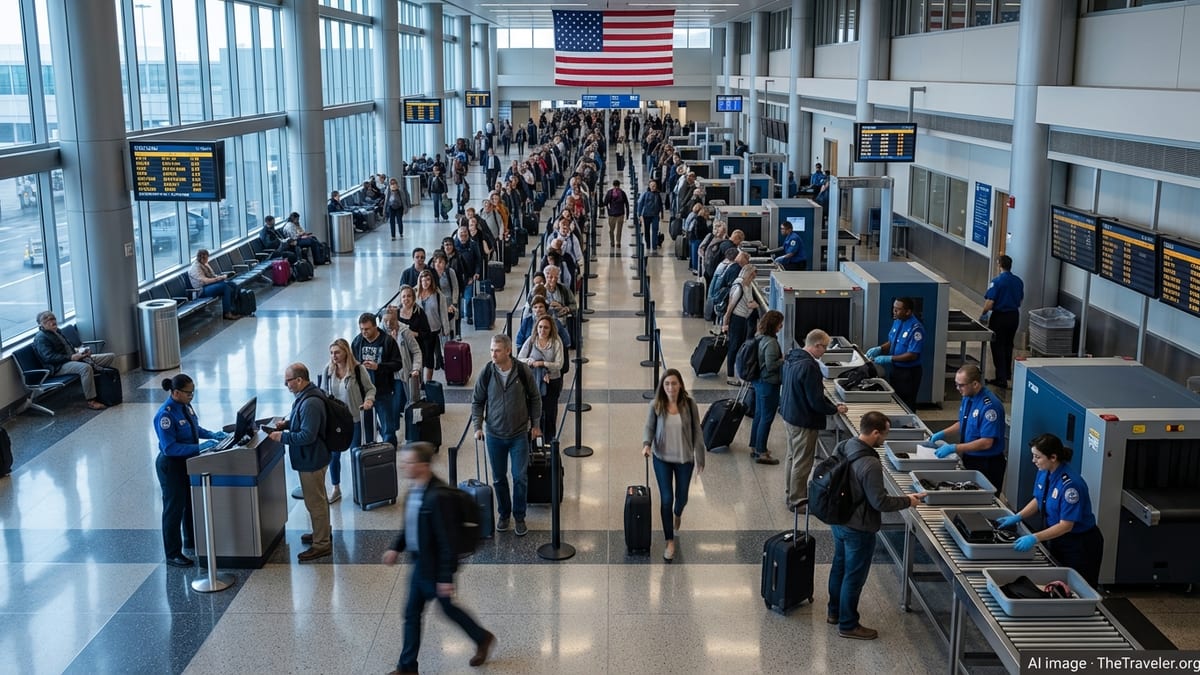
For most travelers, the most visible impact of the DHS funding deadlock is playing out at airport security checkpoints. The Transportation Security Administration depends heavily on annual appropriations, and its officers are among the largest groups of federal employees now working without pay. According to union representatives, tens of thousands of TSA agents received notice that their pay would be halted with the funding lapse, even as they were ordered to continue screening passengers as usual.
On the first weekend of the shutdown, airports reported that all major checkpoints remained open, and there were no nationwide reports of mass sickouts or closures. Federal officials are determined to avoid a repeat of previous shutdowns, when growing numbers of unpaid TSA officers called in sick or sought second jobs, leading to long lines and delays particularly at major hubs. Still, industry groups caution that morale is already fragile, and disruptions could escalate if the crisis drags on beyond the next pay cycle.
Airlines and airport authorities say they are preparing contingency plans in case absenteeism rises among unpaid staff. That could include opening fewer lanes during off-peak hours, shifting staff between terminals, and encouraging travelers to arrive even earlier. Smaller regional airports, which typically operate with lean staffing, may be more vulnerable to even minor fluctuations in attendance among TSA officers. Early signs of strain, such as slower morning screening in some cities and overtime fatigue among supervisors, are being closely watched by carriers and travel associations.
For now, security protocols themselves remain intact. Advanced imaging machines, explosives detection systems, and watchlist checks continue to operate, backed by air marshals and local law enforcement. But without stable funding, routine maintenance, technology upgrades, and specialized training can be delayed, leaving systems more vulnerable to failure over time. Aviation security experts warn that sustained uncertainty over pay and staffing can discourage experienced officers from staying on the job, undermining expertise that is critical for spotting subtle behavioral cues and emerging threats.
Disaster Response and FEMA’s Delicate Balancing Act
Beyond airports, the shutdown is hitting the Federal Emergency Management Agency at a sensitive moment. FEMA relies on DHS appropriations to support much of its workforce and day-to-day operations, even as large disaster relief accounts are handled separately. That means while money for ongoing recovery projects and some long-term rebuilding efforts may still be available, the staff needed to plan, approve, and oversee new actions is constrained.
Officials say that FEMA will continue to respond to active emergencies where lives and property are immediately at risk. If a major winter storm causes serious flooding, or a tornado outbreak strikes the Midwest, core response teams can still mobilize, and federal coordination centers can be activated. But without full funding, the agency may struggle to surge additional staff, authorize overtime, or move quickly on less urgent but still important mitigation work, such as reinforcing levees, clearing debris, or pre-positioning supplies ahead of spring flooding.
State and local emergency managers, who rely on FEMA grants and technical assistance, are watching the situation nervously. Many of their preparedness programs, from wildfire mitigation in the West to hurricane readiness seminars in the Gulf Coast, depend on multi-year federal funding streams. Prolonged uncertainty can delay contract awards, slow down training schedules, and leave communities without clarity on what help will be available during the next disaster season.
Recent years have shown how overlapping disasters, from wildfires and hurricanes to pandemics and cyberattacks, can strain the federal response system. Analysts warn that even a partial and temporary shutdown can ripple through that system, compounding risks down the line. If FEMA is forced to juggle staffing and finances under a tight constraint while also responding to severe weather, the margin for error narrows, and recovery for affected communities could be slower and more uneven.
Coast Guard, Secret Service, and Other Frontline Missions
Other agencies housed under DHS are also feeling the effects of the funding impasse in ways that are less visible to travelers but no less significant for national security. The U.S. Coast Guard, which plays a dual role in maritime safety and defense, is continuing operations with crews at sea and rescue teams on call. As in previous shutdowns, those service members are considered essential and are required to report for duty, yet many are now doing so without pay. For enlisted personnel and junior officers with families, the uncertainty around paychecks can quickly translate into financial stress.
The Secret Service, which protects the president, other senior officials, and visiting foreign dignitaries, is also required to maintain full protective details. However, supporting functions, from training to equipment procurement and analytical support, can face slowdowns or temporary suspensions. In a presidential election year, when campaign travel and public events surge, any disruption in scheduling, overtime authorization, or logistical planning can complicate an already demanding security environment.
Meanwhile, training pipelines for new federal law enforcement officers and border agents have been disrupted, as academies scale back classes or postpone new cohorts until funding resumes. These training delays can create gaps in staffing months or years down the road, especially in specialized roles such as cyber forensics, counter-narcotics operations, and advanced investigative units. The effects may not be immediately apparent to the public but could be felt in slower casework and reduced surge capacity in the future.
Local and state law enforcement agencies, which partner closely with DHS components through joint task forces and information-sharing centers, are also adjusting. Some joint operations, such as multi-agency drug interdiction efforts or coordinated gang investigations, are proceeding with skeleton federal teams or shifting more responsibility to local officers. That realignment can strain local budgets and raises questions about how long such arrangements can be sustained if federal support remains uneven.
Cybersecurity, Border Security, and the Bigger National Security Picture
Beyond physical checkpoints and disaster sites, the shutdown is testing the resilience of America’s cyber and border security posture. The Cybersecurity and Infrastructure Security Agency, tasked with defending critical infrastructure from hacking and cyber espionage, is continuing its round-the-clock monitoring of federal networks and major private-sector partners. Many of its analysts and incident responders are classified as essential, meaning they will work without pay until Congress acts.
Cybersecurity experts warn that a prolonged period of unpaid work can sap morale in a field where skilled professionals are in high demand and can often command higher salaries in the private sector. If even a small number decide to leave government service over the instability, it could weaken the institutional knowledge and relationships that underpin effective cyber defense. Delays in longer-term projects, such as upgrading systems, conducting security audits, or rolling out new guidance to the private sector, may also leave vulnerabilities unaddressed longer than they should be.
At the physical border, the situation is uneven. Some enforcement activities are still supported by previously approved funds, while others rely on the lapsed DHS appropriations. In areas affected by the shutdown, agents and officers remain on duty as essential personnel, but support services like hiring, training, maintenance, and community outreach can be curtailed. The political fight in Washington is explicitly centered on how these border and immigration enforcement operations should be conducted, yet the immediate operational impact is being felt most acutely in other parts of DHS.
Strategists note that adversaries, from criminal organizations to foreign intelligence services, study these moments of domestic political turmoil closely. While there is no evidence so far of a specific plot linked to the shutdown, experts caution that prolonged uncertainty or degraded readiness, even at the margins, can be exploited. The challenge for DHS leaders is to maintain a stable security posture while simultaneously navigating budget shortfalls and workforce anxiety.
Travelers, Workers, and Communities Caught in the Middle
For ordinary Americans, the DHS shutdown is a reminder of how deeply national security operations are woven into daily life, especially for those who travel frequently or live in disaster-prone areas. At airports, many passengers are just beginning to grasp that the officers checking their IDs and scanning their bags have no clear timeline for when they will next be paid. Some travelers have taken to social media to thank TSA workers or bring snacks to security lines, echoing gestures seen during previous shutdowns, but such support does not resolve the underlying financial strain.
Unions representing TSA agents, Coast Guard personnel, and other DHS workers are warning of mounting hardship as the days go by. Many employees live paycheck to paycheck and may soon face difficult choices over rent, utilities, and childcare. While banks and credit unions near major federal installations sometimes offer short-term relief or low-interest loans during shutdowns, those measures can only partially cushion the blow. The psychological impact of being asked to protect the public without pay can also erode trust in both agency leadership and political institutions.
Communities that rely on timely disaster assistance, port security, or federal cyber support are similarly uneasy. Local emergency management offices, city IT departments, and port authorities across the country are recalibrating their expectations of what help will be available if something goes wrong while DHS remains in limbo. Those adjustments may include revisiting mutual-aid agreements, reallocating local staff, or postponing ambitious infrastructure upgrades until federal funding stabilizes.
For the travel and tourism industry, the stakes are high. Even the perception of potential airport chaos can discourage travelers from booking trips, especially international flights that involve complex connections. Travel advisers and industry analysts are closely monitoring whether wait times at checkpoints begin to rise and whether airlines start to see an uptick in cancellations or rebookings driven by concerns over the shutdown. So far the impact appears contained, but with no immediate political solution in sight, the margin between a manageable inconvenience and widespread disruption is uncomfortably thin.
What Happens Next in Washington
As of February 17, Congress is on recess, and there is no publicly announced breakthrough in negotiations to restore DHS funding. Lawmakers are under pressure from governors, mayors, business groups, and federal unions to break the impasse quickly once they return to Washington. Party leaders have traded accusations over who is to blame, but behind the scenes staff are reportedly exploring possible compromise frameworks that would pair a short-term funding extension with an agreement to debate immigration and enforcement reforms on a separate track.
Some senators have floated the idea of a clean continuing resolution to fund DHS at current levels for several months, allowing time for cooler heads to prevail and more substantive policy talks to occur without the immediate pressure of a shutdown. Others insist that any new money must come with conditions addressing the use of force, oversight mechanisms, and judicial review in immigration operations. With the presidential campaign season accelerating, both parties are acutely aware that how they handle this standoff could shape voter perceptions of their approach to both border security and basic governance.
For now, DHS leaders are focused on triage: keeping essential operations running, communicating frequently with employees, and urging Congress to act swiftly. Travel organizations, emergency managers, and local officials are doing their own contingency planning in case the shutdown drags into March. The central tension of this moment is that while the dispute is framed as a debate over safety and rights at the border, the most immediate impacts are being felt in airport lines, Coast Guard stations, FEMA offices, and cybersecurity watch floors far from the Capitol.
How long the shutdown lasts will determine how deep those impacts run. A quick political deal in Washington could limit the damage to a few disrupted pay cycles and postponed projects. A drawn-out stalemate, however, risks leaving a lasting mark on the morale of homeland security workers, the resilience of critical infrastructure, and the confidence of travelers and communities who depend on a government that can keep both planes and protections on schedule.