

More news on this day
Air travelers across the United States faced another day of frustration on Easter Monday, April 6, 2026, as publicly available data showed 4,722 delayed flights and 307 cancellations, heavily affecting major hubs such as Atlanta, Chicago, Houston, Las Vegas, Minneapolis, New York and Philadelphia and disrupting operations at Delta Air Lines, United Airlines, American Airlines, Spirit Airlines, Republic Airways and other carriers.
Get the latest news straight to your inbox!
Holiday Demand And Weather Strains Converge
The spike in delays and cancellations came at the tail end of the Easter holiday period, traditionally one of the busiest stretches of the spring travel calendar. Reports indicate that a combination of high passenger volumes, residual weather impacts and tight airline schedules left little room for operational recovery when problems emerged.
According to multiple operational trackers and media coverage, Atlanta and the New York area once again featured among the most affected regions, with Atlanta Hartsfield Jackson International Airport and New York’s LaGuardia and John F. Kennedy airports recording substantial disruption. Chicago, Houston, Minneapolis and Las Vegas also saw elevated numbers of delayed departures and arrivals, contributing to nationwide congestion.
Industry analyses published in recent days highlight that airlines have been operating near full capacity on many routes, with aircraft and crews scheduled tightly to meet strong demand. Under these conditions, even localized thunderstorms, low clouds or temporary air traffic flow restrictions can cascade into broad network delays, as aircraft and staff fail to arrive on time for subsequent legs.
Recent weather systems over parts of the South and Midwest, combined with typical spring instability, added further pressure. While not as severe as the major winter storms that have periodically paralyzed U.S. aviation, these disturbances were sufficient to reduce runway capacity at peak times, especially at busy connecting hubs.
Major Hubs Bear The Brunt
Among individual airports, information published by aviation tracking platforms and travel outlets points to Atlanta, Chicago O’Hare, Houston George Bush Intercontinental, Minneapolis–St. Paul, Las Vegas Harry Reid, New York’s LaGuardia and JFK, and Philadelphia International as key centers of disruption on April 6. Many of these facilities serve as primary or secondary hubs for the largest U.S. carriers, amplifying the impact of any local delay.
Data shared in separate reports about related days in the same holiday weekend show similar patterns, with Atlanta and Chicago repeatedly ranking among the top U.S. airports for delays and cancellations. New York’s heavily utilized airspace, where multiple major airports share crowded arrival and departure corridors, has also remained particularly vulnerable to knock-on effects whenever one location encounters operational constraints.
Las Vegas and Houston, both important connecting points for domestic and international traffic, recorded notable disruption as well. At Las Vegas, coverage from aviation and travel outlets has highlighted multiple delayed and suspended services affecting routes across the United States and Canada, while Houston’s role as a key hub in the south-central U.S. meant schedule changes reverberated across a wide swath of the country.
Even where the number of outright cancellations remained relatively contained, the concentration of delays in these hubs produced long queues at check-in desks, security lines and customer service counters. Passengers connecting through these airports often found that a delay of even an hour or two at the origin point was enough to cause missed onward flights and forced overnight stays.
Delta, United, American, Spirit And Regional Carriers Disrupted
Across the airline sector, the disruption reached carriers of all sizes and business models. Publicly available trackers covering Easter Monday show that large network airlines such as Delta Air Lines, United Airlines and American Airlines experienced significant numbers of delayed services, in some cases numbering in the hundreds over the course of the day.
Low cost and leisure-focused airlines, including Spirit Airlines and other budget brands, were also affected. Because these operators typically run high aircraft utilization with tight turnarounds, a relatively small delay early in the day can quickly ripple through multiple flights, particularly on popular holiday routes to and from warm-weather destinations and major city pairs.
Regional operators such as Republic Airways, which operate feeder services under the banners of larger network carriers, added an additional layer of complexity. When a mainline flight arrives late at a hub, connecting regional departures often must wait for passengers, flight crews or incoming aircraft, creating further delays on short-haul routes that serve smaller and midsize cities.
Recent analyses of U.S. disruption patterns over the same long weekend suggest that some airlines have preferred to delay rather than cancel flights where possible, seeking to keep aircraft and crews positioned for subsequent rotations. While this approach can reduce the total number of cancellations reported on any single day, it frequently results in long rolling delays for travelers already at the airport.
Passengers Face Long Lines And Limited Options
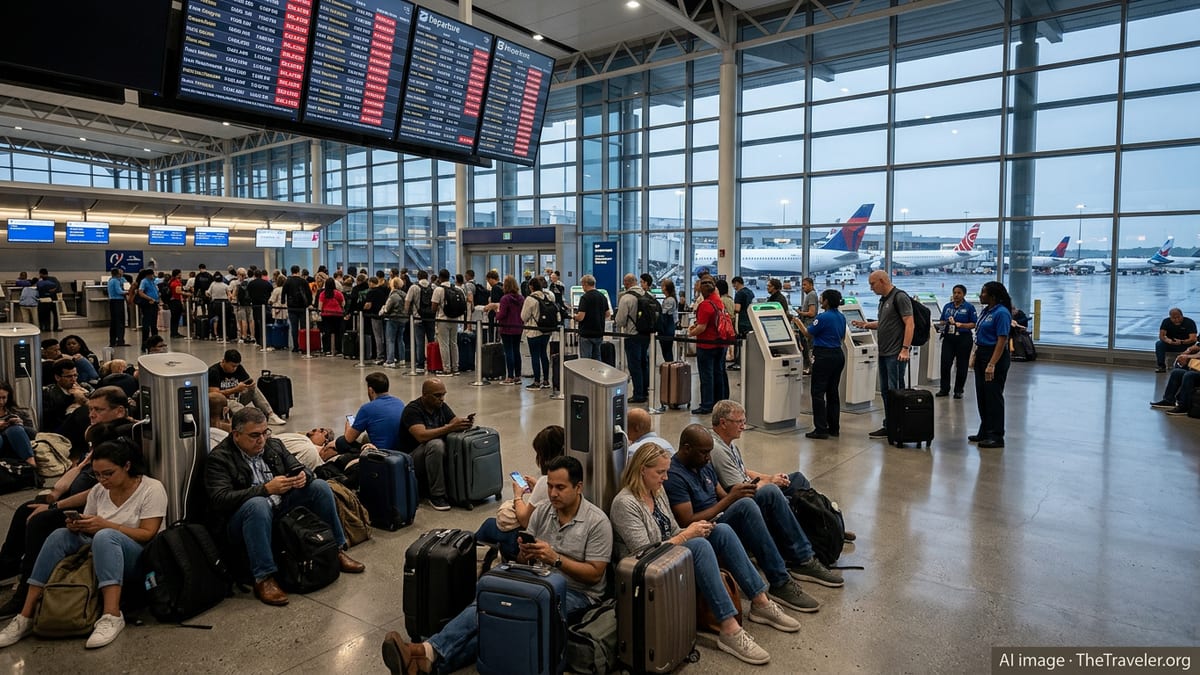
For travelers, the practical consequences of 4,722 delays and 307 cancellations were felt most acutely in crowded terminals and extended journey times. Social media posts, local broadcast coverage and on-the-ground observations described lengthy lines at customer service counters in Atlanta, Chicago, New York and other affected hubs as passengers attempted to secure alternative flights.
On Easter Monday, many flights were already close to or at capacity because of the holiday, reducing the availability of spare seats for rebooking. In some cases, travelers were reportedly offered itineraries departing the following day or rerouted through secondary hubs, adding hours or even an extra overnight stay to their trips.
Observers noted that disruption at one or two major hubs quickly spilled over into other airports. For instance, delays in Atlanta or New York can affect later departures out of Minneapolis, Las Vegas, Houston or Philadelphia when aircraft or crew are late arriving from earlier legs. This interconnectedness explains why airports that had relatively few cancellations still reported elevated delay counts and busier-than-usual gate areas.
Travel commentators have reiterated standard guidance for dealing with such disruptions, encouraging passengers to make use of airline mobile apps and self-service tools to track flight status, join standby lists or request changes where allowed. Those traveling on tight schedules, particularly with onward international connections, are often advised to build in additional buffer time when flying over busy holiday periods.
Persistent Operational Fragility Raises Broader Questions
The events of Easter Monday followed several recent days of elevated disruption in U.S. airspace, reinforcing broader concerns about the fragility of the system during peak travel windows. Industry analysts have pointed to the interaction of high demand, ongoing staffing constraints in some operational roles and aging infrastructure at certain airports as contributing factors.
Reports examining performance over the past year suggest that large hub airports such as Atlanta, Chicago O’Hare, New York LaGuardia, Minneapolis–St. Paul, Las Vegas and Philadelphia frequently rank among the facilities with the highest cumulative delay minutes. High traffic volumes, limited runway capacity at certain times of day and complex airspace structures can make it difficult to recover quickly once schedules start to slide.
In parallel, airlines continue to refine schedules and capacity plans as they balance strong leisure demand with corporate travel that has not fully returned to pre-pandemic patterns in all markets. While carriers have added aircraft and routes in some regions, they have also sought to improve profitability by trimming underperforming services, occasionally leaving thinner margins for disruption on remaining routes.
Given this backdrop, the scale of delays and cancellations recorded on April 6 serves as another reminder that U.S. aviation remains susceptible to spikes in disruption when weather, demand and operational constraints align. For now, travelers planning spring and summer journeys through major hubs such as Atlanta, Chicago, Houston, Las Vegas, Minneapolis, New York and Philadelphia may continue to benefit from building flexibility into their itineraries and monitoring conditions closely in the days leading up to departure.