

More news on this day
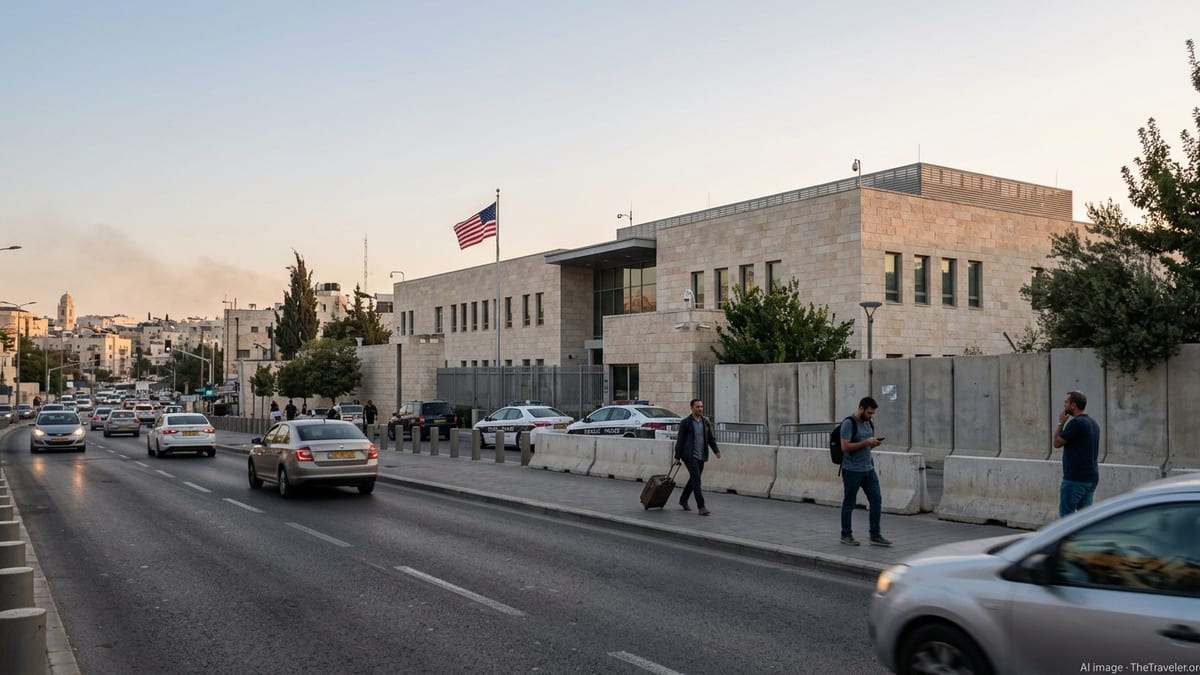
The U.S. Embassy in Jerusalem has issued an updated security alert for Israel, the West Bank and Gaza, underscoring a volatile regional environment and urging U.S. citizens to reassess travel plans, adopt strict personal safety precautions and closely monitor rapidly shifting security conditions.
Get the latest news straight to your inbox!
New Alert Highlights Shelter-in-Place Guidance and Limited Assistance
The latest alert, dated March 2, 2026, reflects an ongoing period of instability tied to regional tensions and conflict dynamics affecting Israel and its neighbors. Publicly available information shows that the embassy has directed U.S. government employees and their family members to continue sheltering in place in and near their residences until further notice, underscoring concern about sudden security incidents.
The alert reiterates that the embassy is not in a position at this time to evacuate or directly assist private U.S. citizens in departing Israel. Instead, Americans are encouraged to make their own contingency plans using available commercial and overland options, subject to frequent changes in schedules and access. The statement reflects a broader pattern of advisories in which travelers are encouraged to plan conservatively and anticipate disruption.
Current guidance emphasizes that the security environment is complex and can change quickly, with incidents such as rocket or missile fire and unmanned aircraft intrusions occurring at short notice. The embassy notes that additional internal restrictions on the movement of U.S. government personnel, including in parts of Jerusalem and the West Bank, may be imposed without advance public warning, a signal that conditions on the ground remain fluid.
Travel Advisories for Israel, West Bank and Gaza Remain Severe
Separate but related State Department travel advisory information continues to categorize Gaza under a "Do Not Travel" recommendation, citing terrorism, armed conflict and extremely limited consular access. For much of northern Israel near the borders with Lebanon and Syria, earlier guidance has also warned against travel because of the risk of cross border hostilities and rocket fire.
Israel more broadly and the West Bank remain under "Reconsider Travel" advisories due to terrorism, civil unrest and security operations. These formal classifications frame the Jerusalem embassy alert within a larger hierarchy of U.S. government risk assessments that shape how travelers, airlines and insurers evaluate conditions.
For U.S. citizens considering or continuing travel, these ratings signal that trips to the region carry elevated and unpredictable security risks. Published travel facts encourage travelers to maintain alternative itineraries, ensure robust travel insurance that explicitly covers conflict related disruption where possible and stay prepared for sudden changes in airport operations or border crossing rules.
Evacuation Routes, Ministry Shuttles and Border Crossings
As part of the March 2 alert, publicly available embassy information describes evacuation related options being coordinated by Israeli authorities rather than by the United States. Reports indicate that the Israeli Ministry of Tourism has begun operating shuttle buses from cities such as Tel Aviv and Jerusalem to the Taba border crossing with Egypt, offering a possible route out of the country for foreign visitors.
Travelers seeking to use these shuttles are required to register in advance through the ministry’s online systems and pay applicable tolls that are valid only for a specific date. The alert notes that flight options from nearby airports in Taba and Sharm el Sheikh remain limited, and that travelers should check directly with airlines, prepare for delays and consider onward connections through other regional hubs.
The status of other crossings, such as the Southern crossing into Jordan near Eilat and the Allenby or King Hussein Bridge in the West Bank, can vary from day to day. The embassy encourages potential travelers to consult Israeli civil defense guidance and official border control announcements before undertaking overland movements, and to avoid assuming that a crossing or airport will remain open solely based on recent experience.
Heightened Call for Individual Security Awareness
The updated alert places strong emphasis on personal readiness and situational awareness for U.S. citizens in Israel, the West Bank and surrounding areas. Travelers are urged to identify the nearest shelter or protected space in every location they visit and to familiarize themselves with local warning systems for rocket or missile alerts, which can provide only a short window to take cover.
Public guidance advises U.S. citizens to keep phones charged, maintain backup power sources and ensure they receive emergency notifications wherever possible. Individuals are also encouraged to carry identification at all times, confirm that family members know meeting points and backup communication plans and review the location of medical facilities capable of treating trauma and blast related injuries.
The alert underscores that security incidents may occur in locations that are popular with visitors, including major urban centers and tourism hubs. For this reason, travel experts recommend avoiding large gatherings where feasible, minimizing nonessential movement during periods of heightened tension and remaining alert to changes in local transport patterns, such as sudden cancellations of bus or rail services.
Implications for Tourism and Future Travel Planning
The renewed alert comes as Israel’s tourism sector was beginning to show tentative signs of adjustment to prolonged instability, including the reopening of Ben Gurion Airport after earlier disruptions and increased use of alternative gateways in neighboring countries. Travel industry analysis suggests that repeated security warnings from a range of governments are likely to suppress short term leisure demand while encouraging a more cautious, information driven approach among those who continue to visit.
Recent policy developments, such as the U.S. Embassy’s pilot effort to expand consular outreach in West Bank locations including Israeli settlements and Palestinian cities, show a parallel attempt to maintain services for U.S. citizens even as threats persist. At the same time, the severity of travel advisories for Gaza and parts of northern Israel underscores that there are areas where nonessential travel remains strongly discouraged.
For prospective visitors and residents alike, the core message of the March 2026 alert is that security conditions in Israel, the West Bank and Gaza are unpredictable and can deteriorate with little notice. Travelers are encouraged to follow official security updates closely, maintain flexible itineraries, and take a conservative approach to personal safety while the current advisory remains in place.