

More news on this day
The United States has authorized non-emergency embassy staff and their families to leave Israel, a rare move that underscores rising concern in Washington over a possible confrontation with Iran and its impact on Americans in the region.
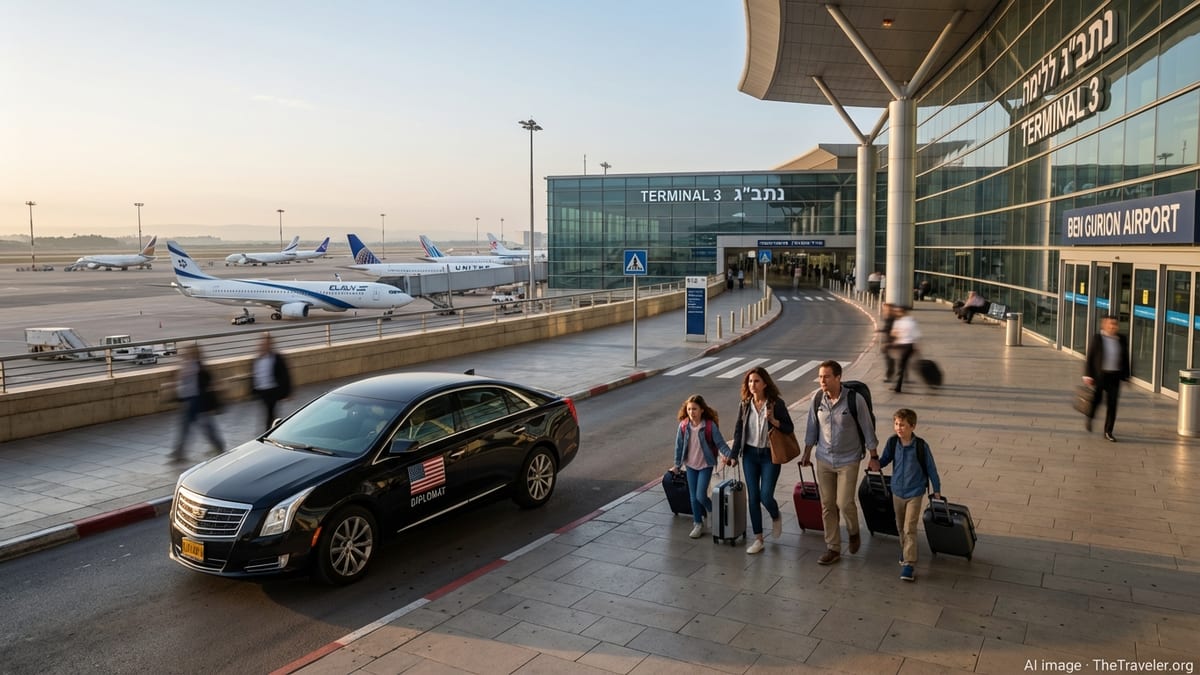
Authorized Departure Marks Escalation in Security Concerns
The U.S. State Department updated its travel advisory on February 27, 2026, to permit non-emergency government personnel and family members assigned to Mission Israel to depart due to what it called safety risks. The decision, known as an authorized departure, falls short of a mandatory evacuation but signals that officials view the security environment as volatile and potentially deteriorating.
The U.S. Embassy in Jerusalem informed staff that those who wished to leave should do so while commercial flights remain available, according to the public advisory and accounts from embassy personnel shared with major news outlets. Staff were told to prioritize securing any outbound flight from Israel, even if it required onward connections elsewhere, reflecting concerns that air links could be disrupted on short notice.
The move comes as Washington weighs military options against Iran following weeks of tense diplomacy over Tehran’s nuclear program and regional activities. U.S. officials have warned that a breakdown in talks could trigger a wider confrontation, with Israel and American facilities across the Middle East considered potential targets for Iranian retaliation.
Authorized departure status also gives affected employees access to government-funded travel, easing the logistical and financial burden on families who choose to leave. It allows the embassy to thin out its footprint in Israel while maintaining core diplomatic operations.
Rising Iran Tensions Reshape Risk Calculus
The shift in posture toward Israel is directly tied to escalating tensions between the United States and Iran, according to senior officials cited by Associated Press and other major media. U.S. leaders have repeatedly indicated that military action remains on the table if negotiations fail, while Iranian officials have warned that any strike would be met with a broad regional response.
In recent days the United States has surged naval and air assets into the eastern Mediterranean and wider Middle East, including the arrival of a major aircraft carrier strike group off Israel’s coast. The military buildup is intended both as deterrence and as preparation for potential operations, raising fears that Israel could be drawn into any direct clash between Washington and Tehran.
Iran-backed groups have previously targeted Israel and U.S. interests using rockets, drones, and other projectiles, heightening concerns that renewed conflict could include attacks on civilian centers or critical infrastructure. The State Department’s advisory explicitly references the risk of rocket fire, armed drone incursions, terrorism, and civil unrest, warning that conditions could change rapidly and without notice.
For diplomats and their families posted in Israel, the combination of strategic threats and unpredictable security incidents has altered daily life. Many are reassessing their tolerance for risk, particularly those with children, and weighing whether to take advantage of the window to leave before any potential disruption to flights or border crossings.
Travel Advisory Upgraded for Israel and the Palestinian Territories
Alongside the embassy decision, the State Department has reinforced its travel warnings for Israel, the West Bank, and Gaza. The advisory urges U.S. citizens to reconsider travel to Israel and the West Bank because of terrorism and civil unrest and continues to list Gaza and areas near several borders as off limits due to ongoing conflict and military activity.
The updated guidance highlights the possibility that airlines could cancel or curtail flights to and from Israel at short notice. Travelers are urged to monitor security alerts from the embassy, maintain flexible itineraries, and have contingency plans for departing the country if the security situation worsens or if air travel becomes limited.
Officials caution that security measures, including restrictions on movement by U.S. government employees, may be imposed suddenly in parts of Israel, Jerusalem’s Old City, and the West Bank in response to protests, clashes, or terror incidents. Such restrictions often serve as an early indicator for private travelers to reassess their own plans.
For Americans already in Israel or considering trips in the coming weeks, the advisory emphasizes personal responsibility in assessing risk. Travelers are encouraged to ensure passports are valid, maintain adequate insurance, keep communication devices fully charged, and register their presence with the State Department’s traveler enrollment program so they can receive updates and emergency guidance.
On the Ground in Israel: Anxiety at Airports and Hotels
The announcement has added a new layer of uncertainty for visitors and residents in Israel’s major hubs, especially Jerusalem and Tel Aviv. Travel agents report a spike in calls from American clients seeking to change or bring forward departure dates, while some tour operators have begun revising itineraries to avoid flashpoint areas and allow more flexibility for last-minute changes.
At Ben Gurion Airport, the country’s main international gateway, passenger volumes have reportedly risen as diplomats, expatriates, business travelers, and tourists seek to secure outbound seats. Airlines are watching developments closely, balancing strong near-term demand with the possibility of future schedule cuts if security risks escalate.
Hotels in Jerusalem and Tel Aviv say many American guests are shortening stays or asking about cancellation policies as they monitor news from Washington and Tehran. Some are opting to relocate to perceived safer areas within Israel, while others are choosing to leave the country altogether rather than risk being stranded.
For local tourism businesses already accustomed to operating amid periods of unrest, the latest turn of events is another test of resilience. Guides, hoteliers, and transport providers are fielding questions about safety on a daily basis, often emphasizing that many areas remain calm while acknowledging that the overall risk level has clearly risen.
What the Shift Means for Future Travel to Israel
While the authorized departure order applies specifically to U.S. government personnel, it is likely to influence how private travelers and travel companies view Israel in the near term. Historically, State Department decisions to reduce embassy staffing have been seen as a signal that the U.S. government anticipates possible instability or conflict.
Travel experts note that Israel’s tourism sector has a long record of rapid recovery after crises, thanks to strong infrastructure and enduring demand for religious, historical, and cultural travel. However, the timing and pace of any rebound will depend heavily on whether current U.S. Iran tensions ease through diplomacy or spill over into open conflict.
For now, many operators are advising caution rather than an outright halt to travel, especially for itineraries scheduled months in advance. Prospective visitors are being encouraged to buy flexible tickets, review cancellation policies, and stay closely attuned to official advisories and reputable news outlets that can track changes to the security environment.
Should tensions subside in the coming weeks, the authorized departure could be lifted and normal staffing levels restored at the embassy. If instead the region moves closer to conflict, additional security measures, including broader evacuation efforts and more stringent travel restrictions, remain possible, keeping Israel firmly in focus for travelers around the world.