

More news on this day
The U.S. Embassy in Uganda has issued fresh guidance underscoring that visa hopefuls must demonstrate they can support themselves financially in the United States, warning that reliance on public benefits can trigger denials under the long-standing “public charge” and self-sufficiency rules.
Get the latest news straight to your inbox!
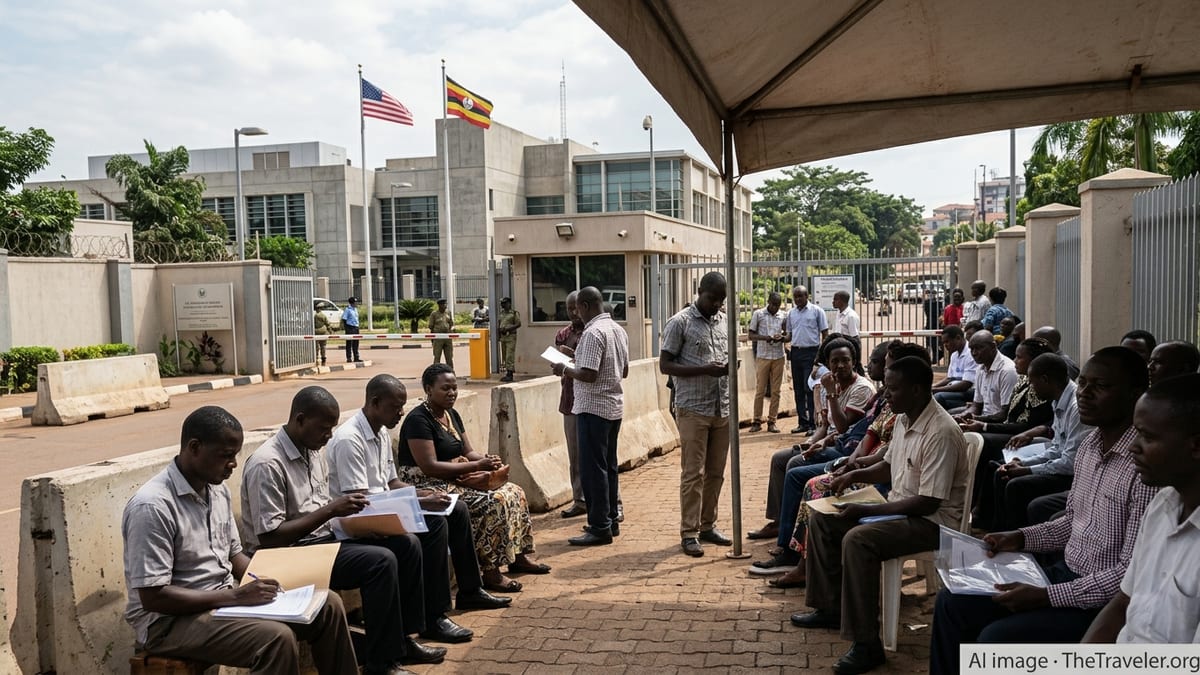
Embassy Guidance Highlights Long-Standing Self-Sufficiency Standard
Recent updates on the U.S. Embassy Kampala’s public information channels reiterate that Ugandan nationals applying for U.S. visas are expected to show they can remain self-sufficient during their stay. The language points directly to the Immigration and Nationality Act requirement that applicants who are “likely to become a public charge” can be found inadmissible and refused a visa.
Publicly available information shows that consular officers assessing applicants in Uganda are paying close attention to financial stability, travel purpose, and ties to home, framing them through the lens of self-sufficiency. The embassy’s materials emphasize that visas are not travel guarantees and that decisions turn on whether applicants appear able to cover their own costs without resorting to U.S. government support.
While the public charge concept has existed in U.S. law for decades, the renewed focus under the “self-sufficiency” label is drawing attention among prospective travelers in Uganda. Reports indicate that travel agents, education advisers, and migration consultants are now urging clients to prepare more robust evidence of income, savings, and sponsorship than in previous years.
Public Charge Rules and the ‘Self-Sufficiency’ Message
The self-sufficiency language at the U.S. Embassy in Uganda reflects broader U.S. policy around the public charge ground of inadmissibility. Federal regulations outline how decision-makers evaluate whether someone is likely to rely primarily on certain public benefits, taking into account age, health, income, assets, education, and family circumstances as part of a single “totality of the circumstances” test.
Current federal rules, adopted after a series of reversals and clarifications between 2019 and 2022, focus primarily on cash assistance for income maintenance and long-term institutionalization at government expense when defining a public charge. Non-cash programs such as most nutrition, emergency medical, and pandemic-related benefits are not treated the same way under the prevailing framework, although policymakers continue to debate the scope of programs that should be included.
For Ugandan visa applicants, the key implication is that they are expected to show not only that they have a plan to cover the costs of travel, accommodation, health care, and daily living, but also that their overall profile does not suggest long-term dependence on government support. According to published coverage of U.S. consular practice, that assessment can draw on bank statements, employment history, sponsor affidavits, and evidence of prior international travel.
What Ugandan Visa Applicants Are Being Warned About
Public embassy information aimed at Ugandan audiences stresses that visa applicants should not expect to rely on public benefits once in the United States. Messaging tied to the self-sufficiency rule cautions that misrepresenting financial circumstances, hiding periods of unemployment, or presenting unverifiable documentation can lead to refusals and, in some cases, longer-term ineligibilities.
Reports from regional media and migration-focused organizations note that consular staff in East Africa have been returning to a more rigorous review of assets, income, and sponsorship after pandemic-era disruptions. In Uganda, this appears to translate into closer scrutiny of whether travelers have realistic budgets for studies, conferences, tourism, or medical trips, and whether they understand that U.S. public assistance is generally not a fallback option for short-term visitors.
Prospective students in particular are being highlighted in commentary around the self-sufficiency rule. Information circulating among university advisers and education fairs in Kampala indicates that those seeking F or M student visas are urged to document full program costs, including tuition, housing, health insurance, and living expenses, with clear evidence of how those costs will be met over the entire course of study.
Practical Effects on Travel, Study, and Family Visits
The self-sufficiency warning comes at a time when Ugandan interest in U.S. travel, education, and migration pathways is growing. Airline connectivity through regional hubs and expanding scholarship opportunities have made the United States an increasingly visible destination, while social media continues to amplify stories of both successful and denied applications.
For short-term visitors applying for B1 or B2 visas, the heightened emphasis on self-sufficiency is likely to translate into more detailed questioning about employment, business activities, and family finances. Travel advisers in Kampala report that some applicants are being encouraged to provide additional context, such as business registration documents or land titles, to support claims that they can fund their trips without outside help.
Family-based immigrant visa applicants are also affected by public charge and self-sufficiency considerations, even though their cases are processed under somewhat different rules. In these situations, the principal concern is often whether the U.S.-based sponsor meets the income thresholds and can credibly show capacity to support the incoming relative, an assessment that can still incorporate broader indicators of self-reliance and long-term financial outlook.
Observers note that the cumulative effect of the current framework is to reward applicants who have spent time compiling a clear financial narrative and who can explain convincingly how they will manage health care, housing, and other costs in the United States without seeking public assistance.
Calls for Clarity and Careful Preparation
The recent spotlight on the self-sufficiency rule at the U.S. Embassy in Uganda is prompting renewed calls from civil society groups and information campaigns for clearer, accessible guidance. Advocacy organizations that track migration trends in East Africa argue that confusion over which public programs count against applicants has, in the past, discouraged eligible immigrants and visitors from using critical health or nutrition services in their home countries.
Legal analysts writing in policy briefs and immigration law reviews emphasize that the public charge test remains discretionary and case-specific. They note that the U.S. framework directs decision-makers to balance negative indicators, such as very low income or serious health conditions without coverage, against positive factors, including higher education, strong job prospects, and evidence of private health insurance.
For Ugandan applicants, the practical message from the embassy’s warning is that careful preparation is increasingly essential. Travel and education consultants in Kampala advise clients to gather thorough documentation, avoid last-minute submissions, and ensure that sponsorship and income claims are internally consistent and supported by verifiable records. The emerging consensus in public commentary is that those who can demonstrate a realistic, detailed plan for self-support are best positioned to navigate the evolving public charge landscape and secure a U.S. visa.