

More news on this day
The United States Embassy in Uganda is drawing renewed attention to a tightened “self-sufficiency” standard in visa processing, warning that applicants who appear likely to rely on public benefits in the United States face heightened scrutiny, additional financial requirements and, in some cases, the suspension of immigrant visa issuance under a broader global public charge review.
Get the latest news straight to your inbox!
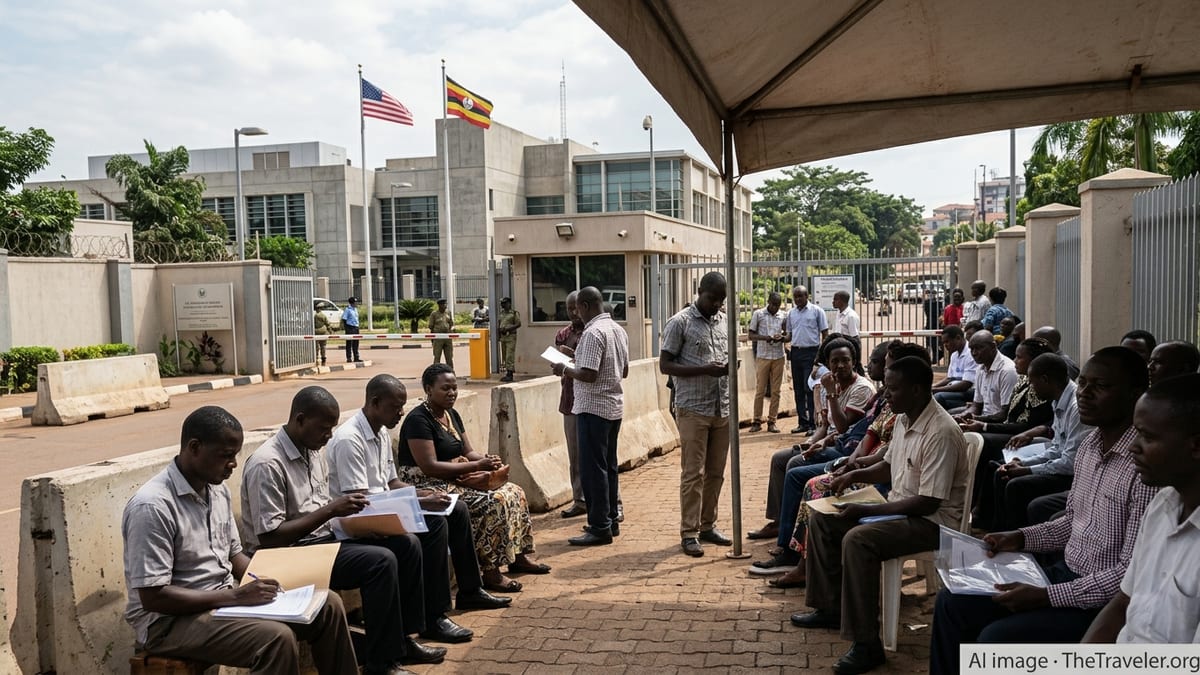
New Focus On Public Charge And Self-Sufficiency
Recent public guidance from the U.S. government underscores a coordinated shift toward stricter enforcement of the “public charge” ground of inadmissibility, a long-standing provision of U.S. immigration law that weighs whether a prospective immigrant is likely to depend on government support. Updated State Department instructions from late 2025 and early 2026 emphasize that visa applicants are expected to demonstrate financial independence and reliable support, with consular officers directed to examine a wide range of economic and personal factors in every case.
According to publicly available policy summaries, the self-sufficiency focus is framed around protecting taxpayer-funded programs and prioritizing migrants who can sustain themselves without resorting to long-term welfare in the United States. New guidance encourages consular posts worldwide, including Kampala, to weigh not only the applicant’s income and savings, but also employment prospects, education, health conditions and family circumstances when considering visa eligibility.
Reports on the evolving framework indicate that consular officers have been instructed to take a “totality of circumstances” approach. While this standard has existed in law for decades, analysts note that recent guidance appears to expand how aggressively it is applied, signaling that marginal or borderline cases may now be more likely to result in refusals or lengthy administrative reviews.
Legal and advocacy briefings further point out that the intensified public charge review is part of a broader recalibration of immigration policy under the current administration, which has made immigrant self-sufficiency a stated priority across both immigrant and nonimmigrant visa categories. For many Ugandan travelers, this means that questions about finances, employment, family sponsorship and any historical links to public benefits are likely to feature more prominently in consular interviews.
Uganda Listed Among Countries Facing Immigrant Visa Suspension
The shift in tone from the U.S. Embassy in Uganda comes as the State Department conducts an expansive public charge reassessment affecting 75 countries worldwide. Public alerts and legal commentary show that Uganda appears on the list of nationalities whose immigrant visa processing has been suspended while the review proceeds, alongside states in Africa, Asia, the Middle East, Latin America and Eastern Europe.
Guidance circulated in January 2026 indicates that immigrant visas for nationals of the affected countries are paused from late January “until further notice,” with the stated goal of ensuring that new permanent residents are unlikely to become dependent on U.S. public assistance. For Ugandan families in the midst of the immigration process, this translates into delayed interview scheduling, frozen case adjudications and a high degree of uncertainty about future travel plans.
Specialist immigration bulletins note that the suspension applies specifically to immigrant visas, such as family-based and employment-based permanent residence cases, rather than to all forms of travel. Nonimmigrant categories, including temporary business, tourism and student visas, technically remain available, though they too are subject to stricter public charge screening and, in some cases, additional financial conditions imposed at the discretion of consular posts.
Regional observers point out that Uganda’s inclusion in the 75-country list intersects with other recent U.S. measures targeting overstay risk and benefit use, creating a more complex landscape for those seeking long-term relocation. The combination of a formal immigrant visa pause and tougher discretionary hurdles in temporary categories is being described in local media as a significant tightening of the migration corridor between Kampala and U.S. destinations.
Visa Bonds, Commitment Fees And Financial Documentation
Alongside the self-sufficiency emphasis, Ugandan media and legal analyses highlight the expansion of visa bonds and related “commitment” fees targeting travelers considered to present elevated risks of overstaying or breaching visa terms. Several news outlets in Kampala report that Ugandan applicants in certain categories may now be asked to post a sizeable refundable bond, at times quoted in the range of 5,000 to 15,000 U.S. dollars, before receiving a visa.
These measures, while formally distinct from public charge rules, are widely described as part of the same policy direction: discouraging misuse of visas and encouraging applicants with strong financial ties and clear return incentives. Commentators explain that payment of such a bond does not replace the need to demonstrate self-sufficiency, but rather operates as an additional safeguard. Applicants can be required to both satisfy consular officers that they will not rely on U.S. public benefits and, in some cases, deposit funds as a guarantee that they will comply with the terms of their stay.
Travel and migration advisers in Uganda are urging prospective visitors and immigrants to prepare far more extensive financial documentation than in previous years. This can include bank statements, employment letters, business records, property titles, tax returns and evidence of family sponsorship with stable income levels. The goal, they say, is to make it easier for consular officers to conclude that the traveler will not need public benefits and is likely to support themselves or be supported privately.
For applicants from lower-income backgrounds, the enhanced requirements may present significant practical hurdles. Commentaries in regional press warn that the combination of possible bond payments, higher evidentiary standards and the risk of outright immigrant visa suspension could effectively price some families out of U.S. travel or long-term settlement, even when they have legitimate reasons for seeking entry.
Practical Implications For Ugandan Travelers And Diaspora Families
The embassy’s emphasis on self-sufficiency is reshaping the preparations of Ugandans planning to visit, study or reunite with relatives in the United States. Agents and legal practitioners who track U.S. policy trends advise that applicants should assume that every aspect of their financial profile will be scrutinized, from current employment and savings to support pledged by U.S.-based sponsors through affidavits and joint sponsorship arrangements.
Public information on the State Department’s evolving framework highlights that factors such as age, education, language skills and health conditions can influence how consular officers gauge the likelihood of future benefit use. Younger applicants with strong job prospects and clear academic or professional plans may find it easier to meet the standard, while older applicants with limited income or significant medical needs could face tougher questions about how they will fund healthcare and daily living expenses without access to public programs.
For many Ugandan diaspora families, the most immediate impact is uncertainty. Cases already in process may be held in limbo by the broader suspension of immigrant visa issuance for the 75 countries, while would-be visitors contend with the possibility of extra fees, longer interviews and stricter refusals. Travel planners in Kampala report that some travelers are now exploring alternative destinations or postponing U.S. plans until there is greater clarity on how long the public charge reassessment will last.
At the same time, legal commentators stress that the public charge test does not automatically disqualify all applicants of modest means. The totality of circumstances approach allows favorable factors, such as strong family support, credible job offers or significant private health insurance coverage, to offset limited personal savings. However, they caution that proving such support now requires a higher level of documentation and preparation than in previous years.
How Applicants Can Respond To The New Landscape
For Ugandans who still intend to pursue travel or immigration to the United States, current guidance from immigration-focused organizations emphasizes preparation and information. Applicants are encouraged to review official State Department and embassy communications regularly, ensure that application forms are accurate and complete, and assemble detailed supporting files that speak directly to questions of self-sufficiency and non-reliance on public benefits.
Experts writing in global mobility and legal briefings suggest that prospective immigrants in particular may wish to seek individualized advice before investing heavily in petition fees, medical exams or travel plans. Given the suspension of immigrant visa processing for Uganda under the ongoing public charge reassessment, some families may decide to pause new applications or focus instead on preserving eligibility for when processing resumes.
Travel industry observers in East Africa note that the emerging “self-sufficiency” rule is likely to have wider effects on tourism flows, educational exchanges and business travel between Uganda and the United States. Universities, conference organizers and corporate partners may see greater demand for support letters and financial guarantees as travelers attempt to demonstrate that they will not draw on U.S. public benefits during their stay.
For now, the U.S. Embassy’s warning about self-sufficiency functions as both a caution and a roadmap. It signals a significantly more demanding environment for Ugandan visa applicants, while also outlining the types of financial stability, documentation and planning that are increasingly critical for those hoping to cross the Atlantic for study, family reunification, work or tourism.