

More news on this day
The U.S. Embassy in Jerusalem is urging Americans to consider leaving Israel "today" as Secretary of State Marco Rubio prepares a high‑stakes visit to the country amid rapidly escalating tensions between Washington and Tehran, heightening uncertainty for travelers across the Middle East and beyond.
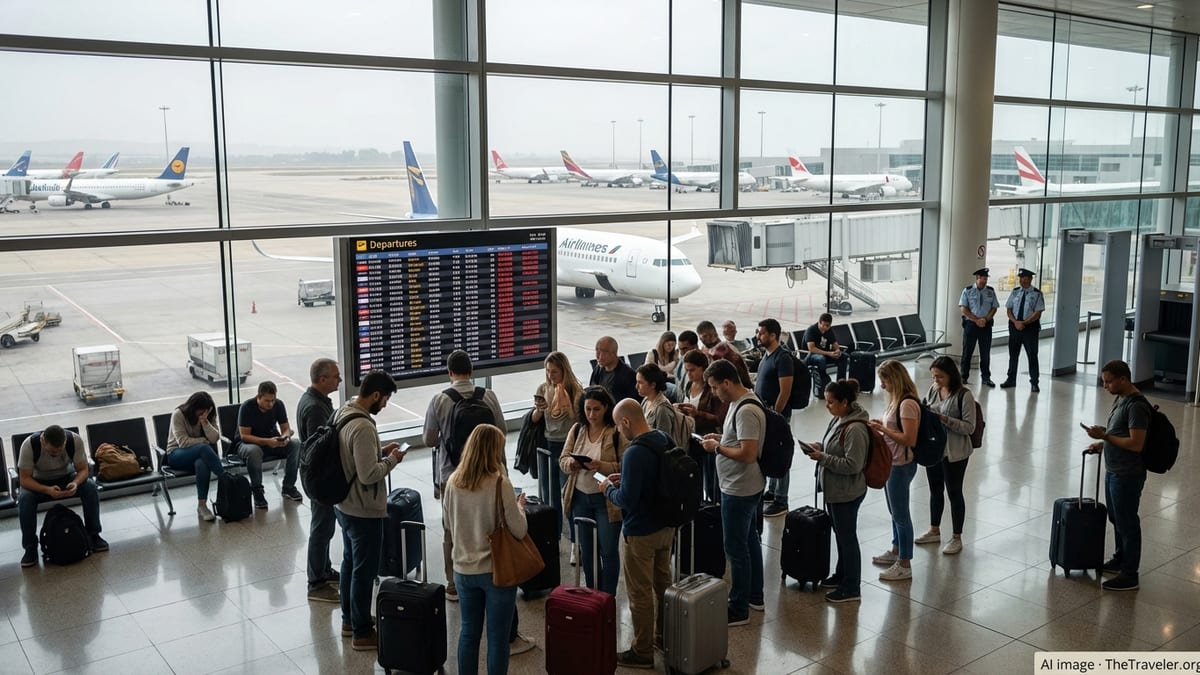
Embassy Urges Swift Departures as Risk Calculus Shifts
In recent days, the U.S. Embassy in Jerusalem has implemented an authorized departure policy for nonessential staff and their families, a rare step that allows eligible personnel to leave at government expense. Ambassador Mike Huckabee, in messages to embassy staff, encouraged those weighing the option to move quickly while commercial flights remain available, underscoring concerns that air links could be curtailed with little warning.
Public security alerts from the embassy warn of a complex and fluid threat environment shaped by terrorism, civil unrest and the potential for a wider regional conflict involving Iran. American citizens in Israel are being advised to closely monitor local developments, keep travel documents and contingency plans ready, and be prepared for sudden changes in airport operations, border procedures and domestic movement restrictions.
At the same time, the State Department has issued a broader worldwide caution following the launch of U.S. combat operations targeting Iranian assets. Officials warn that Americans, particularly those in the Middle East, may experience travel disruptions linked to periodic airspace closures and evolving security conditions, making routine journeys significantly less predictable.
The embassy in Jerusalem has reiterated long‑standing guidance that U.S. citizens should avoid border areas, flashpoint regions and locations with a history of attacks, including popular tourist hubs and transportation nodes. Travelers already in the country are being told to remain vigilant, review personal security plans and maintain flexible itineraries in case rapid departure becomes necessary.
Rubio’s Israel Visit Highlights High‑Stakes Diplomacy
Against this backdrop, Marco Rubio is preparing to travel to Israel early in the week for meetings with Prime Minister Benjamin Netanyahu and other senior officials focused on Iran, Lebanon and broader regional security. The State Department has framed the visit as part of a wider push to coordinate responses to Tehran’s nuclear and military activities and to shore up allied confidence at a volatile moment.
Rubio’s trip comes just days after he formally designated Iran a state sponsor of wrongful detention and signaled that additional steps, including potential restrictions on the use of U.S. passports for travel to Iran, are under consideration. The move reflects mounting frustration in Washington over the continued imprisonment of foreign nationals and stalled efforts to secure their release.
Diplomats and analysts note that the timing of the visit is delicate. U.S. military assets, including aircraft and warships, have been repositioned across the region as contingency planning intensifies, while Iran and its allies warn of possible retaliation for recent strikes. Rubio’s presence in Israel is likely to be read in Tehran as a sign that Washington is keeping open both diplomatic and military options.
For travelers, his visit underscores how closely foreign policy and on‑the‑ground mobility are now intertwined. Any perception that talks are faltering or military action is imminent can quickly ripple through airline schedules, insurance coverage and local security postures, complicating even well‑planned trips.
Travel Disruption Spreads Across Regional Hubs
As tension has climbed, major aviation hubs across the Gulf and wider Middle East have begun to feel the strain. Temporary airspace closures over parts of the region have forced airlines to reroute or suspend flights, triggering a cascade of delays and cancellations that is affecting passengers far beyond the immediate conflict zone.
Carriers serving key transit points have announced short‑notice suspensions of certain routes, citing safety reviews and coordination with national aviation authorities. In some cases, departures have been halted for hours at a time pending security assessments, leaving travelers stranded in terminals or scrambling to rebook onto limited alternative services.
Travelers connecting through the region are being urged to check flight status frequently, maintain close contact with airlines and remain prepared for extended layovers or unplanned overnight stays. Even passengers whose final destinations are in Europe, Asia or Africa can find themselves caught in the disruption if their itineraries depend on Middle Eastern stopovers.
Global airports far from the conflict have begun warning passengers about possible knock‑on effects as aircraft and crews fall out of position and schedules are rebuilt. Industry observers say that if tensions remain elevated or expand, the constellation of last‑minute changes is likely to grow, with longer flight times and reduced capacity on some long‑haul routes.
Heightened Security Guidance for American Travelers
In parallel with embassy‑specific alerts, the State Department has reinforced a slate of security recommendations for U.S. citizens across the region. Americans are being encouraged to enroll in the Smart Traveler Enrollment Program so they can receive time‑sensitive messages from embassies and consulates, including shelter‑in‑place directives and evacuation guidance.
Officials emphasize that personal risk can vary widely depending on location, but they caution that tourist sites, transportation hubs, markets and government facilities may all be considered potential targets. Travelers are advised to avoid large gatherings, monitor reputable local and international news outlets and maintain a low profile, particularly in areas where anti‑U.S. sentiment may be inflamed by the latest developments.
Some embassies have begun explicitly recommending that American citizens defer nonessential travel to Israel, Lebanon, Gaza and parts of the broader Middle East until the security picture becomes clearer. Those who choose to remain in or travel through the region are urged to identify multiple exit options, keep critical supplies on hand and ensure that family and friends in the United States are aware of their movements.
Travel experts note that insurance policies may have limitations related to conflict and government travel warnings, making it essential for travelers to review coverage details carefully. They also stress the importance of flexibility, advising Americans to be ready to adjust itineraries, shift routes away from high‑risk hubs or postpone trips if the diplomatic and military landscape deteriorates further.
Balancing Wanderlust With a Rapidly Evolving Crisis
The unfolding Iran crisis presents a stark dilemma for travelers drawn to Israel’s historic sites, vibrant cities and religious landmarks. While daily life in many areas continues with a measure of normalcy, the elevated risk environment and the U.S. government’s unusually strong language about potential conflict have injected a new layer of uncertainty into travel planning.
Tour operators and hotels report a surge in inquiries from American clients seeking clarity on safety conditions, cancellation terms and alternative destinations. Some visitors are choosing to cut short their stays or reroute to nearby Mediterranean countries, while others are adopting a wait‑and‑see approach in hopes that diplomacy will defuse the situation.
For now, officials and security analysts are united in advising that anyone contemplating travel to Israel or its neighbors weigh the value of the trip against the possibility of sudden escalation. Rubio’s impending visit, coupled with the embassies’ sharpened warnings, signals that the coming days may prove pivotal both for regional stability and for the freedom of movement that underpins modern global tourism.
As events unfold, American travelers will be watching not only headlines from Jerusalem and Tehran, but also the fine print of airline advisories and embassy alerts that can determine whether a long‑planned journey proceeds, is rerouted or is put on hold altogether.