

More news on this day
New York and Washington, D.C., became focal points for anxious travelers on March 3 as the United States moved to organize evacuations of its citizens from a rapidly widening Middle East conflict, while cascading airspace closures and airline suspensions sent shockwaves through global travel networks.
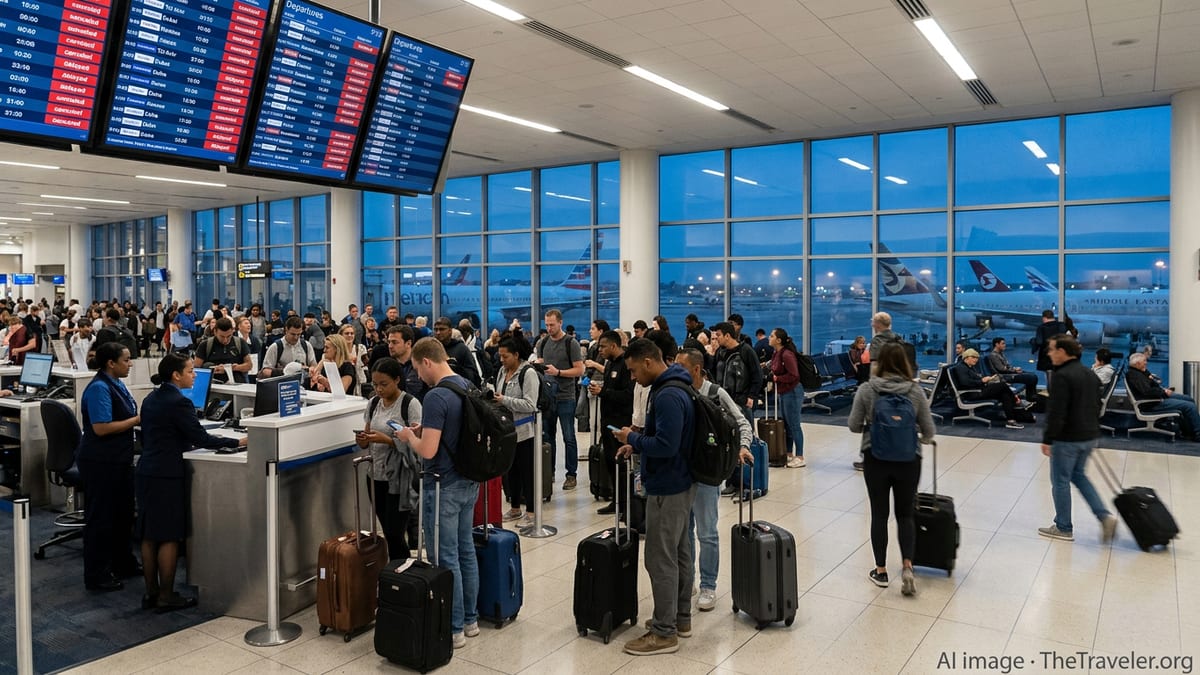
U.S. Activates Evacuation Efforts Amid Widening War
The U.S. State Department confirmed it is securing military aircraft and charter flights to help citizens leave the Middle East as hostilities involving the United States, Israel and Iran intensify across the region. Officials said they are in direct contact with thousands of Americans seeking guidance on how to depart, even as traditional commercial options dwindle.
In recent days, senior consular officials have urged Americans in countries including Iran, Israel, Bahrain, Egypt, Iraq, Jordan, Kuwait, Lebanon, Oman, Qatar, Saudi Arabia, Syria, the United Arab Emirates and Yemen to depart immediately using any remaining commercial routes. The advisory reflects a dramatic escalation in security concerns that have closed or restricted airspace in multiple states and prompted attacks on U.S. diplomatic facilities.
U.S. embassies in several Gulf and Levant countries have curtailed services or shut to the public, limiting on-the-ground assistance for travelers and expatriates. In some capitals, non-emergency U.S. government personnel and family members have been ordered to leave, further shrinking the official footprint in a region where tens of thousands of Americans live, work or transit through major hubs.
In Israel, where demand for outbound seats remains intense, the U.S. ambassador has warned that the embassy cannot currently guarantee or directly provide evacuation assistance, underscoring the reliance on host-country shuttles, land routes and sporadic commercial services for those attempting to exit.
Airspace Closures and Airline Suspensions Ripple Worldwide
The most immediate impact for travelers has been an unprecedented level of disruption to air routes across the Middle East and beyond. Aviation tracking data show that several countries have fully shut their airspace, while others have imposed partial restrictions as missile and drone strikes expand beyond Iran and Israel to neighboring states and key energy and transport corridors.
Major European and North American carriers have suspended flights to frontline destinations such as Tel Aviv, Beirut, Tehran and parts of the Gulf, and many have extended those suspensions to busy hubs including Dubai, Doha, Dammam and Riyadh for at least the coming days. Some airlines are allowing free rebooking or refunds for passengers scheduled to fly to or via the region through mid-March, but availability on alternative routings remains tight.
Industry analysts estimate that tens of thousands of flights have been canceled or rerouted since the start of the crisis, affecting well over a million passengers. Long-haul routes between Europe and Asia that typically overfly the Middle East are being pushed north or south, adding hours to flight times and increasing fuel burn, while some carriers have temporarily withdrawn from certain city pairs altogether.
For U.S. travelers departing from New York, Washington and other major gateways, the changes are most visible on routes to Israel and the Gulf. U.S. airlines have halted service to Tel Aviv and suspended some links to Doha and Dubai, forcing travelers to rely on complex multi-stop itineraries through remaining open hubs in Europe, Africa or South Asia, or to delay travel entirely.
Embassy Strain and Visa Services Disruptions
Beyond flight cancellations, the conflict is straining U.S. consular services throughout the region. Multiple embassies have suspended routine operations, canceled visa appointments and instructed U.S. citizens to avoid mission facilities unless specifically directed to appear. Security incidents, including strikes near or on diplomatic compounds, have heightened concerns for both staff and visitors.
Immigration and mobility specialists report widespread delays in processing U.S. visas for applicants in affected countries, with appointment slots disappearing and rescheduling pushed weeks or months into the future. Business travelers, students and family visitors who had planned spring departures via Middle Eastern posts are now confronting uncertainty about when, or where, they will be able to complete their paperwork.
Washington has activated task forces to coordinate messaging to citizens abroad, including expanded use of messaging apps and social media for emergency alerts. Travelers already in the region are being urged to enroll in official alert systems and to maintain flexible plans, as advice can shift quickly with the security situation on the ground.
However, lawmakers in the United States have criticized what they describe as a gap between the urgent calls for citizens to leave and the limited government-operated evacuation options. Pressure is mounting on federal agencies to make clear where military or charter flights will depart from, and how stranded Americans can safely reach those departure points amid ongoing attacks and transport shutdowns.
Impact on Global Connections Through Gulf and Levant Hubs
The disruption is particularly acute because Middle Eastern hubs such as Dubai, Doha, Abu Dhabi and Riyadh serve as vital connectors between North America, Europe, Asia and Africa. With large portions of their schedules suspended and airspace corridors constrained, ripple effects are spreading far beyond the conflict zone.
Travelers with no plans to enter the region directly, but who were booked to transit through Gulf hubs, are now seeing their itineraries upended. Airlines are attempting to reroute passengers through alternative European or Asian gateways where possible, but bottlenecks are forming as capacity is stretched and crew availability is affected by duty-time limits and security restrictions.
Corporate travel managers say they are reworking routings for employees, canceling nonessential trips and revising risk assessments for any travel that still requires transit near the conflict area. Tour operators with itineraries combining the Middle East with neighboring destinations, such as North Africa or the Caucasus, are fielding a surge in calls from clients seeking refunds, credits or changes to later dates.
For airports in New York, Washington and other major U.S. cities, the turmoil translates into shifting flows of inbound and outbound passengers. Some terminals are seeing sharp drops in Middle East-bound departures, even as help desks and airline counters face higher demand from travelers trying to secure last-minute changes, refunds or emergency repatriation options.
Advice for Travelers and Changing Risk Calculus
Travel experts emphasize that the situation remains fluid and that conditions can change within hours. They advise anyone with plans to travel to, from or through the Middle East in the coming weeks to closely monitor airline communications and official government advisories, and to maintain realistic expectations about delays, cancellations and rebookings.
American citizens currently in the affected countries are being urged to prioritize safety over itinerary commitments, to avoid demonstrations and crowded areas, and to prepare contingency plans if commercial flights become unavailable. That may include identifying land borders that remain open, confirming entry requirements for neighboring countries and staying in regular contact with family or employers outside the region.
For would-be travelers in the United States considering new bookings to the Middle East, many tour operators and travel insurers recommend postponing nonessential trips until there is greater clarity about both security conditions and airline schedules. Where travel remains necessary, flexible tickets, comprehensive travel insurance and detailed risk assessments are increasingly seen as essential rather than optional.
As governments, airlines and international organizations scramble to adapt, New York and Washington are set to play a key role in receiving evacuees and rerouted passengers in the days ahead, turning the evolving Middle East crisis into a pressing travel reality for flyers far beyond the region itself.