

More news on this day
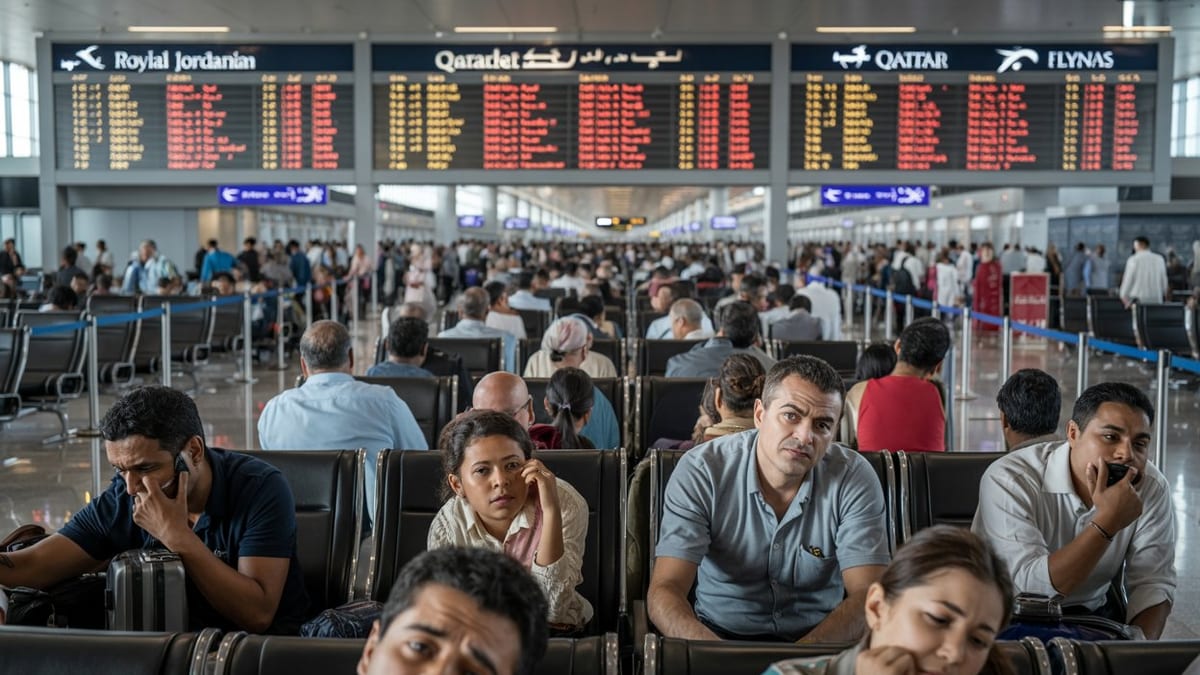
Air travelers across the United States faced a fresh wave of disruption on April 6 as major hubs from Atlanta and New York to Los Angeles and Fort Lauderdale reported 191 flight cancellations and 3,022 delays, snarling operations at Delta Air Lines, Alaska Airlines, American Airlines, United Airlines, regional operator Endeavor Air and several other carriers.
Get the latest news straight to your inbox!
Nationwide Disruptions Concentrated at Major Hubs
Publicly available flight-tracking data for April 6 indicates that the latest round of disruption has been concentrated at the country’s busiest hubs, including Hartsfield Jackson Atlanta International Airport, New York area airports, Boston Logan International, Los Angeles International, Fort Lauderdale Hollywood International and Detroit Metropolitan Wayne County Airport. The pattern mirrors recent holiday and weather related turbulence that has repeatedly stressed airline schedules since the start of the year.
Reports show that although 191 cancellations represent a relatively small share of the day’s total schedule, the 3,022 delays have rippled across the network, pushing back departures by hours and complicating connections. Travel industry coverage notes that this “high delay, moderate cancellation” mix has become increasingly common, as carriers attempt to preserve as many flights as possible even when conditions force significant slowing of operations.
According to aviation data cited in multiple news and industry outlets, Atlanta and New York continue to act as bellwethers for the rest of the system. When thunderstorms, low clouds or air traffic flow restrictions reduce the number of aircraft that can safely move through these choke points each hour, the resulting bottlenecks are quickly felt in secondary markets such as Fort Lauderdale, Detroit and Boston.
In this latest episode, the impact has also extended to key leisure gateways on both coasts. Delays in Fort Lauderdale and Los Angeles have disrupted both domestic and transborder routes, affecting travelers headed to Caribbean and Latin American destinations as well as cross country services.
Delta, American, United and Alaska Among Most Affected
Public dashboards tracking airline performance on April 6 indicate that the brunt of today’s disruption has fallen on the largest U.S. carriers, with Delta Air Lines, American Airlines, United Airlines and Alaska Airlines all reporting a mix of cancellations and significant delays. Regional affiliates, particularly Endeavor Air, have also seen elevated levels of disruption on feeder routes into major hubs.
Delta appears prominently in the cancellation and delay statistics, reflecting the airline’s dominant presence in Atlanta, Detroit, New York LaGuardia and Boston. Regional operator Endeavor, which flies many Delta Connection routes, has accounted for a notable share of the scrubbed and late departures, highlighting how tight crew and aircraft rotations at smaller stations can quickly magnify weather or air traffic disruptions higher up the network.
American and United have experienced scattered cancellations but a far larger volume of delayed flights, especially at New York and other East Coast airports where thunderstorms and traffic management initiatives have periodically slowed operations. Alaska, with a strong presence on the West Coast, has seen delays ripple through its Los Angeles services as aircraft and crews arrive late from earlier segments.
Industry analysts point out that on days like April 6, the operational strategies of the big carriers tend to converge. Rather than canceling large blocks of flights outright, many airlines opt to stretch out turn times, consolidate some frequencies and rely on rolling delays to keep more of the schedule technically intact, even at the cost of prolonged waits for passengers.
Weather, Congestion and Crew Logistics Drive the Numbers
While no single catastrophic event has been identified behind the 191 cancellations and 3,022 delays, publicly available weather and aviation bulletins suggest a combination of lingering storm systems in the eastern United States, low visibility periods at key hubs and heavy post holiday demand. These factors have prompted a series of air traffic flow programs that reduce the number of arrivals and departures per hour at the most congested airports.
When arrival rates drop at locations such as Atlanta, New York or Boston, airlines must decide in real time which flights to operate and which to cut. Industry coverage explains that carriers generally prioritize long haul and hub to hub services, while regional spokes and off peak frequencies are more vulnerable to cancellation. That pattern appears to be reflected in today’s data, with a disproportionate share of cancellations among regional aircraft while mainline flights endure lengthy delays.
Crew logistics further complicate recovery efforts. Federal duty time rules limit how long pilots and flight attendants can remain on duty, and extended delays can push crews past those thresholds. Once that happens, even flights with aircraft and gate space available can be forced to cancel or endure additional delays while replacements are located, especially at outstations with fewer reserve staff.
Operational specialists also note that airline networks remain sensitive to disruption following a series of major winter storms earlier in 2026. Aircraft and crew positioning has improved since the height of those weather events, but the system continues to operate with limited slack, making it harder to absorb even moderate weather or traffic shocks without visible customer impact.
Impact on Travelers and What Passengers Can Do
For travelers, the uneven pattern of relatively modest cancellation counts paired with thousands of delays can be particularly frustrating. Many passengers find that their flights eventually operate, but with enough of a delay to jeopardize connections, hotel reservations or time sensitive commitments at their destinations.
Consumer advocates and travel experts consistently recommend that passengers treat days like April 6 as high risk for missed connections and extended layovers, especially when itineraries route through multiple busy hubs. Booking longer connection times, choosing earlier departures where possible and avoiding tight back to back commitments at the end of a travel day can reduce the likelihood of major disruption.
Public information from the U.S. Department of Transportation and major carriers underscores that passengers are generally entitled to a cash refund if a flight is canceled and the traveler decides not to fly, even on nonrefundable tickets. Policies around meal vouchers, hotel accommodation and rebooking on competing airlines vary, so travelers are encouraged to review airline customer service plans and keep documentation of delays and cancellations.
Travel planning resources also suggest that passengers monitor their flight status frequently via airline apps, airport information screens and flight tracking services, as gate changes and rolling delays are common during widespread disruption. In some cases, proactively requesting an earlier connection or a different routing before a delay snowballs can make the difference between an on time arrival and an unplanned overnight stay.
Ongoing Volatility Highlights Strain on U.S. Air Travel System
The events of April 6 follow a series of turbulent travel periods in early 2026 that have included large scale weather related shutdowns and protracted delays across multiple holidays. Although the numbers reported today are far below the historic waves of mass cancellations seen during major winter storms, they reinforce a broader pattern of volatility that has become familiar to frequent flyers.
Aviation data over recent seasons indicate that while total cancellation rates have improved compared with the most disruptive days of the past few years, the incidence of significant delays remains high at many U.S. airports. Congestion at major hubs, tight aircraft utilization and ongoing crew and maintenance constraints mean that even routine thunderstorms or short lived ground stops can result in hundreds of delayed departures.
For airlines, the latest disruptions underscore the challenge of balancing ambitious schedules with the operational resilience needed to handle increasingly erratic weather and sustained demand. Investments in crew reserves, spare aircraft, improved deicing and upgraded air traffic management technology are among the measures being discussed in industry forums as potential mitigations.
For now, travelers navigating the U.S. system are likely to continue facing days like April 6, when relatively modest cancellation totals mask a much broader web of delay. As the busy summer season approaches, both airlines and passengers will be closely watching how the system copes with continued pressure on some of the world’s most heavily used air corridors.