

More news on this day
Air travel across the United States faced another day of heavy disruption as 801 flights were cancelled and 6,232 delayed, with major hubs in Chicago, Boston, Orlando, Houston and Minneapolis reporting cascading schedule breakdowns for United, American, Delta, SkyWest and other carriers.
Get the latest news straight to your inbox!
Major Hubs Buckle Under Nationwide Disruption
Publicly available tracking data shows that the disruption is widespread but concentrated at some of the country’s busiest airports. Chicago O’Hare, a primary hub for both United Airlines and American Airlines, reported one of the highest tallies of cancellations and delays, affecting both domestic and international operations. Passengers faced rolling gate changes and extended waits as congestion built throughout the day.
Boston Logan, Orlando International, Houston’s George Bush Intercontinental and Minneapolis–Saint Paul International also featured among the hardest-hit airports, indicating a nationwide pattern rather than an isolated regional issue. The impacts were visible from early morning banks of departures through evening peak periods, limiting options for same-day rebooking and tightening available seat capacity on remaining flights.
Secondary hubs and focus cities across the network experienced knock-on effects, as aircraft and crews scheduled to flow through Chicago, Houston and Minneapolis arrived late or not at all. This created a ripple of delays at smaller airports that rely heavily on connecting traffic, complicating travel plans even for passengers starting and ending their journeys far from the worst-hit cities.
The imbalance between cancelled and delayed flights underscores how carriers attempted to preserve as much of the schedule as possible. While more than eight hundred services were scrubbed entirely, thousands more departed later than planned, stretching airport infrastructure, ground handling resources and passenger services at terminals around the country.
United, American, Delta and SkyWest at the Center of the Turmoil
According to widely cited operational data, the brunt of the disruption fell on major U.S. network airlines and their regional partners. United Airlines, with large operations at Chicago O’Hare and Houston, saw a significant number of its flights either cancelled outright or departing behind schedule. These hubs act as critical connectors for United’s domestic and international routes, so problems in Chicago and Houston quickly rippled through the carrier’s broader system.
American Airlines also reported substantial operational challenges, particularly at airports where it competes head-to-head with other large carriers and relies on dense connecting banks. Delays on inbound aircraft limited the availability of planes and crews for onward legs, leading to rolling schedule adjustments and fewer options for passengers attempting to reroute on the same day.
Delta Air Lines, which maintains a strong national footprint and a hub network that includes Minneapolis, faced its own set of difficulties. Industry reporting in recent years has highlighted how system shocks, from severe weather to technology glitches, can leave even well-performing airlines exposed when recovery windows are tight. Elevated delay counts across Delta’s network during the latest disruption reflect how difficult it can be to restore normal operations once bottlenecks develop.
Regional operator SkyWest, which flies under the banners of several major airlines, including United and Delta, played a key role in the day’s statistics. Since regional flights often provide the first and last legs of longer itineraries, cancellations or delays at this level can strand passengers mid-journey or prevent them from reaching major hubs where alternative long-haul options might be available.
Weather, Congestion and Network Complexity Drive the Numbers
While precise causes vary by flight and by carrier, the pattern of disruption aligns with familiar stressors on the U.S. aviation system. Seasonal weather around Chicago, Minneapolis and Boston can reduce runway capacity and lengthen separation between aircraft, leading to immediate delays and, when backlogs become too large, preemptive cancellations. Even modest storms or shifting wind conditions at busy hubs may require controllers to limit arrivals and departures.
Operational data and historical performance trends suggest that airlines responded by trimming parts of their schedules to keep the remainder of their networks moving. Cancelling a proportion of flights can allow carriers to consolidate passengers, protect crew duty limits and reduce the risk of aircraft and staff becoming stranded out of position. However, this strategy inevitably leaves some travelers without same-day alternatives, especially on less frequent routes.
Congestion compounding earlier delays also played a significant role. Once flights begin to operate behind schedule, ground resources, gates and airspace slots are used less efficiently. This can turn localized issues at one or two airports into a multi-city challenge, as departures wait for arriving crews, aircraft undergo longer-than-expected turns, and sequencing into busy hubs slows.
The data on 6,232 delayed flights highlights how often airlines opted to operate services late rather than cancel them entirely. While this can help travelers eventually reach their destinations, it also translates into long terminal waits, missed connections and crowded standby lists as passengers seek to salvage complex itineraries.
Passengers Face Crowded Terminals and Limited Options
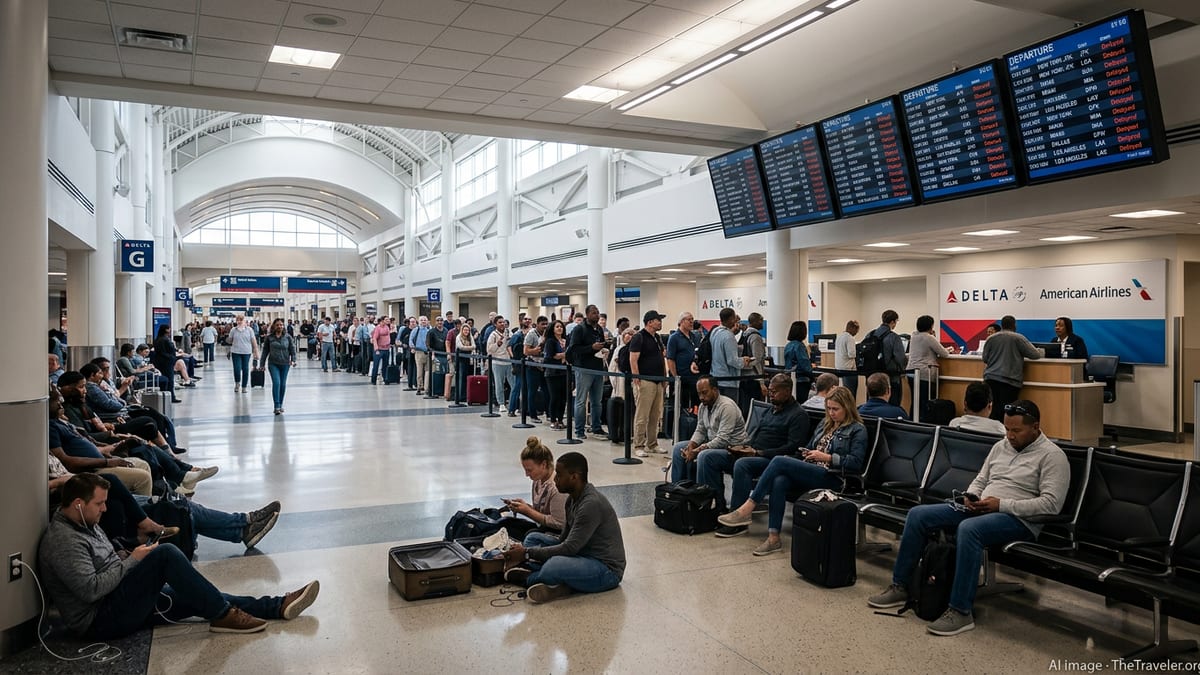
Reports from airports indicate that travelers encountered long lines at check-in counters, security checkpoints and customer service desks as the day’s disruptions unfolded. With thousands of flights operating behind schedule, gate areas became crowded, and overhead bin space on operating flights tightened as carriers attempted to rebook affected passengers onto any available seats.
Those flying on United, American, Delta and SkyWest faced particular challenges at their primary hubs, where dense schedules and heavy reliance on connections can magnify the impact of each cancellation or delay. A missed morning departure from a city such as Orlando or Boston could mean losing an entire sequence of onward connections through Chicago, Houston or Minneapolis, forcing travelers into overnight stays or substantial rerouting.
Public guidance from consumer advocates and regulatory resources emphasizes the importance of monitoring flight status through airline channels and tracking tools, as well as understanding each airline’s published policies on rebooking, meal vouchers and hotel accommodations during controllable disruptions. However, when issues involve broader system constraints, such as adverse weather or airspace capacity limits, options may be more limited, and passengers can wait many hours for the next feasible flight.
Families, business travelers and international passengers connecting through affected hubs were among those most exposed to prolonged disruptions. Missed events, lost workdays and additional out-of-pocket costs such as food, ground transportation and overnight stays are common consequences during large-scale operational breakdowns of this kind.
Lingering Effects Expected as Airlines Work to Rebalance Schedules
Historical patterns suggest that even after the daily tally of cancellations and delays subsides, residual disruptions can persist for at least another travel day. Aircraft and crews finishing their operating day far from their planned locations often create gaps in the schedule that must be covered through last-minute swaps, charters or further tactical cancellations.
Major carriers typically prioritize restoring regular operations at their largest hubs first, as reliability in these locations provides a foundation for the rest of the network. That often means some smaller cities, especially those served primarily by regional partners, continue to see uneven service while mainline banks in places such as Chicago, Houston and Minneapolis are rebuilt.
Analysts note that the U.S. aviation system has been operating close to capacity on many days, leaving limited buffers when large-scale disruptions occur. Tight turn times, high aircraft utilization and strong demand make it harder for airlines to absorb shocks without noticeable impacts on passengers. The day that saw 801 cancellations and 6,232 delays underscores how even a modest shift in conditions can trigger widespread schedule instability.
Travelers with upcoming itineraries through the most affected hubs are being advised by publicly available travel guidance to monitor conditions, consider earlier departures where possible and prepare contingency plans if their journeys depend on tight connections. As airlines work to rebalance fleets and rosters, further schedule adjustments remain possible before full normality returns.