

More news on this day
Flight delays are surging across the United States this spring as airlines, airports and federal agencies confront a convergence of severe weather, runway construction, staffing shortfalls and record travel demand that is straining the system’s capacity.
Get the latest news straight to your inbox!
Storm Systems Collide With Peak Spring Travel
Early April has brought a series of powerful storm systems that have repeatedly disrupted flight schedules just as spring break and Easter travel push passenger volumes higher. Publicly available delay data from flight-tracking services for the first week of April show several large U.S. carriers logging hundreds of delayed flights per day, with knock-on disruptions that lingered well beyond the worst of the weather.
On April 5, Easter Sunday, the Federal Aviation Administration’s national command center implemented multiple ground delay programs and temporary ground stops as low clouds, heavy rain and thunderstorms reduced visibility and slowed traffic along both coasts. Reports indicate that New York’s LaGuardia Airport faced an early-morning ground stop, while San Francisco International Airport saw average arrival delays of roughly half an hour, with the potential for further holds as the day progressed.
These weather-driven restrictions built on a pattern that has marked much of 2026 so far. Winter storms in January and February canceled or delayed tens of thousands of flights nationwide, and March brought another round of major disruptions as snow and severe storms swept through the Midwest and moved east. Each episode has underscored how little slack remains in airline and airport operations when storms collide with already busy travel days.
Industry analyses of federal statistics on delay causes indicate that weather remains the single largest contributor to disruption, but the effects are amplified when schedules are tight and infrastructure is operating near its limits. When airports are full and airlines have few spare aircraft, a weather delay at one hub can quickly ripple across the national network.
Runway Work and New Safety Rules Cut Capacity
Even in clear skies, airport construction and new safety measures are reducing the number of flights that can move through key gateways. The most visible example this spring is San Francisco International Airport, where a major runway project coincides with a permanent change to how closely spaced parallel runways can be used.
According to recent coverage in national newspapers and aviation outlets, the FAA has reduced the permitted arrival rate at San Francisco from about 54 planes per hour to 36, a cut of roughly one third. The change reflects both the temporary closure of pavement for construction and a more conservative approach to parallel arrivals intended to lower the risk of runway incursions and near-miss incidents.
Construction-related constraints are not unique to San Francisco. An FAA construction impact report for the current year outlines dozens of projects at airports nationwide that involve partial or full runway closures, nighttime shutdowns or taxiway reconfigurations. While many of these projects are scheduled during off-peak hours, they still require longer spacing between aircraft, more complex routing and, in some cases, caps on daily movements.
For travelers, these capacity cuts translate directly into more frequent holding patterns, gate holds and missed connections, even when the weather appears calm. Airlines have some ability to adjust schedules or shift flights to nearby airports, but the combination of limited airport capacity and strong demand means that many routes remain tightly packed around the available slots.
Staffing Shortfalls From Security Lines to Control Towers
Staffing challenges are another critical driver of this spring’s delays. The ongoing Department of Homeland Security funding lapse that began in mid-February has left Transportation Security Administration officers working without regular pay, and publicly available reporting shows an uptick in sick calls and attrition at some checkpoints.
In Houston, local coverage in early March described wait times of 90 minutes or more at Hobby Airport during the morning rush, with lines periodically stretching through the terminal. Similar reports from airports in the Washington region and other large metros have documented pockets of severe congestion at security screening, particularly during the busiest morning and evening banks, even as other days and times remain closer to normal.
Beyond security screening, the FAA continues to grapple with a shortage of fully certified air traffic controllers, especially at high-complexity facilities that manage traffic in and out of New York, parts of California and several major hubs. Industry publications reviewing federal performance data note that staffing-related issues categorized under national system delays have accounted for a growing share of late arrivals over the past two summers.
These gaps can force the agency to slow the rate at which planes are allowed to take off and land, even in good flying conditions. When combined with weather and construction, a shortfall of controllers or ground staff at a single facility can trigger cascading delays that stretch across multiple time zones and persist well into subsequent days.
Demand Roars Back While Capacity Lags
All of these constraints are colliding with demand that remains close to or above pre-pandemic highs. Forecasts for 2026 project U.S. airports will handle more than a billion passengers over the year, with load factors on many routes running in the mid-90 percent range. That leaves little margin for airlines to absorb disruption without bumping into hard limits on aircraft, crews and gates.
Analysts who track airline capacity note that carriers are still contending with delays in new aircraft deliveries and extended maintenance downtimes linked to manufacturing and supply chain issues. Those bottlenecks have slowed efforts to add seats back into the market at a pace that fully matches demand, particularly on peak days and at slot-controlled airports.
In practice, this means schedules are tightly tuned to available fleets and crews, with fewer backup aircraft or standby crews than in past years. When a thunderstorm, runway closure or crew scheduling problem hits a hub where every gate is already spoken for, the effect can be a chain reaction of late departures, rolling cancellations and lengthy rebooking queues.
Private aviation and charter operators have reported rising interest from travelers seeking to sidestep the worst of the disruption, but industry briefings emphasize that the underlying constraints in airspace and runway capacity still affect all users. Even flights that bypass commercial terminals must navigate the same weather systems and traffic management programs as the airlines.
What Travelers Are Experiencing on the Ground
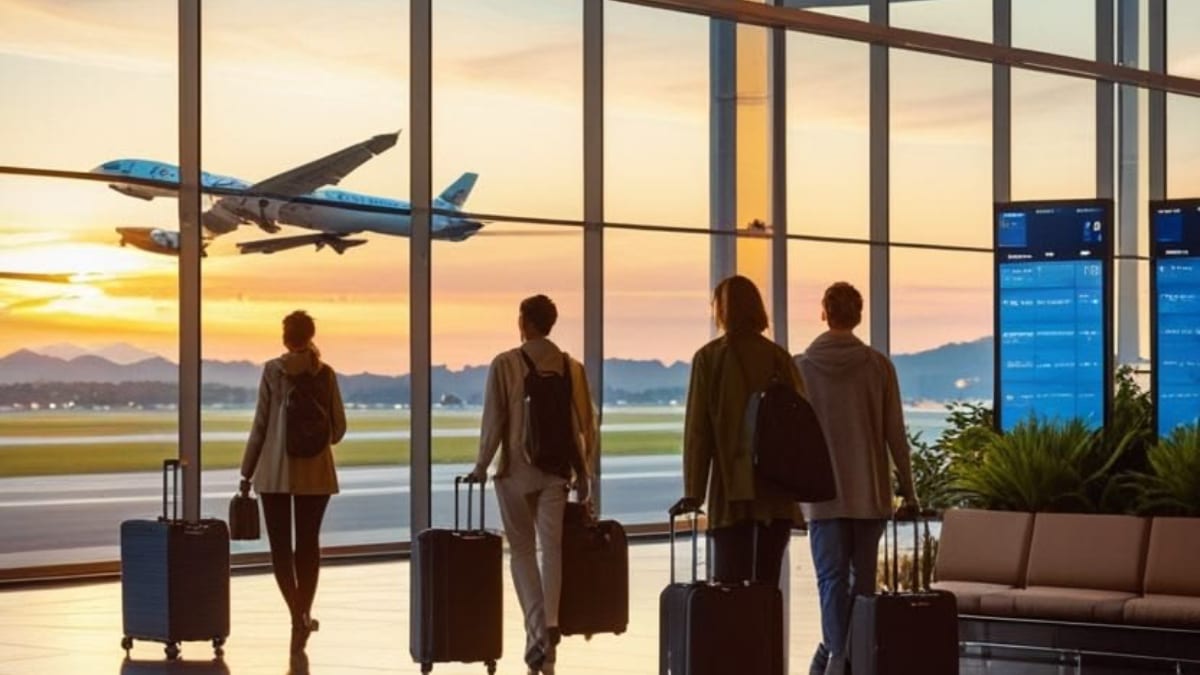
For passengers moving through the system this spring, the convergence of weather, construction, staffing and capacity issues is most visible in the form of long lines, crowded gate areas and unpredictable departure boards. Published dispatches from major hubs such as Atlanta, Chicago, Dallas and New York over the past month have described days when hundreds of flights were delayed and dozens canceled as airlines struggled to recover from storms or airspace constraints.
On peak weekends, especially around holidays and school breaks, travelers have encountered multi-hour waits at security in some cities, followed by further queues at customer service counters when missed connections mount. At the same time, other airports and time windows have remained relatively smooth, highlighting how uneven and fast-changing the situation can be from one day or shift to the next.
Consumer advocates reviewing recent disruptions emphasize the importance of flexibility and preparation. With thunderstorms, construction closures and staffing levels all subject to rapid change, same-day conditions can diverge sharply from what was forecast a few hours earlier. Public information suggests that airlines are continuing to adjust schedules, trim frequencies on chronically delayed routes and encourage travelers to use earlier flights in the day where possible.
With the busy summer travel season approaching, industry commentary points to a system that is likely to remain under strain. Unless additional staffing, new capacity and more resilient schedules can be brought online quickly, the pattern of weather-triggered, construction-exacerbated and staffing-limited delays that has defined early 2026 may continue to shape the passenger experience in the months ahead.