

More news on this day
Air travel across the United States faced another turbulent day on April 6, 2026, as major hubs from Atlanta and Chicago to New York and Las Vegas racked up 4,722 delayed flights and 307 cancellations, disrupting operations at Delta Air Lines, United Airlines, American Airlines, Spirit Airlines, Republic Airways and other carriers during the busy post-Easter travel period.
Get the latest news straight to your inbox!
Disruptions Concentrated at the Nation’s Busiest Hubs
Data compiled from flight-tracking platforms and industry reports indicates that Monday’s disruptions were heavily concentrated at primary connecting hubs, including Hartsfield-Jackson Atlanta International Airport, Chicago O’Hare International Airport, Houston’s George Bush Intercontinental Airport, Minneapolis–Saint Paul International Airport, New York area airports, Philadelphia International Airport and Las Vegas’s Harry Reid International Airport. These airports routinely rank among the highest in aircraft movements and passenger volumes, magnifying the impact of any operational slowdown.
Reports highlight that Atlanta, Chicago and Houston once again served as focal points, following several consecutive days of strain tied to the Easter travel rush. Las Vegas, Minneapolis, New York and Philadelphia added to the pressure, each posting elevated counts of late and canceled departures that rippled across domestic and regional networks.
Travel and aviation outlets note that while 307 cancellations represent a moderate share of the day’s schedule, the 4,722 delays are creating widespread knock-on effects, pushing late arrivals into the evening and complicating next-day operations. Even short delays at hub airports can cascade into broader system disruptions when aircraft and crews miss their scheduled rotations.
The latest figures build on a multi-day pattern of volatility that began ahead of the Easter weekend, when thunderstorms and heavy holiday demand triggered more than 1,000 cancellations and tens of thousands of delays nationwide. With Monday’s data, the post-holiday recovery remains uneven, particularly across the country’s most interconnected hubs.
Delta, United, American and Low-Cost Carriers Under Strain
Publicly available information shows that the disruption has not been confined to a single airline. Major network carriers such as Delta, United and American have all reported elevated levels of late and canceled flights in recent days, particularly at their largest hubs and focus cities. The same pattern is affecting low-cost and ultra-low-cost carriers, including Spirit, as well as regional operators such as Republic that feed traffic into the big three’s networks.
Industry coverage suggests that Delta is facing the brunt of delays in and out of Atlanta and Minneapolis, where dense schedules and high load factors leave limited slack for recovery when the system is stressed. United has seen repeated schedule pressure at Chicago O’Hare and Houston, while American’s operations around Dallas–Fort Worth, New York and other key markets have been indirectly affected by the broader national gridlock.
For carriers such as Spirit and other low-cost operators, the impact can be particularly acute because their business models rely on fast aircraft turnarounds and tight fleet utilization. When weather, congestion or ground restrictions slow operations at multiple hubs at once, even short interruptions can lead to outsized disruptions later in the day.
Regional carriers like Republic, which operate flights under the brands of larger airlines, face added complexity when aircraft and crew positioning are thrown off by cascading delays. Passengers may hold tickets that display a major airline’s name, while the actual flight is operated by a regional partner subject to its own staffing, routing and recovery constraints.
Easter Rush, Weather and Congestion Drive a Complicated Mix of Causes
Reports from aviation analysts and travel publications describe a familiar combination of factors behind the current wave of delays and cancellations. The Easter holiday rush has significantly boosted passenger volumes over the past several days, leaving fewer empty seats and less flexibility for airlines to rebook disrupted travelers.
Weather has been another persistent driver. Coverage of the long weekend details severe thunderstorms and unsettled conditions affecting corridors from Chicago and Houston to Florida and the Mid-Atlantic, leading to periodic ground stops and air-traffic-management programs that slow arrivals and departures. Even when skies clear, airlines often require many hours to reposition aircraft and crews and to work through accumulated backlogs.
Congestion at major hubs adds a further layer of complexity. High aircraft movement counts at airports such as Atlanta, Chicago, Houston, Las Vegas, Minneapolis, New York and Philadelphia mean that any runway, taxiway or gate constraint quickly ripples through the schedule. When multiple hubs experience constraints at the same time, disruptions spread rapidly throughout domestic networks.
Recent history has shown that the U.S. air travel system is particularly vulnerable during peak periods when weather, staff availability and tight schedules intersect. The latest data from the Easter period underscores how even a relatively modest number of cancellations, combined with thousands of delays, can leave passengers facing long lines, missed connections and overnight stays away from home.
Passengers Confront Long Waits, Missed Connections and Limited Options
The imbalance between the number of delayed flights and the number of available alternative seats has been especially challenging for passengers caught in the latest disruptions. With load factors already high due to holiday demand, reports indicate that travelers whose flights are canceled are often unable to secure same-day rebookings, particularly on popular routes connecting major hubs.
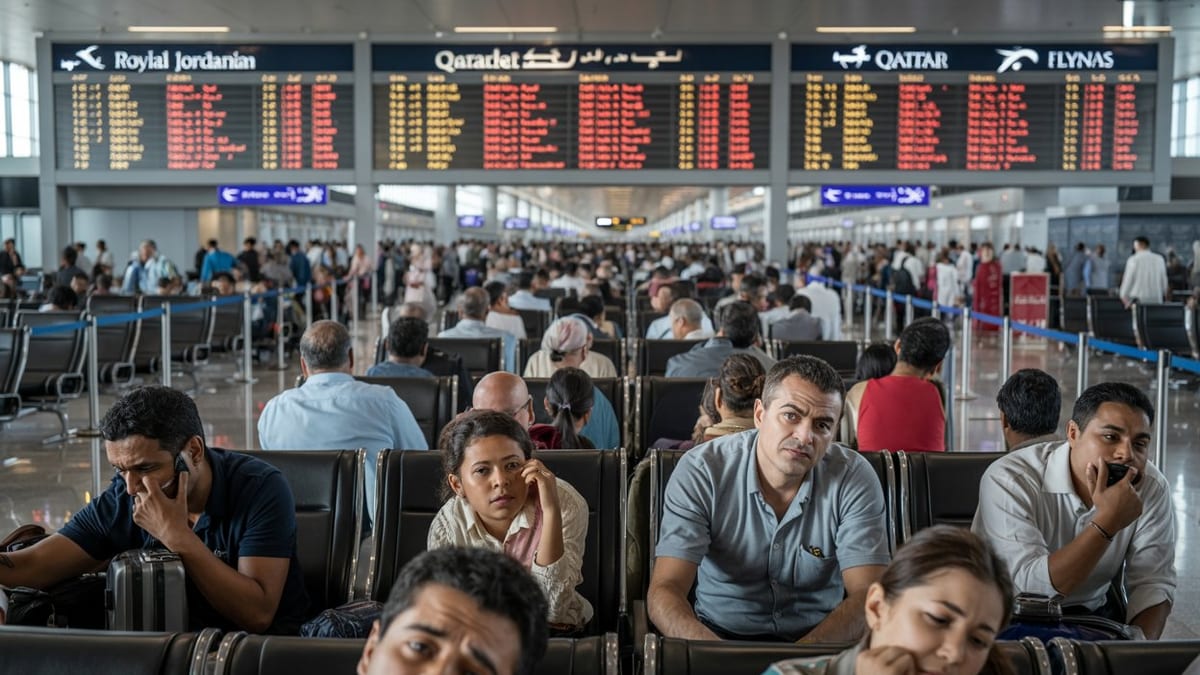
Travel publications describe scenes of crowded terminals and long customer-service queues at affected airports, as passengers seek rebooking, hotel assistance or information about baggage and onward connections. Many travelers have been forced to accept re-routed itineraries through less direct paths or to postpone trips entirely until seats become available.
Consumer guidance from airline and travel resources continues to emphasize the importance of monitoring flight status frequently through airline apps and flight-tracking tools, especially during periods when large hubs are under strain. Passengers are also being reminded that they may be eligible for refunds when flights are canceled and they choose not to travel, even when tickets are labeled as nonrefundable, subject to each carrier’s policies and applicable regulations.
With recovery operations ongoing and schedules still in flux, travelers planning to fly through the affected airports are being encouraged by public advisories and travel columns to allow extra time at the airport, prepare for potential missed connections and keep flexible backup plans where possible.
Outlook for the Coming Days
Analysts following the airline and airport data note that the pattern of recent days suggests a gradual but uneven return to normal operations. If weather conditions stabilize and air traffic control programs ease, airlines are expected to work through much of the current backlog over the next several operational cycles.
However, given the number of aircraft and crew currently displaced from their normal rotations, some degree of residual disruption is likely to persist, particularly at the busiest connecting hubs. Late-evening and early-morning departures are often the last to normalize after a major disruption, meaning passengers on those flights may continue to face schedule changes and delays.
Industry observers point out that the recent Easter-period chaos follows a series of earlier disruption events this year, including winter weather and an early spring blizzard that hit parts of the Upper Midwest and central United States. Together, these episodes highlight the limited margin for error in the contemporary U.S. airline system when high demand, complex hub operations and external shocks converge.
For now, publicly available flight data and airline advisories indicate that travelers planning to pass through Atlanta, Chicago, Houston, Las Vegas, Minneapolis, New York, Philadelphia and other major hubs in the coming days should closely monitor conditions, as the system absorbs Monday’s 4,722 delays and 307 cancellations and attempts to reset ahead of the next busy travel stretch.