

More news on this day
Air travel across the United States was heavily disrupted on March 9, as major hubs including Los Angeles, Boston, Orlando, Atlanta and Seattle reported 176 flight cancellations and 2,945 delays, snarling schedules for Alaska Airlines, Spirit Airlines, Frontier Airlines and several other carriers.
Nationwide Disruptions Concentrated at Key Hubs
The latest data from flight tracking services on March 9 shows a fresh wave of operational disruption spreading across the U.S. aviation network, with a combined 176 cancellations and nearly 3,000 delays recorded by late afternoon. While no single catastrophic weather system was to blame, a mix of localized thunderstorms, residual winter weather in the Northeast and tight airline scheduling combined to overwhelm already stretched operations.
Orlando International, one of the nation’s busiest leisure gateways, was among the hardest hit. The airport logged 19 cancellations and 295 delays in a single day, with ripple effects spreading along key domestic corridors to Atlanta, Dallas, New York, Chicago and Los Angeles. The pattern mirrored other recent strain on the U.S. system, where relatively modest weather disturbances have translated into significant schedule instability for both legacy and low cost carriers.
Los Angeles, Boston, Atlanta and Seattle, all critical nodes in national route networks, experienced rolling delays that pushed departure and arrival times back throughout the day. With many flights operating near full capacity during the early spring break period, even small disruptions at these hubs quickly cascaded across connecting routes, affecting travelers well beyond the airports directly experiencing operational challenges.
Alaska, Spirit and Frontier Among Airlines Most Affected
Alaska Airlines, Spirit Airlines and Frontier Airlines were particularly exposed to Monday’s disruptions, reflecting the importance of the affected hubs to their networks. Alaska relies heavily on Seattle and Los Angeles for both transcontinental and regional operations, and delays on West Coast departures reverberated onto routes linking to Boston, Atlanta and Florida.
Spirit and Frontier, with their focus on price sensitive leisure travelers, have dense schedules into Orlando, Atlanta and other sun and theme park destinations at this time of year. Schedule disruptions at Orlando International had an outsized impact on these carriers, where a handful of cancellations and dozens of delays often meant full flights with limited options for same day reaccommodation.
Operational analysts note that ultra low cost carriers typically run tighter aircraft utilization and thinner schedule padding than some legacy competitors. While this keeps fares lower, it leaves less recovery room when storms, ground stops or crew availability issues arise. As delays mounted on March 9, social media posts from passengers on Alaska, Spirit and Frontier documented long lines at service desks and difficulty securing timely rebookings, especially for multi stop itineraries.
Weather, Congestion and Crew Constraints Collide
The disruption on March 9 did not stem from a single dramatic weather headline, but rather from a familiar combination of recurring constraints that have tested the resilience of U.S. aviation in recent seasons. Localized thunderstorms around central Florida temporarily reduced arrival and departure rates at Orlando, triggering ground control programs that slowed traffic into the region. At the same time, lingering winter weather and low ceilings across parts of the Northeast complicated operations in Boston and along the busy corridor to Seattle.
These conditions collided with high passenger demand and tight turn times at many airlines. Once an early bank of flights is delayed, aircraft and crews can struggle to return to schedule for the remainder of the day. In some cases, crews timed out after reaching federally mandated duty limits, necessitating cancellations even when weather had improved. The result was a patchwork map of flight status boards, with long stretches of yellow and red delay indicators from coast to coast.
Industry observers say that while the number of cancellations on March 9 was well below levels seen during severe nationwide storms, the ratio of delays to cancellations underlines a different challenge. Airlines are often opting to keep flights on the board and operating late rather than cancel outright. For travelers, that can mean hours of uncertainty at the gate, rolling departure estimates and missed connections, even if the flight eventually departs.
Travelers Confront Long Lines, Missed Connections and Limited Options
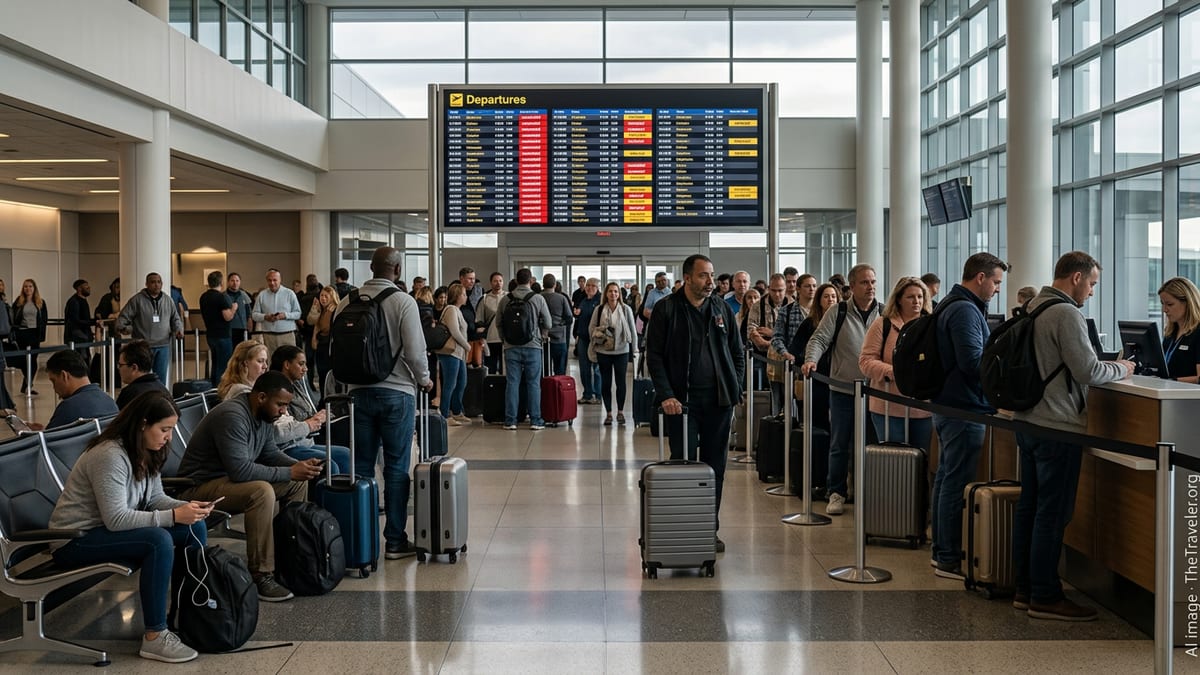
For passengers, the operational statistics translated into a day of frustration and improvisation. At Orlando, long queues formed at airline counters as families and vacationers sought new options after cancellations or severe delays disrupted carefully planned trips. Similar scenes were reported at Los Angeles, Atlanta and Boston, where the knock on effects from delayed inbound flights led to last minute gate and schedule changes.
Travelers on Alaska, Spirit and Frontier reported particular difficulty finding open seats on alternative flights on the same day, as many departures were already operating near capacity. Some passengers turned to competing carriers at significant extra cost, while others opted to delay their trips by 24 hours or more. Hotel availability near major hubs tightened as stranded travelers were forced to overnight unexpectedly.
Consumer advocates reiterated calls for clearer communication and faster automatic rebooking tools, pointing out that many passengers still learn of major changes via delayed email notifications or crowded service counters. For families traveling with children or for those with limited travel budgets, even a single long delay can quickly escalate into a costly ordeal when meals, accommodation and lost vacation time are taken into account.
What Spring Break Travelers Should Expect Next
The timing of the latest disruption is especially concerning for airlines and travelers alike as the U.S. spring break period ramps up. Demand for flights to and from Orlando, South Florida, Southern California and other warm weather destinations traditionally peaks from early March through mid April, leaving less slack in the system to absorb disruptions.
Airline planners are likely to respond by adding extra reserve crews and aircraft where possible, particularly at pressure points such as Orlando, Los Angeles and Atlanta. However, staffing and fleet limitations mean there is only so much capacity that can be mobilized on short notice. Passengers are being advised to build longer connection buffers into their itineraries, travel earlier in the day when feasible and monitor flight status closely in the 24 hours before departure.
For now, the March 9 figures serve as a fresh reminder of the fragility of the current system. Even in the absence of a headline making nationwide storm, a combination of localized weather, air traffic congestion and operational strain can still lead to hundreds of cancellations and thousands of delays. With Alaska, Spirit, Frontier and their competitors all vying to operate fuller schedules through busy hubs, travelers can expect further days of disruption as the busy spring travel season unfolds.