

More news on this day
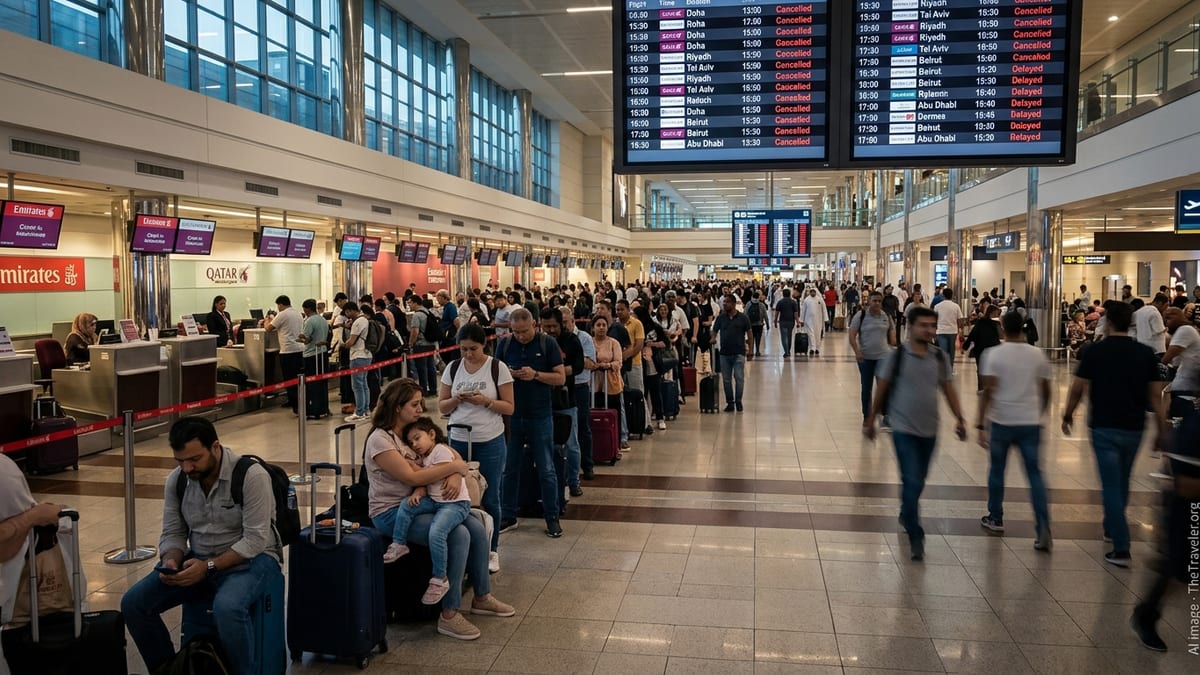
Escalating hostilities between the United States and Iran, including strikes, missile attacks and restrictions around the Strait of Hormuz, are rippling through global aviation, forcing airlines to cancel or reroute tens of thousands of flights and disrupting travel through major hubs such as Dubai, Abu Dhabi, Doha, Riyadh, Tel Aviv and Beirut.
Get the latest news straight to your inbox!
Regional Airspace Turns Into a Patchwork of No-Go Zones
Since late February 2026, when coordinated United States and Israeli strikes on Iran marked the beginning of the current war, airspace across much of the Middle East has become heavily constrained. Publicly available flight-tracking data and industry advisories show sharp reductions in civilian traffic over Iran, Iraq and adjacent corridors as carriers divert away from perceived conflict zones and missile trajectories.
The situation worsened as Iran responded with missile and drone attacks on Gulf states and tightened control over the Strait of Hormuz, a critical bottleneck for both maritime and aviation routes. While not every country has formally closed its skies, a web of conflict-zone warnings from aviation regulators and risk bulletins from insurers has effectively pushed many airlines to redraw their routings between Europe, Asia, Africa and Oceania.
Analysts note that the Middle East had been one of the world’s busiest transit regions before the war, with hubs in the United Arab Emirates, Qatar and Saudi Arabia serving as key bridges between continents. The sudden loss or degradation of these air corridors is now forcing airlines to shift traffic to longer, more northerly paths over Europe and Central Asia, driving up fuel burn, crew costs and journey times.
Dubai and Abu Dhabi Struggle With Cancellations and Capacity Crunch
Dubai International Airport, the world’s busiest for international passengers, has been among the hardest hit. Reports indicate that waves of flight suspensions followed an Iranian drone and missile campaign against targets in the United Arab Emirates, including an incident in which a drone strike on airport fuel infrastructure temporarily halted movements at Dubai. Carriers based in the emirate have already cancelled numerous rotations to Iran, Iraq, Jordan, Lebanon and Syria, and have curtailed or rerouted some services further afield.
Abu Dhabi has faced similar turbulence. Travel risk advisories and airline operations notices describe periods in early March when all flights to and from Abu Dhabi were temporarily suspended because of regional airspace closures, before being gradually reintroduced on revised routings that skirt high-risk areas. Even when airports remain technically open, rolling delays, last-minute reroutes and crew repositioning challenges are constraining capacity and complicating schedules.
For travelers, the impact is immediate and often bewildering. Passengers connecting through the UAE on long-haul journeys between Europe, Africa, Asia and Australasia are reporting missed connections, involuntary overnight stays and rebookings via alternative hubs. Public guidance from aviation security specialists consistently urges passengers to check flight status repeatedly before departure and to expect that routings and transit points may change with little notice as the conflict evolves.
Doha and Riyadh Face Suspensions as Gulf Networks Rewire
Qatar’s capital Doha, another key transit node, has seen even more severe disruption. According to aviation notices and civil aviation updates, Qatar’s airspace has been intermittently closed or heavily restricted following Iranian strikes on targets in the country. Authorities in Doha initially suspended standard commercial operations, allowing only emergency, evacuation and limited cargo services under special conditions while airlines reassessed risk levels.
The knock-on effects reach far beyond the Gulf. Travel advisories in markets such as New Zealand and Australia warn that the closure or restriction of Middle East hubs like Doha and Dubai is leading to cancellations, missed onward connections and longer routings for passengers heading to Europe and North America. Some carriers have brought forward seasonal capacity cuts or redeployed aircraft to alternative hubs in Europe and South Asia to maintain a basic level of connectivity.
Saudi Arabia’s aviation sector is also adjusting under pressure. Regional port and travel bulletins describe Saudi carriers suspending or reducing flights to neighboring Gulf capitals, including Doha, Bahrain and Kuwaiti cities, as well as temporarily trimming services to Dubai and Abu Dhabi at moments of peak tension. While large parts of Saudi airspace remain available for civilian use, heightened military activity and the need to create buffers around sensitive areas have led some international airlines to restrict overflights or to adopt more circuitous paths when crossing the kingdom.
Tel Aviv and Beirut Caught in Expanding Conflict Radius
On the eastern edge of the Mediterranean, Tel Aviv and Beirut are both under significant pressure from the expanding conflict map. Published coverage of the war describes Israel deploying more troops into southern Lebanon and facing recurrent missile and drone incidents, prompting several European and Gulf carriers to suspend or limit services to Tel Aviv for safety and insurance reasons. Some airlines that had recently resumed flights after earlier bouts of regional tension have once again withdrawn.
Beirut’s Rafic Hariri International Airport remains formally open, but local reports and airport sources cited in regional media indicate that multiple international airlines have quietly cancelled or reduced flights to Lebanon. The combination of nearby military activity, shifting front lines in southern Lebanon and changing risk assessments among insurers has made the country increasingly difficult for global carriers to serve on regular schedules.
The squeeze on Tel Aviv and Beirut compounds broader disruption across the Levant. Airlines that once used these cities as end points or niche connection markets have been forced either to pull capacity or to route passengers via more distant hubs, lengthening journey times. For local communities and diaspora travelers, the reduced air links heighten concerns about isolation and complicate access for those trying to leave or return amid uncertainty.
Global Ripple Effects: Longer Routes, Higher Costs and Uncertain Timelines
The disruption radiating from the U.S.-Iran conflict is not confined to the Middle East. Aviation analysts and economic research cited in international media highlight the war’s role in driving up oil prices and insurance premiums, which in turn inflate operating costs for airlines worldwide. Early estimates from travel data providers suggest that more than half of all scheduled flights in parts of the Middle East have been cancelled since the war began, with tens of thousands more operating on altered flight paths.
For long-haul networks, the loss of direct transits across Iran and neighboring states is forcing carriers to choose longer, more northerly routings that add time and fuel burn. Routes between India and North America, Southeast Asia and Europe, and Australasia and Western Europe are particularly affected. Some airlines are temporarily limiting capacity on these sectors, while others are adding technical fuel stops or shifting traffic via secondary hubs in Southern Europe and Central Asia.
Travel risk bulletins emphasize that there is no clear timeline for a return to normal operations. As the United States and Iran harden their negotiating positions over ceasefire terms and the reopening of the Strait of Hormuz, each new round of strikes or missile launches can prompt additional, short-notice adjustments to airspace availability. Aviation planners caution that even if an eventual deescalation is achieved, rebuilding confidence, restoring suspended routes and recalibrating global schedules could take months, leaving travelers and the tourism industry braced for a prolonged period of instability.