

More news on this day
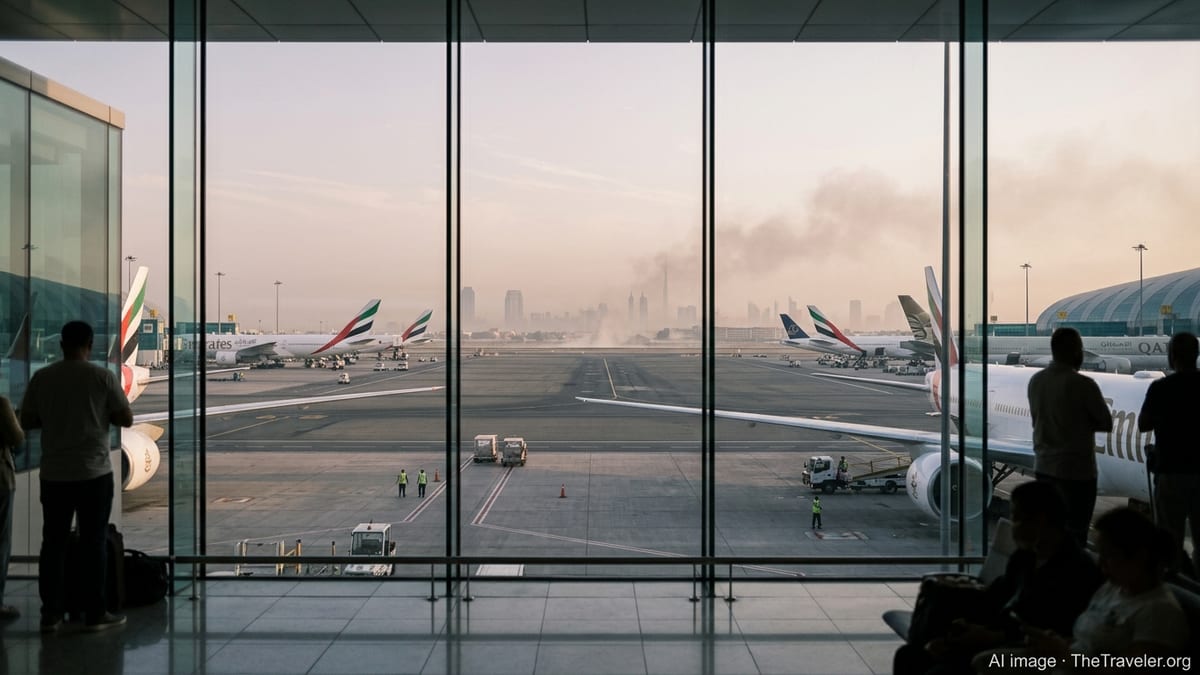
Heightened conflict involving Iran, the United Arab Emirates and U.S. forces is reshaping the safety picture for flights across the Gulf, as a rare worldwide alert from Washington draws urgent attention to fast-changing risks over and around Iran and the UAE.
Get the latest news straight to your inbox!
Why a Rare U.S. Alert Matters for Travelers Now
Publicly available information indicates that the United States has issued a rare worldwide security alert, highlighting increased threats linked to the widening conflict involving Iran, the United States, Israel and Gulf states. Recent coverage notes that the alert places particular emphasis on Americans in or transiting through the Middle East, where missile and drone attacks, cyber activity and proxy groups have all become part of the wider risk landscape.
At the same time, the conflict has moved well beyond rhetoric. Open-source reporting describes large-scale U.S. airstrikes on Iranian military targets, including on Kharg Island and in the Strait of Hormuz area, alongside Iranian ballistic missile and drone attacks on sites in the United Arab Emirates. These developments have brought military activity into close proximity with key international air corridors used by long-haul flights linking Europe, Asia, Africa and North America.
Aviation safety regulators have not yet announced a blanket global grounding of flights in the region, but the pattern of advisories, reroutings and short-notice suspensions shows how fluid the situation has become. For travelers, the combination of a broad security caution and a heavily militarized airspace environment means more scrutiny than usual is required when planning any trip that passes near Iran or the UAE.
Missiles, Drones and the Changing Map of Gulf Airspace
Since late February, reports from regional and international media have documented repeated Iranian missile and drone strikes on targets across the UAE, including near major population centers in Abu Dhabi and Dubai. Official casualty figures cited in public summaries remain relatively limited, but debris from intercepted projectiles has caused damage to civilian infrastructure, including in areas close to Dubai’s airport and waterfront districts.
These attacks are taking place against the backdrop of a broader campaign around the Strait of Hormuz. Open reporting shows that Iran moved to disrupt shipping in the vital waterway following joint U.S. and Israeli strikes, prompting further U.S. military operations aimed at reopening sea lines of communication. Each new round of military activity introduces additional air-defense assets, surveillance flights and combat missions to a region that is also one of the world’s busiest aviation crossroads.
In previous Middle East crises, civil aviation has faced grave risks from misidentification and crossfire. Historical Federal Aviation Administration analyses of Iranian airspace, for instance, have highlighted concerns about robust air-defense postures along Iran’s southern coast and the potential for confusion during fast-moving operations. Those underlying dangers are now magnified by sustained missile salvos and drone swarms traversing air routes that, in peacetime, would be dominated by commercial traffic.
Flight Disruptions: What Airlines Are Doing
According to recent coverage from Gulf-based and international outlets, airlines serving the region have already implemented a mix of suspensions, diversions and altitude or routing changes. Some regional carriers temporarily halted flights to and from certain Gulf hubs during the heaviest barrages, before gradually resuming limited services once air-defense activity eased. Large international airlines have re-routed long-haul flights to avoid Iranian airspace altogether, adding time and cost but reducing exposure to conflict zones.
Industry notices and port advisories from early March recorded widespread airspace restrictions across several Gulf states, with carriers trimming schedules, consolidating flights and, in some cases, shifting operations to secondary airports perceived as less exposed. While airports in the UAE remain operational, operations have at times been constrained by temporary pauses and congestion as air-traffic controllers deconflict civilian and military movements.
For travelers, the practical effect is a higher likelihood of last-minute schedule changes. Even when tickets remain valid, routing may shift significantly, with aircraft detouring via safer corridors over Saudi Arabia, the Red Sea or Central Asia. These alternative routes can lengthen flight times and increase fuel burn, which may affect fares on some markets. Travelers relying on tight connections through Gulf hubs should be prepared for missed onward flights and rebooking challenges if new security incidents trigger sudden airspace closures.
What Travelers Should Consider Before Flying via Iran or the UAE
Given the evolving nature of the conflict, travelers are being encouraged by many governments and airlines to monitor official advisories closely and to remain flexible. Public travel guidance from a wide range of states has already urged citizens to avoid nonessential travel to Iran and to exercise heightened caution in nearby countries, including the UAE, due to the risk of spillover attacks and disruptions.
Those who must fly through the region are advised to pay attention to the routing of their ticket, not just the advertised destination. It is possible for an itinerary that begins and ends far from the Gulf to pass through Iranian or adjacent airspace as a matter of efficiency. Travelers who wish to avoid that exposure may need to select carriers known to be rerouting around Iranian territory, even if that means longer journey times.
Insurance is another critical consideration. Some standard travel policies exclude coverage for events related to war or armed conflict, and insurers sometimes classify certain airspace or destinations as higher-risk areas. Before departure, travelers may wish to confirm whether disruptions caused by regional hostilities, government advisories or airspace closures would qualify for reimbursement or allow for penalty-free changes.
Staying Informed During a Rapidly Moving Crisis
Open-source analysts note that conditions in the Gulf can change faster than traditional travel planning cycles. New strikes, retaliatory moves or diplomatic breakthroughs can all alter the risk calculus within days or even hours. As a result, many airlines now update their operational bulletins and passenger information channels in near real time, while aviation tracking platforms provide a visual picture of changing flight paths around conflict areas.
Travelers are increasingly turning to a mix of official government advisories, airline announcements and reputable international news outlets to gauge whether a planned transit through the UAE or neighboring countries remains acceptable. Some travelers in the region have also described a pattern of short-lived flight suspensions around major attack windows, followed by a cautious resumption of services once immediate threats pass.
For now, the rare global alert from Washington serves as a signal that the stakes have risen beyond the usual background tensions of the Middle East. While most flights continue to operate safely, the combination of missile and drone activity, active air defenses and complex military operations near core aviation routes means that anyone planning to cross the region should treat risk assessment as an essential part of their trip, not an afterthought.