

More news on this day
A routine U.S. government travel notice for Finland has drawn attention after an unusual warning line, apparently unrelated to the Nordic country’s traditionally low security risks, was added to the top of the advisory page.
Get the latest news straight to your inbox!
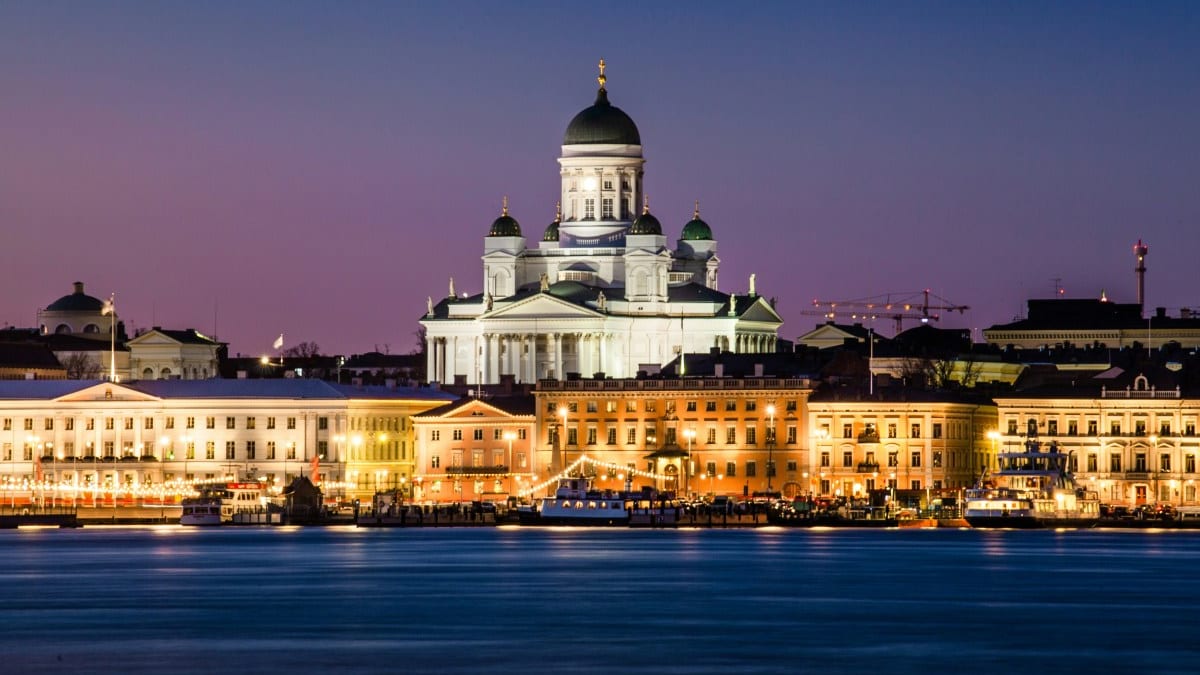
Image by Yahoo Finance Australia
Low-Risk Destination With a Puzzling Disclaimer
Finland remains one of Europe’s most stable and low-crime destinations, and the core U.S. advisory still reflects that reality. Publicly available State Department material continues to categorize Finland as a place where travelers should exercise normal precautions, noting low levels of violent crime and no recent pattern of large-scale security incidents affecting visitors.
What stands out, however, is an eye-catching line now appearing above the main Finland notice, referencing “Americans in the Middle East” and providing global consular contact numbers. The wording is framed as a general reminder, yet its placement directly on a country-specific page that does not involve the Middle East has led to confusion among readers who expected straightforward, Finland-only information.
Travel industry observers describe the combination of an essentially unchanged, low-level advisory with a stark global caution banner as unusual. For many habitual users of government travel guidance, the Finland page has traditionally been a template example of a calm, standard notice, making the new juxtaposition all the more striking.
The Finnish tourism sector has long marketed the country on its reputation for safety, efficient infrastructure, and predictable public services. Against that backdrop, even a generic security-sounding message tacked onto an otherwise benign advisory feels out of place to some travelers scrolling for reassurance before booking a trip.
Global Alerts Spill Onto Country Pages
The timing of the added language appears to coincide with a broader U.S. effort to promote a global “worldwide caution” message in response to elevated geopolitical tensions. Similar wording has been highlighted on other country pages, reflecting a centralized approach to security communication rather than a Finland-specific downgrade.
Analysts who track government advisories note that such global overlays are not new, but their visibility can fluctuate. When worldwide alerts are active, they may be inserted at the top of many country profiles, sometimes with identical wording, even if the local conditions have not changed. This can create the appearance of a sudden warning where none actually exists in the detailed country narrative.
In Finland’s case, the body of the advisory still emphasizes familiar themes such as routine petty theft risks in busy urban areas, standard guidance on emergency numbers, and practical advice for winter driving and outdoor activities. There is no indication of new, Finland-specific threats aimed at U.S. travelers.
Despite that, the heightened language in the introductory banner can influence perception. Casual readers may skim only the first lines and come away with the impression that Finland has become significantly more dangerous, even though the detailed text continues to portray it as a low-risk destination.
Traveler Confusion and Industry Reaction
The travel community has reacted with a mix of surprise and skepticism. Online forums and social media discussions highlight puzzled comments from prospective visitors who encountered the Middle East-focused line while researching a city break in Helsinki or a summer cabin stay in the Finnish Lakeland.
Some travel professionals point out that government advisory templates have grown increasingly layered in recent years, as officials seek to address both country-specific issues and rapidly changing global risks such as terrorism, cyber incidents, and regional conflicts. That complexity sometimes results in generic content surfacing in places that seem counterintuitive to the casual reader.
For tour operators and airlines selling Finland, the key message being relayed to clients is that nothing in the substantive advisory suggests an elevated threat level in the country itself. Booking patterns to Finland remain supported by its image as a safe Schengen destination, even as travelers are encouraged to read entire advisories carefully rather than react to a single line.
Consumer advocates also remind travelers that multiple governments publish their own assessments, and cross-checking advisories from different countries can help provide context. In the case of Finland, international guidance continues to portray a destination that is comparatively secure within Europe.
Context: A Shifting Global Advisory Environment
The strange note on Finland’s page is also a window into how rapidly the global advisory system has evolved. Over the past year, several European countries and Canada have toughened their own guidance on travel to the United States in response to stricter border enforcement and policy changes affecting certain travelers, including transgender and non-binary visitors.
Coverage in outlets such as public broadcasters and travel trade publications highlights how Finland’s foreign ministry, along with other European governments, updated their U.S. advisories in 2025 with more explicit warnings about possible detention, deportation, or entry denial linked to new American immigration and gender documentation rules. Those moves, in turn, triggered debate about how political shifts and policy experiments reshape the language of travel risk on both sides of the Atlantic.
The result is a more crowded and sometimes contradictory advisory landscape. While Finland is flagged at home as a safe and orderly country, its own citizens are being told to approach the United States with unusual caution. At the same time, the U.S. is layering broader global warnings on top of traditionally calm profiles like Finland, creating a sense of dissonance that can be jarring for travelers trying to interpret actual on-the-ground conditions.
Travel analysts suggest that this feedback loop between domestic politics and cross-border advisories is likely to remain a feature of the current decade. As governments seek to showcase vigilance, they may favor sweeping language that occasionally lands awkwardly on otherwise uncontroversial country pages.
What Travelers to Finland Should Take Away
For U.S. travelers weighing a trip to Finland, publicly available information still paints a reassuring picture. The advisory level remains at the lowest tier, and the detailed security commentary does not describe systemic threats targeting tourists. Standard best practices, such as safeguarding valuables in crowded areas and monitoring local news during major events, are considered adequate precautions for most visitors.
Experts recommend reading beyond the initial banner text on any government advisory page, paying particular attention to sections describing crime, health care access, transportation safety, and entry requirements. In Finland’s case, these sections continue to emphasize normal travel planning and routine vigilance rather than extraordinary restrictions.
Travel planners also note that Finland’s infrastructure, from its public transit networks to emergency services, is widely regarded as reliable. That reputation, coupled with the country’s emphasis on social stability and environmental stewardship, has helped maintain its standing as a favored destination for nature-based and city-focused trips alike.
The strange U.S. warning line may persist for as long as wider global alerts remain in effect, but for now it reads more like a reflection of worldwide anxiety than a verdict on Finland itself. For many travelers, the practical impact is likely to be limited once they look past the headline and into the fine print of the advisory.