

More news on this day
A recent U.S. health-related advisory referencing Finland has created confusion among American travelers, who are now trying to reconcile an unusual warning with the Nordic nation’s long-standing reputation as one of the safest destinations in Europe.
Get the latest news straight to your inbox!
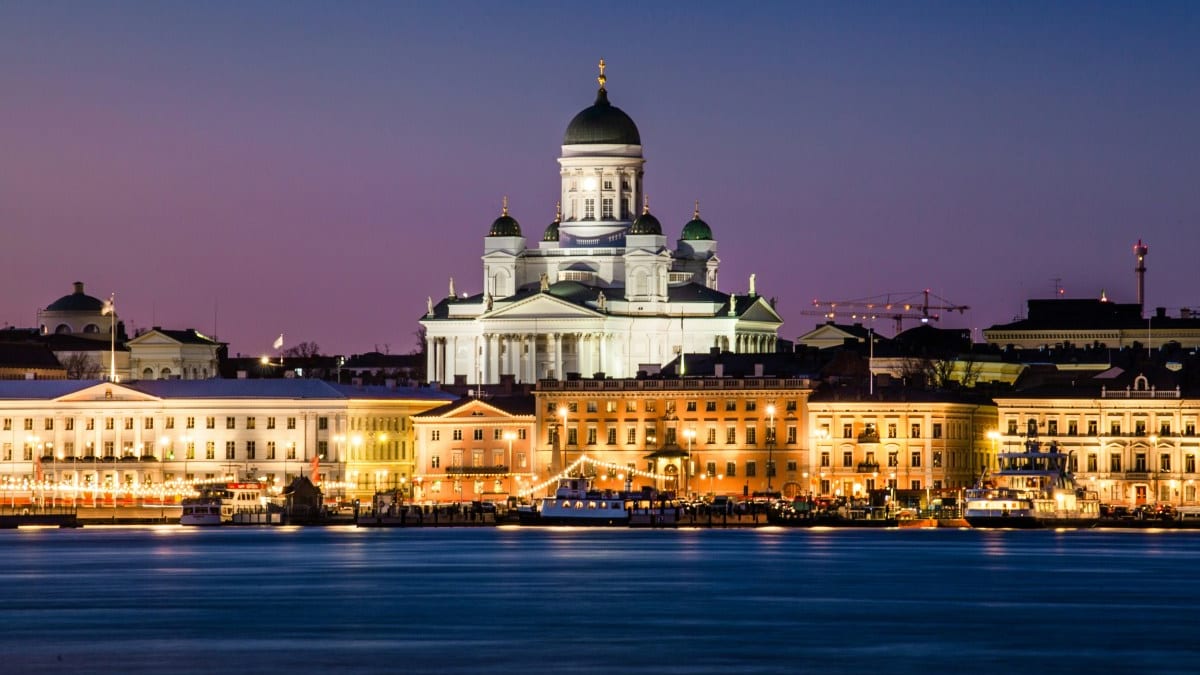
Image by au.finance.yahoo.com
Advisory Mentions Finland in Wider Health Warning
Recent public health communications in the United States have highlighted Finland among several European countries in connection with concerns over the spread of a vaccine-preventable disease. Reports indicate that American travelers are being urged to review their immunization status before visiting a list of destinations that includes Finland, Spain, Germany, Poland and the United Kingdom.
The advisory language is framed broadly, focusing on heightened vigilance around polio and similar paralyzing illnesses that have appeared in clusters worldwide. In this context, Finland is treated as part of a larger European pattern, rather than as an isolated hotspot. The messaging has nevertheless stood out to many travelers because Finland is more commonly associated with safety rankings and “happiest country” lists than with infectious disease alerts.
Publicly available coverage points out that the advisory does not tell travelers to cancel trips to Finland, but instead emphasizes routine precautions, such as ensuring that childhood and booster vaccinations are current. The inclusion of a country perceived as highly stable and well resourced has sparked debate over how the United States government communicates evolving global health risks.
The health-focused notice has emerged alongside a separate, global “worldwide caution” security message aimed at Americans abroad. That broader security alert, which does not single out Finland, may be amplifying the sense among some would-be visitors that official messaging about international travel has grown more ominous overall.
Travel Advisory Level for Finland Remains Low
Despite the heightened attention created by the disease-related alert, State Department documents and university travel-briefing materials still categorize Finland as a low-risk destination for U.S. citizens. Country-specific information issued in recent months continues to assign Finland a Level 1 advisory, which corresponds to “exercise normal precautions.”
This status places Finland among the more favorably rated countries for American travelers, in contrast with destinations that carry higher levels tied to crime, civil unrest or armed conflict. Guidance aimed at study-abroad participants and conference travelers reiterates that standard urban awareness, routine documentation checks and basic health insurance are generally sufficient for most visitors.
Analysts who track travel-risk systems note that advisory levels tend to move slowly and are updated when a meaningful, sustained change in conditions is documented. The lack of a higher-risk classification for Finland is being cited by some travel professionals as a key indicator that the core security assessment for the country has not shifted, despite the unusual spotlight created by health alerts.
For many travelers, this divergence between the calm tone of the formal country advisory and the more urgent language of disease-related notices underscores how different branches of the U.S. government may emphasize distinct aspects of risk at the same time.
How a “Strange” Warning Shapes Perception of a Safe Destination
Finland frequently appears at the top of international rankings for happiness, governance and quality of life, and has long marketed itself as a haven for nature-focused and design-oriented tourism. Against that backdrop, the idea of any U.S. warning connected to the country can feel counterintuitive, prompting some travelers to describe the new messaging as strange or disproportionate.
Travel commentary and social media discussions suggest that the juxtaposition of Finland’s positive image with a mention in U.S. warnings has led to questions about whether the advisory reflects on-the-ground conditions or a more generalized approach to risk communication. Some observers argue that bundling Finland into a long list of countries can inadvertently give the impression of a specific problem where the actual intent is precautionary and global in scope.
Tourism researchers have previously documented how even modest changes in advisory language can affect destination choice, especially for Americans planning once-in-a-lifetime trips to Europe. Finland’s inclusion in a disease-related list, however routine from a public health standpoint, may therefore have an outsized psychological effect compared with the actual, measured risk.
Industry monitoring from the Nordic region has not yet indicated a clear downturn in U.S. arrivals tied specifically to the advisory. Nonetheless, local stakeholders are closely watching whether the narrative around Finland in the U.S. market shifts from “safe and serene” toward “safe, but with caveats,” as travelers digest the latest official messaging.
Balancing Medical Precautions With On-the-Ground Realities
Health experts typically emphasize that travel medicine recommendations are designed to err on the side of caution and are often updated in response to relatively small movements in case numbers or transmission patterns. In the current situation, Finland’s strong public health infrastructure, high vaccination coverage and robust disease surveillance are all cited in open-source analyses as factors that help mitigate risk.
For individual travelers, this creates a two-track picture. On one track, U.S. advisories encourage them to consult healthcare providers, verify polio and routine vaccine status, and pay attention to news from European health authorities. On the other, practical experience on the ground in Finland is still likely to resemble travel in a modern, well-regulated European Union member state with reliable medical facilities and sanitation standards.
Travel clinics and tour organizers often frame such advisories as an opportunity to update long-overdue boosters rather than as a reason to avoid travel entirely. In the case of Finland, this perspective aligns with the continuing Level 1 security rating and the lack of country-specific language suggesting that U.S. citizens are at elevated risk compared with other visitors.
American travelers weighing the advisory are therefore being asked, implicitly, to distinguish between actionable medical steps and broader fears about safety. For many, that may mean factoring in both the reassuring baseline indicators from Finland itself and the more cautionary tone of recent U.S. communications.
What American Travelers Should Watch in the Coming Months
Looking ahead, the key signals to monitor will likely come from formal updates to both U.S. and European public health notices. If international agencies report progress in containing polio outbreaks in affected regions, advisory language may be softened or narrowed, reducing the spotlight on specific countries such as Finland.
Conversely, if transmission patterns worsen in parts of Europe, travelers could see further refinements to vaccine guidance, including stronger recommendations for boosters or documentation of immunization status. So far, the United States has not paired its health-related language about Finland with any new security or political warnings directed specifically at the country.
Travel specialists often advise checking the timestamp on official advisory pages and cross-referencing multiple sources before making last-minute cancellations. In Finland’s case, the combination of a long-standing low-risk security designation and a newer, disease-focused alert suggests that travelers may be able to proceed with plans while taking targeted medical precautions.
For now, the “strange” aspect of the U.S. warning seems to lie less in any dramatic change on the ground in Finland and more in the contrast between the country’s image as a model of stability and its unexpected appearance in the fine print of evolving American travel guidance.