

More news on this day
The United States has joined a growing roster of countries tightening immigration taps and struggling with visa backlogs, pausing immigrant visa issuance for nationals of 75 countries as governments worldwide recalibrate border controls and screening in response to security, economic and migration pressures.
Get the latest news straight to your inbox!
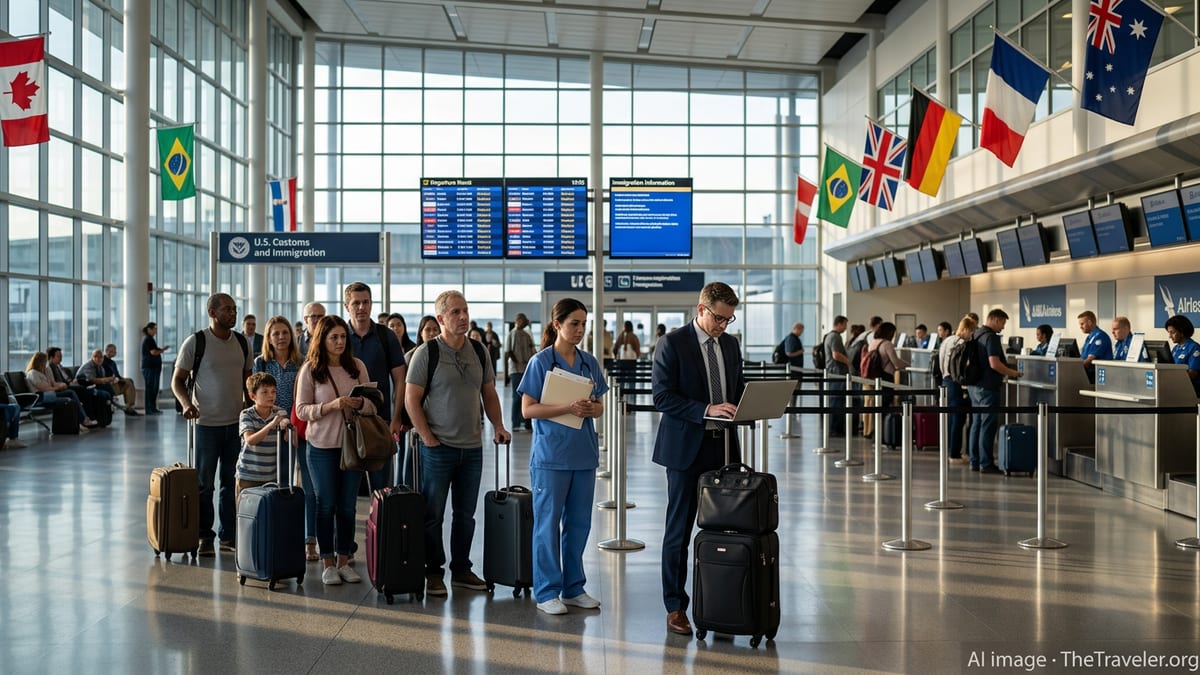
Washington’s 75-Country Immigrant Visa Pause Shocks Applicants
The U.S. State Department’s decision, effective January 21, 2026, to pause immigrant visa processing for applicants from 75 countries has sent shockwaves through consulates and immigrant communities around the world. The move targets those the administration labels at higher risk of relying on public benefits, and follows months of steadily tightening rules on legal migration.
Officials emphasize that the measure is framed as a processing pause rather than a permanent legal change, but they have given no clear end date. Immigrant visa interviews are still being scheduled in many posts, yet consular officers have been instructed not to issue the final visas, leaving thousands in limbo after years of document gathering, medical exams and background checks.
The action applies only to immigrant visas such as family-sponsored and employment-based green cards. Temporary nonimmigrant visas, including common categories for tourism, study and short-term work, are not formally covered, though practitioners say spillover delays are inevitable as consulates reconfigure staffing and security reviews.
Advocates warn that the combination of expanded travel bans, tougher “public charge” scrutiny and the 75-country pause will slash legal immigration pathways just as the United States faces labor shortages in sectors ranging from health care to technology. Policy analysts estimate that the change could bar hundreds of thousands of would-be permanent residents from entering over the next year.
Canada, United Kingdom and Europe Wrestle With Backlogs
The U.S. decision comes as other major destinations are grappling with their own visa crunches. Canada’s Immigration, Refugees and Citizenship department has faced mounting criticism over multi-year processing times in some permanent and temporary streams, despite efforts to hire more staff and digitize applications. International students and skilled workers report extended waits for study and work permits, complicating university enrollment and hiring schedules.
In the United Kingdom, the Home Office has repeatedly adjusted visa fees, health surcharges and eligibility criteria while simultaneously working through asylum and family-reunification backlogs. Travel agents and immigration lawyers say that, although tourist visas are often processed within posted standards, more complex family and work cases regularly drag on beyond advertised timelines.
Across the European Union, consular posts have struggled to meet demand for Schengen visas during peak travel periods. Some applicants have described booking appointments months in advance or resorting to third-party scheduling services to secure interview slots. Governments have pledged to streamline procedures, but capacity has been slow to catch up with post-pandemic demand and broader geopolitical shifts that have reshaped travel patterns.
Germany and France, both central hubs for intra-European migration, are attempting to balance domestic political pressure to curb irregular arrivals with economic imperatives to attract skilled workers. Officials in Berlin and Paris have launched specialized channels for high-demand professions, even as ordinary family and reunification cases endure longer waits.
Brazil, Australia and Emerging Hubs Tighten Entry Amid Surging Demand
Beyond North America and Europe, middle-income and Asia-Pacific destinations are also recalibrating their immigration systems. Brazil, which once liberalized visa requirements for several nationalities to stimulate tourism, has oscillated between waivers and restored entry requirements. Recent administrative strains and resource constraints have led to longer consular processing times, particularly in high-volume posts.
Australia, long seen as a model for points-based immigration, has not been immune to backlogs. Temporary skilled visas, partner visas and some humanitarian pathways have all experienced elevated waiting times at various points in recent years. The government has moved to reprioritize applications in sectors facing acute worker shortages, while tightening scrutiny in categories that have drawn political attention.
Other regional hubs, from Gulf states to Southeast Asia, are likewise confronting capacity limits. Increased security vetting, biometric requirements and health screenings introduced after the pandemic and amid global instability have slowed throughput, even as tourism boards campaign for visitors and universities court international students.
Immigration lawyers note that each new layer of control, even when justified on security or public finance grounds, tends to ripple through systems that were already operating near maximum capacity. The result is a patchwork of shifting rules and unpredictable timelines that travelers and employers struggle to navigate.
Human and Economic Costs of a Global Immigration Slowdown
The immediate human impact of the U.S. 75-country immigrant visa pause is being felt in separated families and stalled careers. Many applicants had already completed interviews and medical examinations, sold property or resigned from jobs in anticipation of relocating. With visas now frozen, they face uncertainty about housing, schooling and financial planning.
Employers, particularly in sectors heavily reliant on foreign-born talent, warn of compounding disruptions. Hospitals, technology firms, research institutions and agricultural producers that sponsor immigrant workers are reassessing staffing plans, exploring temporary visas or remote arrangements, and in some cases shifting investment to countries with more predictable entry regimes.
Economists caution that broader global slowdowns in immigration can reduce dynamism and dampen long-term growth. Countries like the United States, Canada, the United Kingdom, Germany, France and Australia have historically used immigration to offset aging populations and skill shortages. Prolonged pauses and backlogs risk undermining those strategies, even as political debates focus on short-term security and fiscal narratives.
Migrants and their advocates argue that the uncertainty fuels anxiety, encourages irregular migration routes and erodes trust in legal pathways. While governments frame pauses as temporary recalibrations, the absence of clear timelines or transparent criteria for resuming processing leaves many would-be travelers questioning whether their journey will ever resume.
What Travelers and Would-Be Immigrants Should Watch Next
With policies shifting rapidly, applicants are being urged to track official government notices, particularly from foreign ministries and immigration departments, and to be wary of rumors circulating on social media. For those affected by the U.S. immigrant visa pause, attorneys recommend maintaining updated contact details with consulates, preserving valid temporary status where possible and avoiding irreversible life changes until there is greater clarity.
Prospective travelers to Canada, Brazil, the United Kingdom, Germany, France and Australia are also advised to build in extra time for visa processing, to gather documentation thoroughly and to prepare for potential interview delays. Travel professionals say that flexibility in dates and routes, along with contingency plans for remote work or study, can help mitigate some of the uncertainty.
As governments weigh national security concerns, public finances and domestic politics against economic and demographic needs, further adjustments to visa regimes are likely. For now, the convergence of U.S. restrictions with mounting backlogs in other major destinations signals a more complex era for global mobility, in which planning ahead and staying informed have become essential parts of any international journey.