

More news on this day
In a bid to modernize aging airport checkpoints and respond to record passenger volumes, U.S. lawmakers and aviation officials are advancing plans to overhaul how federal travel security fees are collected and spent, aiming to channel billions of dollars toward new screening technology, higher Transportation Security Administration staffing levels, and a smoother experience for travelers nationwide.
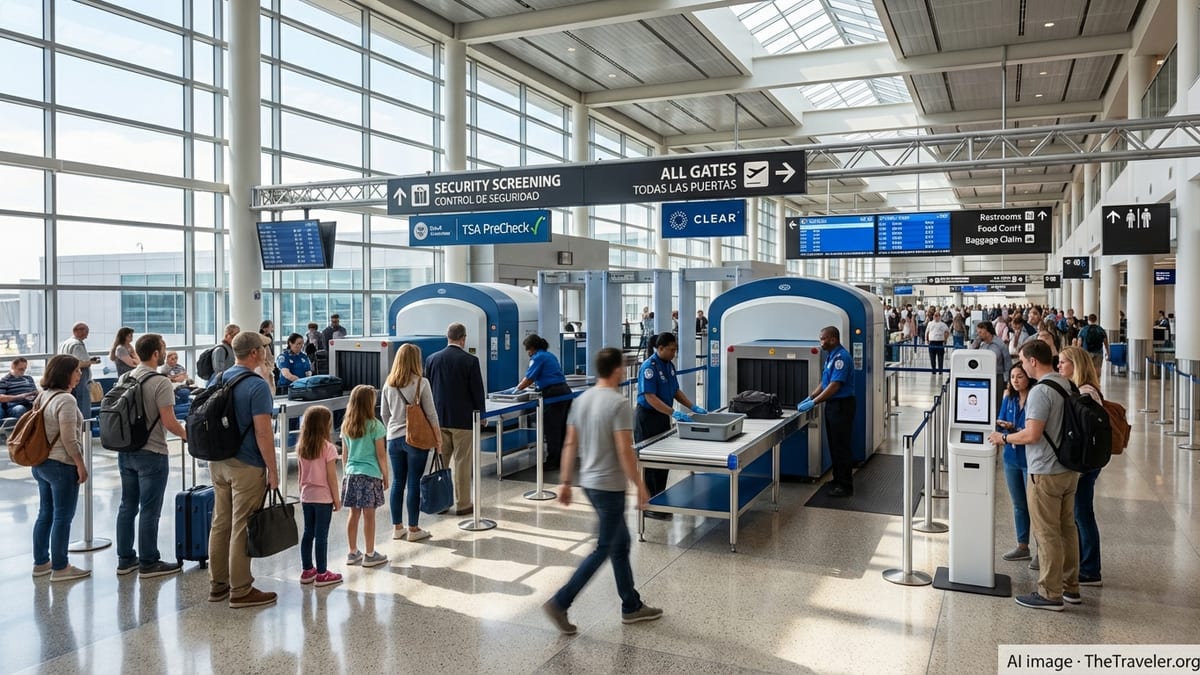
A Renewed Push to Fix a Long‑Criticized Funding Model
For more than a decade, the way the United States funds aviation security has been out of step with its stated purpose. Airline passengers currently pay a federal security fee of 5.60 dollars per one-way trip, a charge that was created after the September 11 attacks to help pay for TSA operations at airport checkpoints. Yet a substantial share of that revenue has repeatedly been diverted to general deficit reduction rather than screening equipment, staff, or infrastructure at the nation’s 400-plus commercial airports.
That budget practice is now at the center of an urgent reform effort on Capitol Hill. A series of bipartisan proposals, coupled with provisions already folded into recent federal spending packages, seek to restore the so-called 9/11 Passenger Security Fee to its original mission. Lawmakers are pressing to end the diversion of fee revenue before it is scheduled to expire in 2027, arguing that doing so would unlock billions for long-delayed checkpoint upgrades, advanced scanning systems, and a more resilient TSA workforce.
The debate over the fee has gained new momentum as air travel rebounds and surpasses pre-pandemic levels, straining checkpoints that still rely heavily on legacy x-ray machines and manual document checks. TSA leadership has told Congress that, without a dedicated and predictable stream of security fee funding, nationwide deployment of newer systems could take decades, leaving many travelers stuck in slower lanes and airports vulnerable to shifting threats.
Industry groups representing airlines, airports, and corporate travel managers have largely lined up behind reform, arguing that passengers deserve to see their security fees reinvested where they are paid: at the checkpoint. They contend that a more transparent and ring-fenced security fee would not only strengthen safety but also ease congestion, cut delays, and improve the overall travel experience.
From Deficit Plug to Dedicated Security Pipeline
The central complaint from reform advocates is straightforward. Since the Bipartisan Budget Act of 2013, roughly one third of the revenue collected through the passenger security fee has been routed to the U.S. Treasury to help reduce the federal deficit. That diversion has totaled well over 1 billion dollars annually in recent years, according to budget documents and congressional testimony, leaving TSA to cover a growing mission with comparatively constrained resources.
Lawmakers in both parties have introduced competing but complementary bills aimed at flipping that equation. One measure, branded the SAFEGUARDS Act, would ensure that revenue from the 9/11 Passenger Security Fee is directed entirely to aviation security and the acquisition of new equipment. Another, the FASTER Act, focuses on restoring diverted funds to bolster TSA’s operating budget and improve pay and training for front-line Transportation Security Officers who staff security lanes.
Separately, the White House and Congress agreed in the fiscal year 2024 spending package to restore more of the ticket fee revenue to TSA, an early down payment on broader reform. Airport and business travel organizations welcomed that move as a precedent-setting shift, emphasizing that long-term certainty about the fee’s use is critical for planning multi-year technology investments and terminal redesigns.
The appropriations debate for fiscal year 2025 has further underscored the stakes. TSA officials have urged lawmakers to end the diversion as soon as possible, telling House appropriators that earlier restoration of the fee would allow the agency to accelerate capital projects, expand the Aviation Security Capital Fund, and ramp up staffing in high-growth markets. Without such steps, they warn, passengers will continue to encounter bottlenecks at outdated checkpoints even as they pay more in fees.
Modern Screening Tech at the Heart of Reform
At the core of the funding push is a sweeping agenda to modernize the physical and digital backbone of airport security. TSA and its industry partners are working to roll out computed tomography scanners for carry-on bags, advanced body imaging equipment, and next-generation credential authentication systems that rely on biometrics to verify identity. Each of these technologies is costly to acquire, install, and maintain, and many airports say they lack the financial certainty to replace aging machines on an aggressive timetable.
One signature program is TSA’s deployment of upgraded Credential Authentication Technology, known as CAT, including versions that incorporate facial recognition. The devices scan a traveler’s government-issued identification, verify its authenticity, and match the traveler against watchlists without requiring a separate boarding pass. Agency leaders have said that, at current funding levels, it could take as long as a quarter century to fully deploy these systems across the national airport network.
In parallel, TSA has been piloting and expanding touchless identity verification tools designed to reduce physical contact, speed the document check process, and cut down on human error. A Touchless Identity Solution, rolled out at a set of high-volume international airports, allows officers to confirm a passenger’s identity in roughly ten seconds using a tablet-based camera linked securely to government databases. The project has already earned federal innovation awards and is cited by reform advocates as an example of what dedicated security fee funding can deliver at scale.
New money tied directly to the passenger security fee would also support less visible but critical elements of checkpoint modernization, including upgraded software, more resilient network infrastructure, and enhanced cybersecurity protections for screening systems. Officials argue that modern threats, from sophisticated explosives to digital intrusions, cannot be addressed with equipment and processes designed for a different era of aviation.
Travelers Seek Shorter Lines and a Smoother Journey
For passengers, the reforms are ultimately judged less by line items in a budget than by what they experience between the curb and the gate. After a summer of packed terminals and sporadic delays, surveys by travel associations indicate that security waits remain one of the top sources of anxiety and dissatisfaction for U.S. flyers, particularly at peak holiday and business travel periods.
Advocates for redirecting the travel security fee say that upgraded technology, coupled with better staffing, can meaningfully change that equation. Computed tomography scanners, for example, allow more passengers to keep laptops and liquids inside bags, reducing the need for secondary searches and repacking. Biometric credential systems can shave precious seconds off each identity check, time that adds up quickly when millions of passengers pass through checkpoints every day.
Trusted traveler programs such as TSA PreCheck remain central to the satisfaction strategy, offering expedited lanes and lighter screening for vetted low-risk travelers. The recent partial government shutdown, which triggered confusion over the status of PreCheck and a temporary suspension of Global Entry, highlighted the vulnerability of those programs to political and budget turbulence. Travel industry leaders argue that a more stable funding framework for TSA, underpinned by security fees that cannot be easily diverted, would help insulate these services from future disruptions.
The broader vision, articulated by both policymakers and airport executives, is a checkpoint environment where risk-based screening, automation, and smart design reduce friction for the average traveler. Instead of long serpentine lines and repeated requests to remove items, passengers would encounter more intuitive layouts, clear signage, and officers equipped with tools that let them focus on security decisions rather than rote procedures.
Balancing Security, Privacy, and Civil Liberties
The rapid expansion of advanced screening technology brings with it a parallel set of concerns about privacy and civil liberties. Civil rights groups and some lawmakers have raised questions about the use of facial recognition at checkpoints, data retention policies, and the potential for algorithmic bias in systems that compare travelers’ images against identification documents or watchlists.
TSA has responded by emphasizing that its biometric systems are opt-in in many locations, with travelers offered a choice between automated and manual identity verification. The agency says it applies strict rules on data storage and has engaged independent testing organizations to measure error rates across different demographic groups. Even so, critics argue that stronger safeguards and clearer statutory limits are needed as the technology spreads from pilot airports to the broader network.
Fee reform proposals intersect with this debate by effectively determining the pace at which biometric systems, computed tomography scanners, and other advanced tools are rolled out. Some lawmakers have urged that any legislation redirecting the passenger security fee explicitly tie new funding to oversight requirements, including transparency about system performance and independent auditing of privacy protections.
Travelers themselves appear divided. Business travelers and frequent flyers are often more willing to trade biometric data for a faster, more predictable journey, while occasional leisure travelers may be more hesitant. As Congress weighs how to structure a modern security fee regime, these differing risk and comfort thresholds are likely to shape hearings, amendments, and ultimately the details of any bill that reaches the president’s desk.
Industry, Labor, and Airports Press for Predictable Investment
The campaign to overhaul the travel security fee has brought together a broad coalition that includes airlines, airport operators, business travel associations, and unions representing front-line TSA staff. Their message is that intermittent funding spikes tied to annual appropriations cannot sustain the level of modernization and staffing needed to keep pace with demand and evolving threats.
Airport executives point out that major checkpoint redesigns, from expanding queuing areas to installing new scanner arrays, often require multi-year construction plans and coordination with airlines, concessionaires, and local authorities. Without confidence that the federal share tied to passenger security fees will be available over the life of a project, they say, it is difficult to commit to ambitious upgrades or to synchronize them with broader terminal expansions.
Labor representatives, for their part, stress that passenger satisfaction is tightly linked to the working conditions and training of Transportation Security Officers. They argue that reliable fee-backed funding can support improved pay scales, additional full-time positions, and more comprehensive training on new technologies, all of which can reduce turnover and enhance professionalism at the checkpoint.
Business travel groups have framed the issue in terms of national competitiveness. In their view, U.S. airports risk falling behind global hubs that have invested heavily in frictionless security experiences, including widespread biometric boarding and fully integrated bag and identity screening. A modernized, fee-supported TSA, they contend, is essential to maintaining the attractiveness of U.S. destinations for corporate meetings, tourism, and international investment.
Shutdown Turbulence Highlights System Vulnerabilities
The current push for travel security fee reform is unfolding against the backdrop of a partial government shutdown that has exposed the fragility of aviation security operations. Since mid-February, TSA and other Department of Homeland Security components have been forced to keep essential personnel on the job without pay, leading to growing concerns about morale, retention, and the potential for operational slowdowns at airports.
An initial announcement by Homeland Security officials that TSA PreCheck and Global Entry would be suspended as part of emergency cost-cutting measures drew fierce backlash from travelers, airlines, and lawmakers. Within days, the department reversed course on PreCheck, keeping the program running while maintaining a freeze on Global Entry. The episode underscored how quickly political deadlock can translate into uncertainty at the checkpoint for millions of travelers.
Supporters of a dedicated, insulated travel security fee point to this turmoil as a cautionary tale. They argue that when fee revenue is siphoned away from TSA and when program funding is subject to last-minute brinkmanship, even well-established services can be threatened. By contrast, a model in which passenger security fees are locked into technology, staffing, and infrastructure investments could provide a more stable foundation during future budget showdowns.
The shutdown has also sharpened the focus on contingency planning and resiliency. Airport officials are openly asking whether, with more robust and consistently funded automation in place, the system might be better able to absorb staffing strains without sacrificing either security or passenger satisfaction. Those questions are likely to feature prominently as Congress takes up broader budget and fee reform negotiations in the weeks ahead.
What Comes Next for Travelers and Airports
In the short term, travelers will not see immediate changes to the dollar amount of the security fee printed on their tickets. Most of the reform activity now underway concerns where that money goes and how quickly TSA can convert it into equipment, staff, and redesigned checkpoints. Any major alteration to the fee level itself would require separate legislative action and is likely to be politically sensitive at a time of widespread concern over rising travel costs.
What passengers may notice, however, is a more visible federal focus on the customer experience at security. Lawmakers have increasingly framed their fee reform efforts in terms of passenger outcomes, from shorter lines and clearer communication to more widespread access to trusted traveler options. TSA has likewise elevated traveler satisfaction as a performance metric, tracking complaint trends and piloting new queuing strategies and signage to reduce confusion at busy hubs.
For airports, the coming months will bring a mix of anticipation and uncertainty. Many are preparing wish lists of projects that could move forward quickly if Congress enacts a dedicated aviation security funding stream, from expanding computed tomography coverage at smaller regional airports to replacing temporary checkpoint structures with permanent, technology-ready spaces. Yet until legislation is finalized, they must continue to operate within existing budget constraints.
As negotiations continue in Washington, passengers, airlines, and airport operators are watching closely to see whether the United States can finally align its travel security fees with its stated priorities of safety, modernization, and a better experience at the checkpoint. The outcome will shape not only how travelers move through airports in the years ahead but also how they feel about the value they receive for every security fee printed on their boarding passes.