

More news on this day
Air travelers in the United States are set to see clearer and in many cases richer payouts when they are bumped from oversold flights, as the federal government updates denied boarding rules and major carriers including Delta Air Lines and United Airlines move to overhaul their compensation policies.
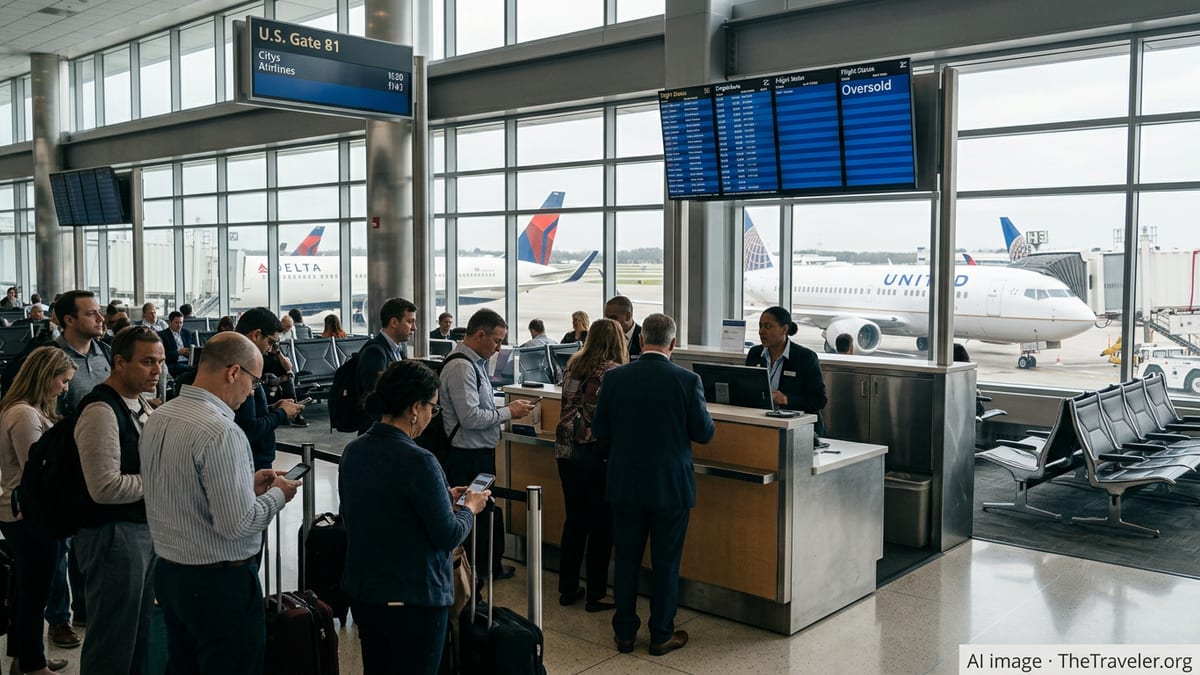
New Federal Rules Put Oversales in the Spotlight
The U.S. Department of Transportation has recently refreshed its consumer guidance and regulations around oversales, reaffirming that airlines may legally oversell flights but must meet stricter standards when passengers are denied boarding. Updated federal materials emphasize that travelers involuntarily bumped from a domestic or outbound international flight are entitled to compensation based on the price of their ticket and the length of their delay in reaching their final destination.
The rule framework requires airlines to first seek volunteers willing to give up their seats in exchange for compensation before resorting to involuntary bumping. Only when there are not enough volunteers may carriers deny boarding, and then they must pay cash or a check in amounts tied to the fare and delay window, with caps that adjust over time. The Department has also clarified that airlines cannot retroactively change key contract terms to weaken existing oversales protections after a ticket has been purchased.
In tandem with broader refund rules adopted in 2024, the government has sharpened the distinction between schedule disruptions and classic oversales. For passengers, that means two overlapping layers of protection: automatic cash refunds in defined situations when flights are canceled or significantly changed, and separate denied boarding compensation when a seat is oversold and a traveler is forced to wait for a later departure.
Regulators have framed these changes as an effort to close gaps exposed by several high profile incidents in recent years, in which passengers were removed from full flights or downgraded from premium cabins with minimal or confusing compensation. The new guidance is intended to standardize expectations at the gate and reduce the room for improvisation by individual agents.
Delta Aligns Oversell Compensation With Updated Standards
Delta Air Lines has revised its customer service plan and related legal notices to align with the new federal requirements, explicitly highlighting how the carrier will treat passengers when a flight is oversold. The company has renewed its pledge to handle bumped travelers with what it calls fairness and consistency, spelling out that the amount offered will depend on delay length and ticket cost and that customers will be told when they may be eligible for a refund instead of or in addition to vouchers.
Delta’s updated commitments, effective from late 2024 onward, guarantee that customers will receive timely information about schedule disruptions and that refund eligibility will be disclosed whenever alternative transportation or credits are proposed. While much of the language focuses on cancellations and significant delays, the section on oversales reinforces that volunteers will be sought first, often with escalating electronic offers sent to passengers before boarding begins.
Inside the airline industry, Delta has been one of the carriers most closely watched for how it balances generous voluntary offers against the higher costs of involuntary bumping under federal rules. Recent traveler reports describe four figure digital bids for volunteers on peak flights, a sign that the airline is prepared to pay more upfront to avoid triggering mandatory denied boarding payouts tied to ticket price multipliers and capped amounts.
Travel experts note that Delta’s moves effectively cement a two tier system. Passengers who volunteer to give up their seats may receive flexible eCredits, vouchers or sometimes miles that can exceed statutory minimums, while those who are bumped against their will are entitled to specific cash payments defined by federal regulation. The carrier’s refreshed policies are designed to make those distinctions clearer at the gate and in follow up communication.
United Reworks Its Denied Boarding and Downgrade Playbook
United Airlines has also been reshaping how it handles oversales situations, particularly in premium cabins where demand often exceeds supply on popular business routes. The airline’s contract of carriage details Rule 25 on denied boarding compensation, outlining limits, exceptions and payout formulas when passengers are bumped from oversold flights departing the United States.
Recent consumer complaints and online accounts highlight tension points that United is now under pressure to address more systematically, including involuntary downgrades from business or premium economy to standard economy when aircraft are swapped or cabins are oversold. In several high profile cases, customers initially reported receiving little or no compensation, only to secure higher payouts after escalating to corporate customer care or invoking federal guidelines.
Industry analysts say United’s internal policies have been evolving in response to that feedback and to the government’s clearer stance on what constitutes denied boarding and what must trigger compensation. Gate agents are being trained to distinguish more carefully between operational changes that may not require payouts and true oversales events where federal rules demand specific remedies.
For travelers, the practical change is that United is increasingly codifying what used to be handled on an ad hoc basis. Passengers who voluntarily step off an oversold flight can expect a more structured set of options, often including vouchers at set levels depending on the expected delay, while those who are bumped without consent are to be given written notice of their rights and the cash amounts owed under federal law.
How the New Oversell Landscape Affects Travelers
For U.S. passengers, the combined effect of federal rule tightening and airline level policy updates is a more predictable experience when flights are oversold. The baseline entitlement in an involuntary bump scenario is now widely understood inside the industry, and major carriers, led by Delta and United, are building automated tools to calculate and issue payments quickly at the airport.
At the same time, the gap between federal minimums and what airlines may voluntarily offer to entice travelers off a crowded flight is creating a more dynamic market at the gate. On busy routes and peak travel days, it is common for airlines to send out multiple rounds of increasing offers through their apps and display boards before boarding, aiming to reach a price point that draws enough volunteers to avoid denied boarding altogether.
Consumer advocates advise passengers to pay close attention to how offers are framed. A voucher or eCredit can be worth more than the cash minimum if used wisely, but it is not the same as the statutory compensation due in an involuntary bump. Travelers who accept a voluntary deal generally waive their claim to additional denied boarding payments, which makes it important to understand both the airline’s policy and the applicable federal rules before saying yes.
The renewed focus on oversales has also prompted more transparent reporting. Regulators publish quarterly data on involuntary denied boardings, and airlines track internal metrics on how often they resort to bumping, the amounts paid out, and the volume of customer complaints that follow. That data is feeding into revenue management decisions, encouraging carriers to refine how aggressively they oversell in the first place.
Competitive Pressures Extend Beyond Delta and United
While Delta and United are at the center of the latest policy shifts, other major U.S. airlines are moving in parallel. American, Southwest, Alaska and several low cost carriers have updated their customer commitments and contracts of carriage to align with the government’s clarified oversales guidance and to remain competitive in the eyes of travelers who increasingly compare compensation practices.
Some airlines have chosen to publicly emphasize that they rarely, if ever, involuntarily bump passengers, underscoring their reliance on advance rebooking tools and voluntary offers to manage overbooked flights. Others highlight generous voucher schemes, lodging coverage or meal credits when disruptions occur, even where federal rules do not explicitly mandate those extras.
The competitive pressure is especially pronounced on routes where multiple carriers operate similar schedules and aircraft types. Business travelers in particular are paying attention to how often airlines oversell premium cabins and what happens when things go wrong. Clear, consistent oversell compensation policies are becoming part of the broader value proposition alongside frequent flyer benefits and onboard amenities.
As the new federal rules settle in and airline policies continue to evolve, industry watchers expect further refinements, including possible adjustments to compensation caps and more automation around how offers are targeted to specific passengers. For now, the message to U.S. travelers is that they have stronger, better defined rights when flights are oversold, and that the largest carriers, led by Delta and United, are reshaping their playbooks accordingly.