

More news on this day
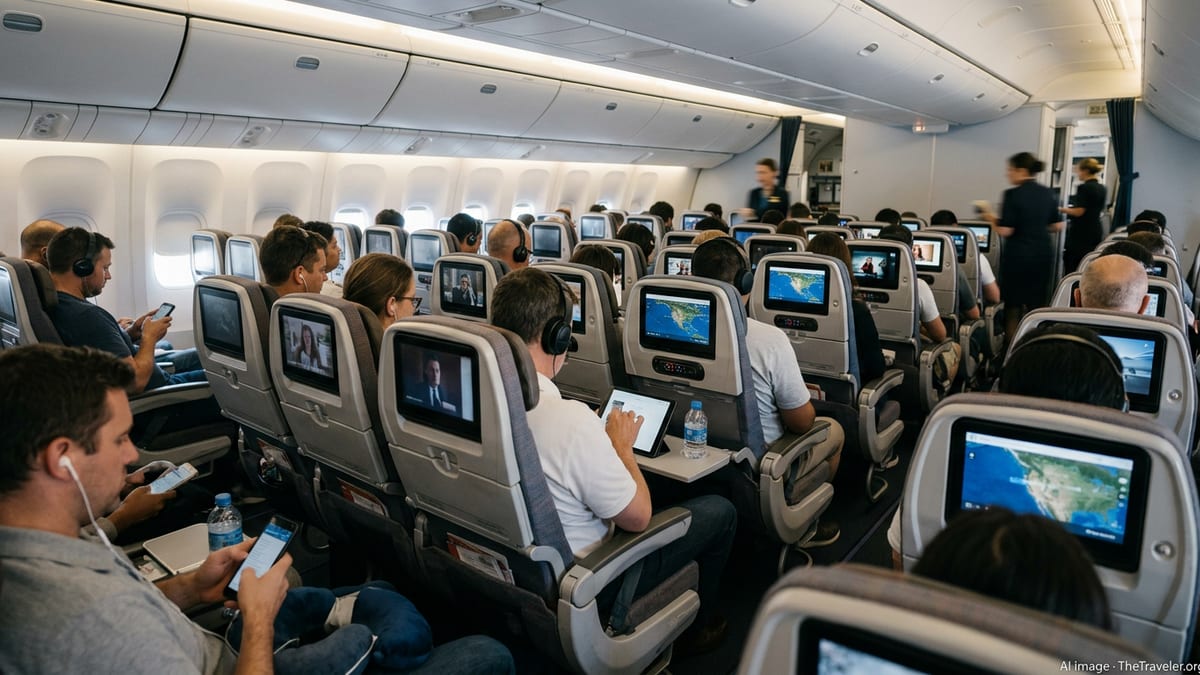
United States regulators and airlines are moving to standardize the use of personal headphones for in-flight entertainment, mirroring long-standing practices at many international carriers and signaling a broader shift toward quieter, more controlled cabin environments.
Clarifying What “Mandatory Headphone Use” Really Means
While some social media posts have suggested a sudden new federal rule, U.S. carriers have for years required passengers to use wired or wireless headphones when listening to in-flight entertainment or personal devices with audio. What is changing is not the existence of the expectation, but the consistency with which it is communicated and enforced, as airlines respond to rising complaints about cabin noise and disruptive media playback.
Industry officials note that there is no blanket federal regulation that forces passengers to don headphones for all entertainment at all times. Instead, regulators outline broad safety and comfort standards, while individual airlines set and enforce policies that bar audible content from speakers on seatback screens, phones, tablets and laptops. The latest airline policy updates and notices to passengers more clearly describe these rules and emphasize that crew can intervene when travelers refuse to comply.
The renewed focus has led some observers to frame the shift as the United States “joining” other regions in mandating headphone use. In practice, global carriers have converged on similar expectations: if audio is playing, it should be routed through headphones or earbuds that do not intrude on other passengers’ space or safety.
Noise, Comfort and Hearing Health Drive Stricter Policies
Airlines and regulators say the push for stricter headphone rules is partly driven by concerns over cabin noise levels. Modern aircraft are quieter than older models, but the combination of engine hum, airflow and human conversation already creates a loud background. When individual passengers play movies, music or games through device speakers, even at low volume, the result can be pockets of competing sound that travel several rows.
Cabin crew report that disagreements about loud entertainment have become a more common trigger for in-flight disputes, particularly on long-haul services and red-eye flights where many travelers want to sleep. By making headphone use the default for any audio, airlines hope to defuse conflicts before they begin and create a more predictable sound environment throughout the aircraft.
There is also a growing focus on hearing health. Some aviation medicine specialists caution that passengers may turn up the volume on personal devices to overcome ambient cabin noise, increasing the risk of long-term hearing damage. Airlines are responding by promoting volume-limiting headphones for children, redesigning audio settings on seatback systems and issuing clearer guidance that passengers should keep their devices at moderate levels.
How U.S. Rules Align With Global Airline Practices
In many respects, U.S. carriers are catching up with communication practices already common elsewhere. European and Asia-Pacific airlines typically state in pre-flight announcements and inflight magazines that entertainment audio must be heard only through headphones, and that speakers on personal devices should remain muted throughout the flight.
North American airlines have historically relied more on informal enforcement, with crew asking individual passengers to plug in headphones if their device audio bothered others. Updated policy language and more prominent reminders at booking, check-in and in safety briefings reflect an attempt to eliminate ambiguity and to make it easier for flight attendants to refer to written rules when they intervene.
The emphasis on consistency is particularly important for international routes where passengers may connect between domestic and foreign carriers on the same journey. Aligning expectations about headphone use helps reduce confusion and avoids situations in which behavior considered acceptable on one leg becomes a problem on the next.
What Passengers Can Expect On Board
For travelers, the practical impact of the tightening rules will mostly be seen in how airlines communicate. Passengers can expect clearer instructions that any form of audio, whether from the airline’s own entertainment system or from a personal streaming service, must be listened to with headphones or earbuds. Crew will be more likely to step in quickly if sound is audible beyond a passenger’s immediate seat area.
Airlines are also revisiting the way they provide headphones. Some full-service carriers still distribute complimentary wired headsets, particularly on long-haul flights, while others sell higher-quality options through onboard catalogs or encourage passengers to bring their own. The spread of wireless Bluetooth connectivity to newer seatback systems is influencing purchasing decisions, as frequent travelers invest in noise-canceling models that work both in the air and on the ground.
Passengers who rely on assistive listening devices are being reassured that the policies are intended to support, not restrict, accessibility. Airlines say that compatible hearing aids and approved wireless systems remain permitted, and that crew are trained to help passengers connect their devices to onboard entertainment where possible.
The Future of Quiet Cabins and In-Flight Technology
Looking ahead, aviation analysts expect the trend toward quieter cabins to continue as airlines retrofit aircraft with improved sound insulation and upgrade inflight entertainment platforms. Some are experimenting with more granular volume controls, directional speakers embedded in headrests and noise-masking audio profiles that allow passengers to listen comfortably at lower levels.
Regulators and airlines are also watching how emerging technologies, such as personal augmented reality headsets and spatial audio systems, will fit within existing rules. The guiding principle is unlikely to change: whatever the device, its sound should remain private and should not affect nearby passengers’ comfort or ability to hear crew instructions.
As the United States sharpens its approach to headphone use for in-flight entertainment, travelers can expect a cabin environment that is a little quieter, a little clearer and, airlines hope, a little more harmonious. For now, one message is consistent across carriers and continents alike. If you plan to watch or listen at 30,000 feet, you will be expected to plug in.