

More news on this day
Canadian travelers are abandoning trips to the United States in numbers not seen outside the pandemic era, as new data and traveler accounts point to an informal, fast‑spreading boycott of the southern neighbor’s border.
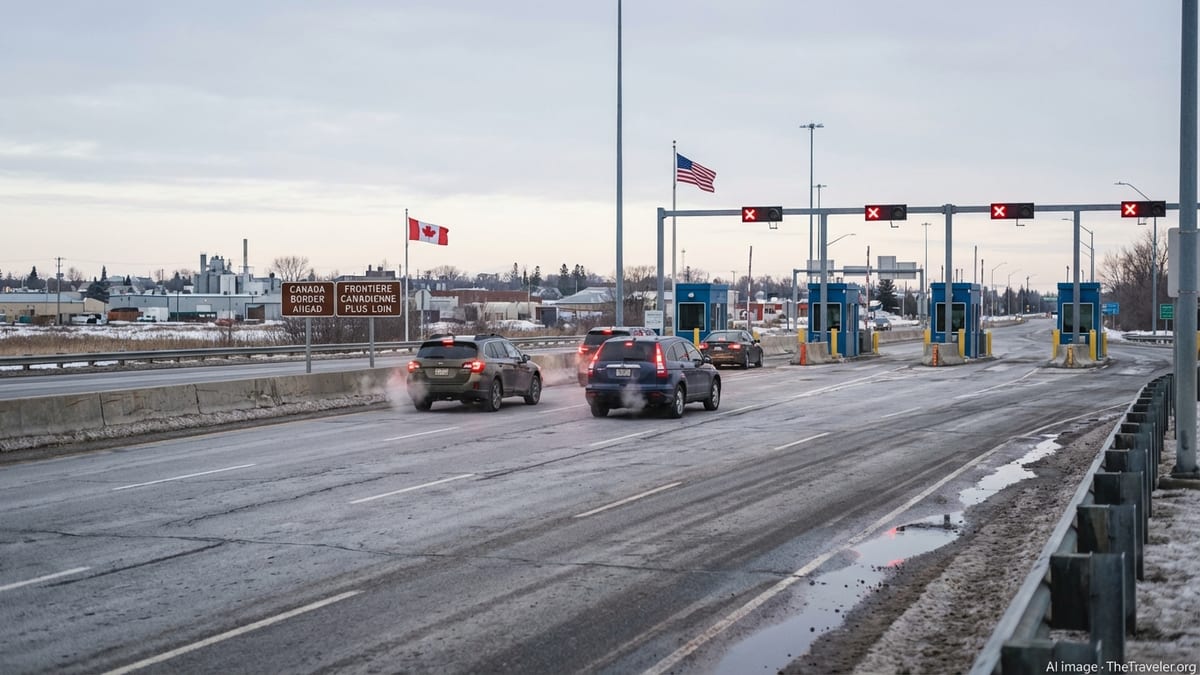
Sharp Declines Signal a Sudden Reset in Cross-Border Travel
Official statistics and industry reports show Canadian travel to the United States has fallen at a pace that analysts describe as historic outside major crises. Between January and May 2025, Canadians made just over 7 million visits to the U.S., a drop of nearly 17 percent compared with the same period a year earlier. By July, Canadian residents logged 1.7 million return trips by motor vehicle from the United States, almost 37 percent fewer than in July 2024, according to data cited by Statistics Canada and U.S. agencies.
The slide has deepened into 2026. Fresh figures from Canadian travel analysts indicate that in January 2026, Canadians made 24.3 percent fewer trips to the United States than in January 2025. Compared with January 2024, before the current round of tariff tensions escalated, the decline reaches 28.2 percent, suggesting a structural shift rather than a temporary wobble.
At specific border points, the retreat is visible in daily traffic counts. In Ontario, land crossings into the United States fell to about 1.08 million travelers in March 2025, down from 1.22 million a year earlier, with similar drops recorded in February. U.S. officials say overall personal vehicle volumes have recovered from pandemic lows, but cross‑border patterns are now being reshaped by policy and politics rather than public health.
The trend has flipped a long‑standing relationship. Statistics compiled in mid‑2025 show that U.S. visitors to Canada now outnumber Canadians heading south, largely because Canadian same‑day returns plunged more than 40 percent year over year through May. For border communities that once relied on quick shopping trips and weekend getaways, the reversal is dramatic.
Politics, Tariffs and a Climate of Unease at the Border
Behind the numbers is a potent mix of political frustration and growing discomfort about how Canadians are treated at the U.S. border. President Donald Trump’s return to office and his administration’s “America First” agenda have reverberated northward, with new tariffs on Canadian goods and sharpened rhetoric about the bilateral relationship. Ottawa has condemned the measures, but it is ordinary travelers who are quietly voting with their passports.
Major news outlets in both countries report that Canadians increasingly view U.S. vacations as a political choice. Surveys cited by tourism firms show many would‑be visitors staying away because they feel unwelcome or unsafe, or believe that spending vacation money in the United States amounts to endorsing policies they oppose. The result is a kind of consumer boycott, diffuse but powerful, as families who once drove regularly to border malls or Florida beaches now scroll past U.S. deals in favor of other destinations.
Stricter enforcement at the northern frontier is magnifying those sentiments. U.S. Customs and Border Protection has stepped up inspections, questioning and secondary screenings, with widely reported cases of Canadians being detained or turned back over issues ranging from past cannabis use to perceived political views. The Government Accountability Office has also flagged staffing and equipment strains at the northern border, conditions that can translate into longer lines and unpredictable waits for legitimate travelers.
For some Canadians, those stories are enough to stay home. Travel agents report clients cancelling long‑planned road trips after hearing of neighbors stopped for hours at inspection booths or pulled aside over device searches. Border officers maintain they are enforcing federal law, but the cumulative effect, tourism executives warn, is a chilling atmosphere that is increasingly hard to reverse.
Economic Fallout on Both Sides of the Line
The sharp pullback in Canadian visitors is rippling through businesses that have long relied on steady cross‑border traffic. Duty‑free operators and retailers along the northern frontier report sales plunging by as much as 40 to 50 percent compared with a year earlier, with U.S. tourism advocates estimating billions of dollars in lost revenue for border communities.
Airlines are feeling the shock as well. Aviation analytics firms say transborder flight bookings between Canada and the United States have fallen by more than 70 percent over key travel months in 2025. Carriers have responded by trimming capacity, cutting hundreds of thousands of seats from Canada–U.S. routes through the peak summer and fall period. Canadian airlines including Air Canada, WestJet and Flair have all reported double‑digit drops in U.S. bookings, with some low‑cost operators seeing even steeper declines.
In popular sun destinations such as Florida and California, local tourism boards describe a noticeable dip in Canadian snowbirds, a demographic that once filled winter hotels and golf courses. Restaurants, outlet malls and attractions that counted on Ontario and Quebec license plates in their parking lots are now competing harder for domestic U.S. visitors and new international markets.
Canadian communities built around cross‑border shopping and work are also exposed. From Windsor and Sarnia in Ontario to small towns in New Brunswick and British Columbia, hotels and gas stations near bridge heads are watching traffic thin. Municipal officials warn that if the downturn persists, it could undermine local tax bases and employment in regions with few alternative industries.
Canadians Reroute Trips to Overseas and Domestic Alternatives
While trips south are shrinking, Canadians are not giving up travel altogether. Instead, they appear to be reallocating their time and money. Statistics from Ottawa International Airport and other major hubs show strong growth on non‑U.S. routes. Ottawa handled 4.6 million passengers in 2024, up more than 12 percent from the previous year, and recorded over 9,000 Canadians returning from non‑U.S. destinations in July 2025 alone.
National data reinforce that shift. Canadian‑resident overseas air trips rose by more than 11 percent year over year in January 2026, even as cross‑border auto trips to the United States fell by more than a quarter. Travel agencies say demand is rising for European city breaks, Caribbean resorts and longer‑haul itineraries that bypass U.S. airports altogether, routing through Canadian or overseas hubs instead.
Domestic tourism is benefiting as well. Provincial marketing campaigns are capitalizing on the moment, urging Canadians to keep their dollars at home rather than heading to outlet malls in Buffalo or Bellingham. With the U.S. dollar relatively strong, many travelers now find that a week in the Maritimes or the Rockies offers better value than a cross‑border shopping run, even before factoring in tariffs and border hassles.
The pattern is creating new winners and losers in the broader travel economy. Airlines and tour operators with diversified networks beyond the United States are faring better than those heavily reliant on cross‑border routes. Hotels and attractions in Canadian and overseas destinations are seizing a rare chance to grab market share from the U.S. tourism juggernaut.
Can Washington and the Tourism Industry Win Canadians Back?
U.S. tourism officials and state governments are now wrestling with how to stem the exodus. Some destinations, notably California and parts of the Northeast, have launched targeted campaigns aimed specifically at Canadians, emphasizing shared values, safety and welcome. Local chambers of commerce along the border are pressing federal authorities to provide clearer messaging on entry rules and to ensure that legitimate travelers are not caught up in high‑profile enforcement actions.
So far, those efforts have yielded only modest gains. Surveys conducted in late 2025 and early 2026 show that barely more than half of Canadian travelers are considering a U.S. trip in the next 12 months, and only a small fraction have firm bookings. Tourism specialists warn that rebuilding confidence could take years, particularly if trade disputes and headline‑grabbing border incidents continue.
Policy experts argue that both governments have a stake in reversing the spiral. For Canada, reduced exposure to the U.S. market may offer some short‑term political satisfaction but risks weakening a vast web of family, business and cultural ties. For the United States, the loss of millions of high‑spending, low‑risk visitors from its closest ally undercuts an industry that had counted on a full post‑pandemic rebound.
For now, however, the message from Canadian travelers is clear. Faced with tougher politics, tougher borders and richer alternatives elsewhere, many are choosing to stay away. The question for Washington and the travel sector is how long that quiet boycott will last, and what it will take to persuade Canadians that the border is, once again, worth crossing.