

More news on this day
Major U.S. airports are grappling with crippling security bottlenecks as a protracted Department of Homeland Security funding lapse leaves tens of thousands of Transportation Security Administration officers working without pay, thinning checkpoints, stretching lines for hours and threatening to derail what was expected to be one of the busiest spring travel seasons in years.
Get the latest news straight to your inbox!
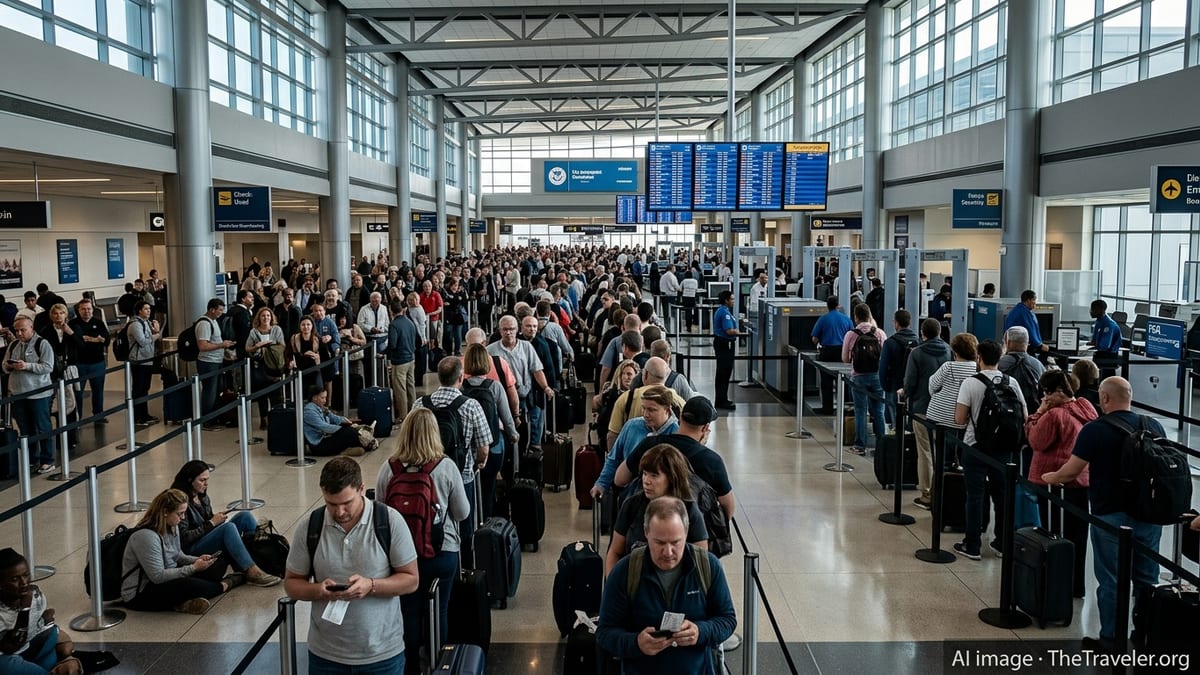
Government Shutdown Deepens Nationwide Airport Gridlock
The current partial shutdown of the Department of Homeland Security, which began in mid-February, has moved from a political standoff in Washington into a full-blown operational crisis at airports across the country. Publicly available information indicates that roughly 50,000 TSA officers have been required to report for duty without pay, driving an escalating wave of sick calls, resignations and staffing gaps at security checkpoints.
Reports indicate that some of the nation’s largest hubs, including George Bush Intercontinental Airport in Houston and other major connecting airports, have seen wait times stretch well beyond two hours during peak periods. Photos and broadcast footage from recent days show snaking queues extending deep into terminal lobbies as checkpoint lanes sit closed for lack of screening staff.
While airport operations teams have attempted to redistribute personnel and consolidate checkpoints, published coverage suggests that these steps have not kept pace with demand. The shutdown coincides with overlapping pressures, including early spring storms in several regions and the start of school and university holidays, amplifying the impact of each staffing shortfall on travelers.
Industry groups representing airlines, airports and travel businesses have warned in open letters that the situation resembles past shutdown disruptions, but on a larger scale given the continued growth in passenger volumes and the high expectations for travel in 2026 tied to upcoming major events.
Hours-Long Security Lines Strand Passengers Coast to Coast
Across multiple regions, travelers are encountering wait times that far exceed typical guidance to arrive at the airport two hours before domestic flights and three hours before international departures. Public reports from Houston, Washington, Alaska and several Midwest hubs describe passengers waiting up to four to six hours at the busiest periods, with many missing flights despite arriving well in advance.
Local news outlets in Alaska and the Pacific Northwest have documented extreme lines with only a fraction of checkpoint lanes staffed and open. In one widely cited example, a main checkpoint reportedly operated with just two officers checking identification during a busy afternoon wave, leaving lines that stretched through the terminal for much of the day.
Conditions have varied by market, with some airports in the Washington region initially avoiding the worst delays while others, such as Baltimore/Washington International, have urged travelers to arrive at least three hours early even for domestic trips. Regional differences appear tied to baseline staffing levels, ability to reassign personnel and the availability of contract screeners or alternative security arrangements at smaller facilities.
For passengers, the experience has become a test of endurance. Travel advisories from airlines and industry associations now recommend building in extensive extra time, preparing for limited seating in queuing areas and anticipating additional stress points such as crowded parking facilities and strained concessions near checkpoint entrances.
ICE Deployments and Potential Airport Closures Raise New Questions
As the staffing crunch has intensified, the federal response has taken the unprecedented step of deploying Immigration and Customs Enforcement personnel to assist at airport security checkpoints. According to published coverage, ICE officers have been sent to a growing list of large and midsize airports, including facilities in Pittsburgh, the Washington region and other major metropolitan areas.
These deployments are focused on peripheral functions such as monitoring exits, checking identification before travelers reach TSA screeners and managing crowd control in line areas. Public statements from labor representatives and security experts cited in recent reporting raise concerns that such measures may offer only limited relief, given that ICE agents are not trained aviation screeners and cannot directly operate X-ray machines or advanced imaging systems.
At the same time, federal briefings referenced in regional news indicate that smaller hub airports, including Fairbanks International and other remote facilities, may face partial or full shutdowns if TSA staffing continues to erode. Such closures would have outsized impacts in communities with few alternative transport options, effectively cutting off air access for residents and businesses.
Airport operators and local officials in affected regions have begun scenario planning for reduced schedules or temporary suspensions of service. Contingency discussions reported publicly include consolidating flights at larger regional hubs, expanding intercity bus links and coordinating with cargo carriers to preserve essential freight connectivity if passenger operations are curtailed.
Economic and Operational Impact on the U.S. Travel Industry
Economic analysis released by national travel associations in recent weeks has warned that extended disruptions to screening could cost the U.S. travel sector billions of dollars. Earlier shutdowns were estimated to have drained several billion in visitor spending, and updated modeling suggests that the current impasse may be on track to match or exceed those losses if it stretches further into the spring and early summer schedule.
Airlines are reporting mounting costs tied to missed connections, rebookings and schedule recovery, as aircraft depart with open seats because passengers remain stuck in security lines. Airport concessionaires and parking operators face volatile revenues, with some reporting spikes from longer dwell times and others seeing sharp drops as travelers cancel or reroute trips to avoid the worst-affected airports.
Published commentary from aviation analysts highlights the longer-term risks to workforce stability at TSA. After multiple shutdowns in less than a year, many front-line screeners are reportedly reassessing their future in federal service, raising fears of a prolonged staffing shortage even after funding is restored and back pay is issued.
Travel demand itself has shown signs of softening in some segments, particularly discretionary domestic leisure trips and last-minute business travel, as travelers weigh whether to postpone journeys until conditions stabilize. Industry observers caution that this hesitation could blunt the momentum of what had been forecast as a record-setting travel year driven by major sporting and cultural events on the calendar.
Travelers Confront an Uncertain Peak Season
Looking ahead, public-facing guidance from airports, airlines and trade groups converges on a single message for travelers: plan for uncertainty. With Congress still at an impasse over Homeland Security funding and no guaranteed timeline for relief, the outlook for security wait times over the coming weeks remains highly unpredictable.
Many airports have expanded communication through social channels, terminal signage and recorded announcements to set expectations about potential delays and to encourage passengers to arrive earlier than usual. Some carriers are waiving certain change fees or allowing more flexible same-day rebooking on a case-by-case basis when missed connections are tied to unusually long security lines.
Travel advisors and corporate travel managers are adjusting itineraries around the new reality by scheduling earlier departures, favoring connecting patterns through less-congested hubs where possible and steering travelers toward airports that use private or contract screeners unaffected by the shutdown. Guidance documents distributed within the industry emphasize the importance of real-time monitoring of checkpoint conditions on day of travel.
For now, the travel experience at many U.S. airports is defined by unpredictability. Until a funding resolution is reached and TSA can begin rebuilding its staffing levels with regular pay restored, passengers are likely to continue facing the prospect of multi-hour security lines, missed flights and a level of strain on the aviation system not seen in years.