

More news on this day
The United States has slipped into a 2.2 billion dollar travel trade deficit as Americans spend more on trips overseas than international visitors bring into the country, highlighting a stubborn imbalance that underscores the uneven nature of the sector’s post-pandemic recovery.
Get the latest news straight to your inbox!
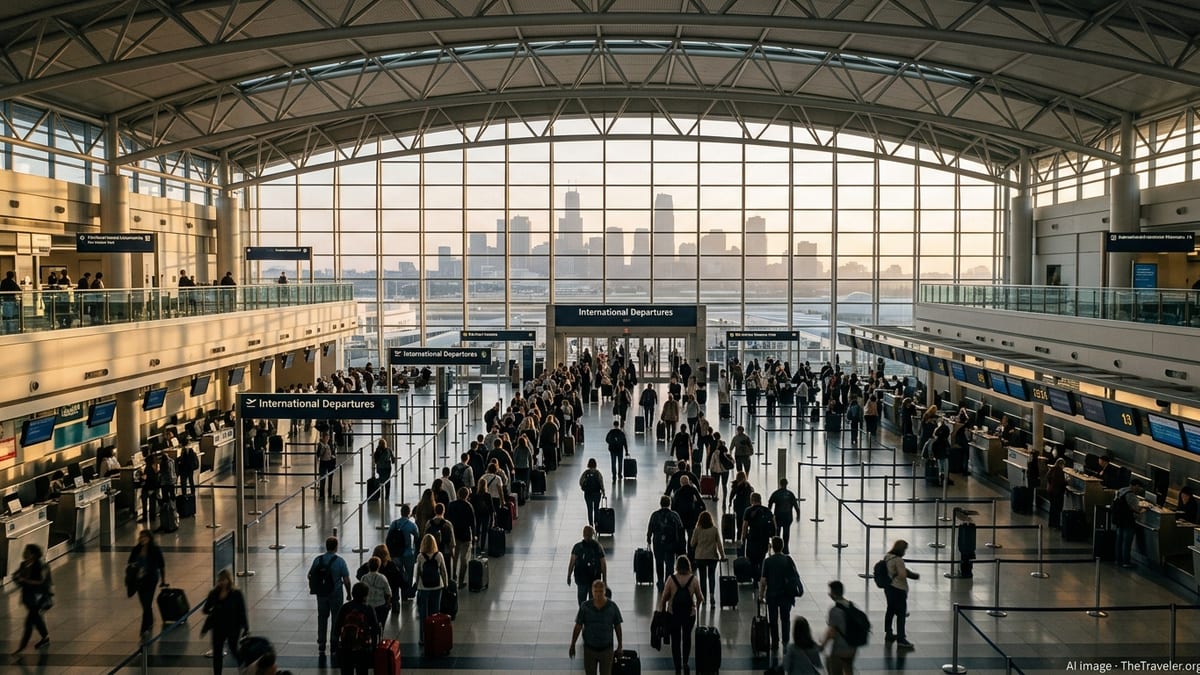
Outbound Spending Surges Past Inbound Receipts
Recent government data on international trade in services show that U.S. residents are once again traveling abroad in large numbers and spending heavily on lodging, food, entertainment and transportation outside the country. That outbound outlay has outpaced the money foreign visitors spend on similar services inside the United States, resulting in a travel-specific deficit estimated at about 2.2 billion dollars over a recent twelve-month period.
Travel services are treated in official statistics as exports when foreign visitors spend inside the United States and as imports when Americans purchase travel abroad. For several years before the pandemic, the United States typically ran a sizeable surplus in this category, as strong inbound tourism and a weak dollar made domestic destinations comparatively attractive. More recent releases from the Bureau of Economic Analysis and the International Trade Administration indicate that dynamic has shifted, with outbound spending recovering faster than inbound receipts.
Monthly snapshots of the travel account help explain the swing. In some recent months, inbound visitor spending in the United States has hovered in the low- to mid-teens in billions of dollars, while Americans’ outlays abroad have pushed above the 20 billion dollar mark. When those monthly gaps are accumulated over a year, they produce a meaningful deficit, even as overall services trade remains in surplus.
Economists note that the travel deficit is small relative to the country’s overall goods and services trade gap, but it carries outsized symbolic and local economic significance. Communities and states that rely heavily on international tourism feel the difference quickly when visitor numbers or spending soften, particularly in major gateway cities and long-haul destinations.
Inbound Recovery Stalls Below Pre-Pandemic Levels
Available data indicate that inbound travel to the United States has not yet fully returned to its pre-2019 strength, even though global tourism volumes have largely recovered. Government statistics and industry analyses point to visitor arrivals and spending that remain below their pre-pandemic peaks, especially from some long-haul markets in Europe and Asia.
One key factor is the slower rebound of certain high-spending segments, such as long-haul leisure travelers and international business visitors. Reports show that while regional tourism within Europe and Asia has bounced back strongly, long-haul trips to the United States lag as travelers face higher airfares, lengthy flight times and persistent visa bottlenecks in some origin markets. A stronger dollar in several recent periods has also made hotels, dining and attractions in the United States comparatively more expensive.
Sector-specific headwinds further complicate the picture. Airline capacity on some transpacific and transatlantic routes remains below 2019 levels, constraining potential growth in arrivals. At the same time, evolving corporate travel policies, remote work and virtual meetings have limited the return of traditional business travel, which historically generated a large share of high-yield inbound spending.
Forecasts compiled by industry research groups suggest that inbound visitor numbers could edge closer to pre-pandemic levels over the next two to three years, but many projections now assume a slower trajectory than earlier expected. That softer outlook, combined with robust outbound demand from U.S. residents, reinforces the likelihood that the travel trade account will remain under pressure.
Strong Dollar and Consumer Confidence Fuel Outbound Demand
On the outbound side, Americans appear eager to make up for missed trips during the pandemic era. Surveys and booking data cited in recent travel industry reports indicate that U.S. consumers continue to prioritize international leisure travel, even as they navigate inflation and higher interest rates. Popular destinations in Europe, Mexico, the Caribbean and parts of Asia have benefited from strong U.S. demand.
Currency dynamics have played a visible role. Periods of relative strength in the U.S. dollar against major currencies have effectively discounted overseas travel for American households, helping offset higher airfares and hotel rates. When the dollar buys more abroad, U.S. travelers are more inclined to extend stays, upgrade accommodations or add additional destinations, all of which increase outbound spending captured in official statistics.
Airline and tour operator capacity has also shifted to chase outbound demand. Carriers have focused on restoring and expanding routes that serve American vacationers heading to Europe and beach destinations, sometimes more quickly than flights that bring inbound visitors to U.S. gateways. That tilt in capacity supports outbound growth but does little to bolster inbound receipts, deepening the imbalance in the travel account.
Analysts note that outbound travel is closely tied to the overall health of the U.S. consumer. As long as employment levels remain strong and household savings and credit can support discretionary spending, outward flows of American tourists are likely to remain elevated, keeping upward pressure on the import side of the travel ledger.
Macro and Policy Implications for the Travel Economy
The emergence of a 2.2 billion dollar travel trade deficit comes at a time when policymakers are paying closer attention to the composition of the broader U.S. trade balance. While the amount is modest when compared with the nation’s overall goods and services deficit, the shift from surplus to deficit within travel services signals a loss of export earnings for the tourism industry and related sectors.
Travel exports, in the form of spending by foreign visitors, have long been a critical source of revenue for hotels, airlines, attractions, restaurants and retailers. When that export stream underperforms, it can dampen investment in tourism infrastructure and slow job growth in destinations that otherwise depend heavily on international guests. Industry groups have warned in recent months that rising geopolitical tensions, safety perceptions and increased competition from other destinations could weigh further on inbound demand if left unaddressed.
From a policy perspective, several levers are often cited as ways to strengthen the United States’ position as a travel destination. These include efforts to streamline visa processing, modernize airport and border facilities, expand marketing in key overseas markets and support initiatives that improve price competitiveness and visitor experience. Publicly available information suggests that federal and state entities are weighing such measures as part of broader economic and trade strategies.
At the same time, the travel deficit must be viewed in the context of a services sector that still generates a sizable surplus overall for the United States. Other high-value services exports, including financial, technology and intellectual property-related services, continue to offset part of the drag from weaker travel exports. That broader cushion lowers the risk that the travel-specific deficit will significantly alter the national trade picture in the near term, even if it remains a pressing concern for tourism-dependent regions.
Outlook: Can the U.S. Regain Its Travel Surplus?
Looking ahead, the central question for the tourism economy is whether the United States can restore its traditional travel surplus or whether the recent 2.2 billion dollar deficit foreshadows a more persistent structural shift. Much will depend on the pace of inbound recovery from key markets, the direction of the dollar and the evolution of geopolitical and economic conditions that shape traveler sentiment.
Major upcoming events and infrastructure investments could help close the gap over time. Large international sporting events, expanded convention facilities and new attractions in leading cities are expected to draw additional overseas visitors, potentially lifting inbound spending if connectivity and visa access keep pace. A more balanced currency environment could also make the United States relatively more affordable for foreign travelers while reducing the purchasing power of Americans abroad.
Industry forecasters caution, however, that competition for international visitors is intensifying. Many countries have launched aggressive destination marketing campaigns, simplified entry procedures and invested heavily in tourism infrastructure to capture high-spending travelers. In that environment, the United States may need to address lingering perceptions around cost, convenience and safety to fully reassert itself as a top long-haul destination.
For now, the data indicate that outbound spending by U.S. travelers continues to outstrip inbound demand, leaving the country with a travel trade deficit that contrasts with its historical position. How policymakers, destination marketers and industry stakeholders respond to that signal will shape the next phase of the sector’s recovery and its contribution to the broader U.S. trade story.