

More news on this day
The U.S. Virgin Islands is using the global spotlight of Routes Americas 2026 in Rio de Janeiro to press for new and expanded airline routes, positioning the Caribbean territory as a growth market for carriers looking to tap robust leisure demand and more resilient regional connectivity.
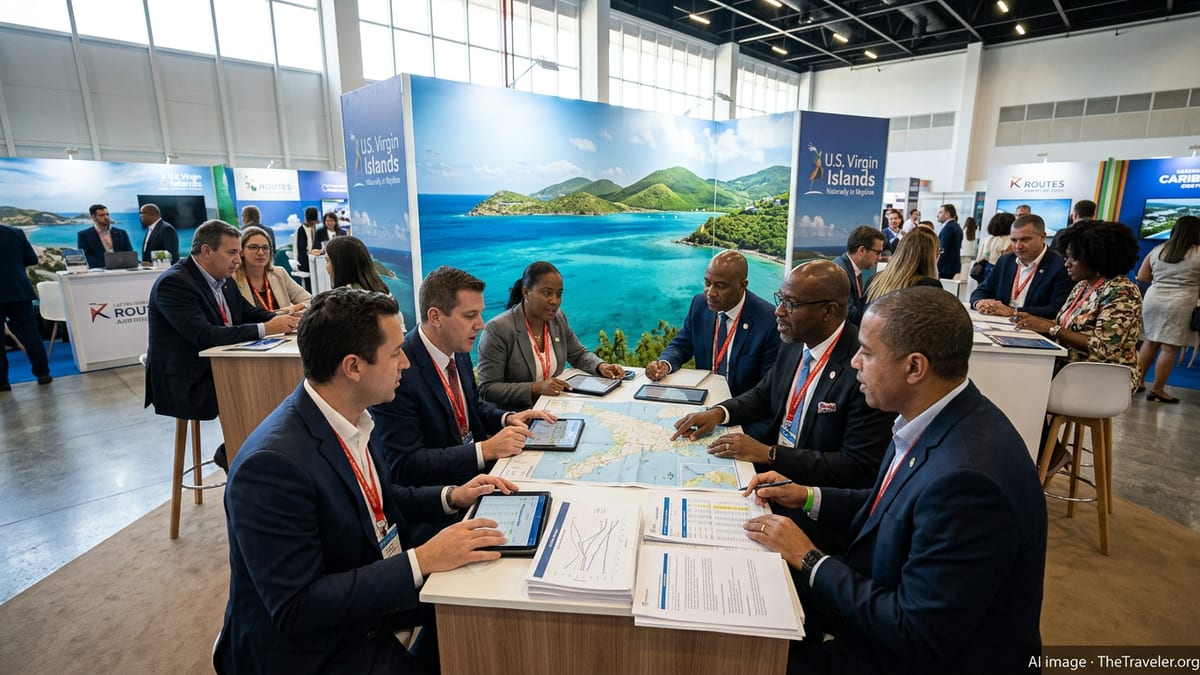
USVI Brings Aggressive Airlift Agenda to Rio
Held from March 3 to 5 at ExpoRio Cidade Nova, Routes Americas 2026 has brought airline planners, airport executives and tourism leaders from across the hemisphere to Rio de Janeiro for high-level talks on future air service. For the U.S. Virgin Islands Department of Tourism, the event marks a critical milestone in an airlift development strategy that aims to secure additional nonstop capacity from key North American gateways and improve intra-Caribbean links.
According to an official statement from the Department of Tourism, the U.S. Virgin Islands delegation arrived in Rio with a full schedule of one-to-one meetings and a clear message for carriers: the territory’s visitor demand is outpacing current seat supply, particularly in peak seasons, and the government is prepared to support sustainable new routes with coordinated marketing and data sharing.
Tourism officials describe Routes Americas as a rare opportunity to compress months of outreach into three intensive days of negotiations. In Rio, they are leveraging updated performance data from existing services into St. Thomas and St. Croix, as well as forward-looking tourism indicators, to make a detailed business case for both capacity increases and entirely new city pairs.
The Rio forum is also allowing the U.S. Virgin Islands to deepen its relationship with the event’s Brazilian and regional hosts at a time when Latin American outbound travel to the Caribbean is beginning to recover and diversify beyond traditional destinations.
Meetings With Major Carriers Signal Route Potential
During the three-day forum, the U.S. Virgin Islands delegation has held official meetings with a mix of legacy, low-cost and regional players, including Delta Air Lines, Southwest Airlines, United Airlines, JetBlue, Breeze Airways and Canada’s Porter Airlines, as well as representatives from major airports such as Denver and Copenhagen. The breadth of the schedule underlines the territory’s goal of spreading risk across multiple partners rather than relying on a narrow set of carriers.
Talks with established U.S. mainland partners are understood to focus on strengthening existing hubs that feed the Caribbean, particularly along the East Coast and in the Sun Belt. For airlines already serving St. Thomas or St. Croix, tourism officials are presenting performance metrics that highlight strong load factors, premium cabin demand from affluent leisure travelers, and opportunities to smooth seasonality with targeted events and group travel.
Low-cost and hybrid carriers are being pitched on the potential to unlock new origin markets where price sensitivity has limited Caribbean travel in the past. With families and younger travelers showing strong interest in beach destinations that are part of the U.S. domestic travel framework, the U.S. Virgin Islands is emphasizing its advantage of passport-free access for American citizens alongside competitive hotel and villa inventory.
Discussions with Porter and other non-U.S. carriers in Rio are aimed at gradually broadening the territory’s reach into Canada and selected Latin American markets. While immediate launches are unlikely, officials describe these talks as essential groundwork for future seasonal or winter-focused services as demand and fleet plans evolve.
Regional Collaboration to Ease Caribbean Connectivity Gaps
Beyond airline boardrooms, the U.S. Virgin Islands is using Routes Americas as a platform for deeper regional cooperation. Tourism leaders have held informal and scheduled exchanges with peers from Jamaica, Anguilla, Barbados, Turks and Caicos and other Caribbean destinations, seeking common approaches to shared challenges such as high operating costs, aircraft availability and fragmented intra-island networks.
These conversations are particularly focused on improving multi-stop itineraries that combine the U.S. Virgin Islands with neighboring destinations, a product that tour operators say is increasingly attractive to long-haul visitors. By coordinating schedules, marketing messages and potential incentives, Caribbean destinations hope to present airlines with route structures that make better commercial sense than stand-alone, thin routes.
The forum in Rio is also giving the U.S. Virgin Islands an opportunity to highlight its own investments in airport infrastructure and service quality. Officials are emphasizing upgrades at Cyril E. King Airport on St. Thomas and Henry E. Rohlsen Airport on St. Croix, including modernized terminals and operational improvements designed to support more reliable on-time performance and better passenger experience.
While no specific new Caribbean routes have been announced publicly from the Rio meetings, delegates describe the tone of discussions as pragmatic but optimistic, with several airlines requesting additional data and follow-up sessions later in the year to refine potential schedules and aircraft assignments.
Data-Driven Strategy Amid Volatile Aviation Landscape
The U.S. Virgin Islands’ push in Rio comes at a moment of both opportunity and uncertainty for airlines serving the wider Americas. Carriers are juggling high fuel costs, capacity constraints and evolving fleet plans, even as leisure demand to sun destinations remains robust. In response, the territory’s air service strategy has increasingly shifted toward a data-driven approach that aligns closely with airline revenue models.
Tourism officials arrived at Routes Americas equipped with forward booking curves, hotel occupancy trends and spending profiles that break out high-value segments such as weddings, yachting and luxury villa stays. The aim is to demonstrate that the U.S. Virgin Islands can reliably fill seats at sustainable fares, particularly on days and times that optimize aircraft utilization for network carriers.
At the same time, the territory is signaling flexibility in how new service might be structured. Seasonal routes that operate during peak winter months, weekend-focused patterns aimed at short breaks, and trial periods tied to cooperative marketing campaigns are all on the table in discussions with airlines wary of overcommitting capacity.
Officials acknowledge that external shocks, from geopolitical tensions to weather-related disruptions, continue to complicate planning for both airlines and destinations. By maintaining an active presence at events like Routes Americas and prioritizing ongoing dialogue with route planners throughout the year, the U.S. Virgin Islands hopes to remain near the top of the list when carriers are ready to redeploy aircraft or test new leisure markets.
Next Steps After Rio: From Talks to Timetables
With the Rio conference now concluded, the focus for the U.S. Virgin Islands shifts from pitching to follow-through. Tourism leaders say the coming weeks will be dedicated to detailed follow-up with carriers met in Brazil, including sharing more granular demand data, refining potential schedules and defining what level of cooperative marketing or introductory support might be needed to launch new services.
The Department of Tourism is expected to work closely with the Virgin Islands Port Authority and private-sector partners to align airport readiness, hospitality capacity and destination marketing around any new airlift announcements that emerge from the Rio discussions. Industry observers note that timing will be crucial, with airlines already sketching out network plans for the 2026 to 2027 winter season.
Even absent immediate route launches, officials argue that the visibility gained at Routes Americas 2026 helps solidify the U.S. Virgin Islands’ standing as a serious, data-literate partner for airlines. That positioning, they say, is essential in a competitive landscape where destinations across the Americas are vying for the same limited pool of aircraft and route-planning attention.
As the aviation industry digests the outcomes of this year’s forum in Rio de Janeiro, the U.S. Virgin Islands is betting that its intensified route development push will translate into more seats, more gateways and more resilient connectivity for residents and visitors in the years ahead.