

More news on this day
From coastal cities to small towns, U.S. couples planning 2026 weddings are increasingly choosing smaller, sustainable celebrations that favor meaningful moments and low-impact design over crowded banquet halls.
Get the latest news straight to your inbox!
Guest Lists Shrink as Costs and Priorities Shift
Industry data for 2024 and 2025 show a steady contraction in guest counts, a trend analysts say is setting the tone for the 2026 season. Research shared with Axios by The Wedding Report indicated an average U.S. guest count of roughly 131 people in 2024, down from around 180 in the mid-2000s, and planning platforms report further softening heading into 2026. While many weddings still host more than 100 guests, micro weddings with 20 to 50 people and “small” weddings under 100 are becoming a larger share of the market.
At the same time, the overall cost of a U.S. wedding remains historically high. A 2024 analysis by CNBC, referencing major planning platforms, put the average wedding budget above 30,000 dollars, with more recent 2026 forecasts from Zola suggesting typical totals in the mid 30,000 dollar range. Against that backdrop, planners note that trimming the guest list remains one of the most effective ways to manage budgets without sacrificing style or experience.
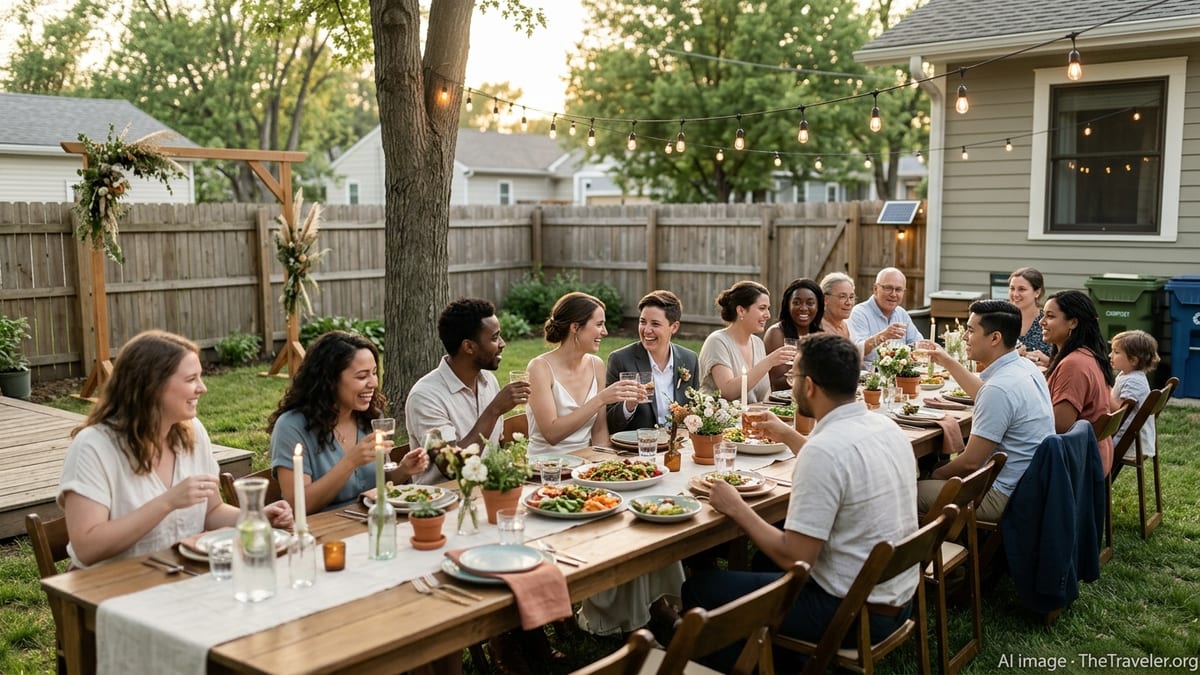
Reports from regional outlets in markets such as Kansas City and Minneapolis point to couples moving ceremonies to courthouses, restaurants and small chapels, often followed by relaxed receptions in backyards or intimate venues. These formats, once seen as second-best to a traditional ballroom, are now marketed as curated experiences in their own right, particularly attractive to couples who prefer to invest more per guest rather than inviting a larger crowd.
Vendors and analysts also point to generational change. With older members of Generation Z reaching marrying age, platforms such as Zola describe this cohort as values-driven and selective about how and where they spend. Rather than chasing maximum capacity, many Gen Z and younger millennial couples planning 2026 dates appear comfortable with guest counts that would have been considered modest a decade ago.
Eco-Friendly Ceremonies Move From Niche to Normal
Smaller guest lists dovetail with a parallel rise in interest in sustainable weddings. A 2025 sustainability report cited in coverage by ZipDo Education estimated the carbon footprint of a traditional wedding at around 14 tons of CO2, roughly equivalent to several long-haul flights, and found that greener practices could cut that impact by as much as half. The same analysis noted double-digit growth in venues pursuing formal green certifications over the past three years.
Couples planning 2026 weddings appear to be acting on that information. Planning guides and specialty blogs focused on eco-conscious celebrations report increased demand for venues that prioritize renewable energy, on-site composting, and limits on single-use plastics. Reports indicate that some U.S. venues now market explicit “green wedding” packages that bundle plant-based or locally sourced menus, seasonal florals, and decor rentals designed for reuse.
Climate concerns are another factor. Associated Press coverage in 2025 documented how extreme summer heat has complicated traditional peak-season weddings, pushing some couples toward shoulder-season dates or cooler locations and encouraging outdoor ceremonies that can more easily integrate natural light and ventilation. In this context, sustainable choices such as shaded garden venues, lighter dress codes and reduced travel footprints align with both comfort and environmental goals.
These shifts are making the “green wedding” less a niche statement and more a mainstream planning lens for 2026. According to publicly available planning surveys, an increasing share of couples now say sustainability is an important or very important consideration, even if not every element of their celebration can be fully low-impact.
Design Trends: Micro Size, Maximal Style
Smaller, more sustainable gatherings have not led to plainer parties. Instead, planners describe a “micro size, maxi design” approach dominating 2025 and early 2026 inspiration boards. With fewer tables to dress and fewer guests to serve, couples are able to direct budgets toward higher-quality materials, distinctive venues and statement decor without increasing overall spend.
Coverage from Axios and regional lifestyle outlets highlights the spread of micro wedding chapels and boutique estates that host ceremonies for 20 to 60 guests. Many of these spaces lean into a highly styled aesthetic: converted warehouses with curated vintage rentals, restored chapels framed by native landscaping, and private lodges that double as weekend retreats. The emphasis is on immersive environments that photograph well and reflect the couple’s personality, rather than on sheer scale.
Vendor reports also point to a rise in rental-heavy, low-waste styling. Instead of buying large quantities of decor items, couples are turning to specialty rental houses for tableware, textiles and backdrops that can be reused across many events. Florists are incorporating more potted plants, dried botanicals and seasonal blooms sourced from local growers, trends sustainability advocates say can significantly cut the environmental cost of floral design.
Even attire and accessories are evolving. Secondhand and rental wedding fashion marketplaces, highlighted in recent lifestyle coverage, say they are seeing more demand for pre-loved gowns, rewearable bridal separates and suits designed to be worn after the wedding. Styling remains polished and often luxurious, but the underlying philosophy has shifted toward longevity and circular use.
New Venues, New Business Models
The move toward small, sustainable weddings is reshaping the business side of the industry as well. According to planning guides compiled in late 2025, more venues across the United States now advertise dedicated micro wedding packages, typically capping guest counts between 20 and 50 people and bundling essentials such as ceremony space, a short reception, photography time and light catering.
These offerings are often scheduled on weekdays or off-peak dates, helping venues fill their calendars while giving couples access to spaces that might otherwise be out of budget. Recent package lists from historic estates and boutique properties show scaled-down rental fees for small groups, paired with shorter booking windows of three to six hours instead of all-day exclusivity.
Industry forecasts for 2026 from firms tracking the global wedding market still anticipate overall revenue growth, even as many couples individually spend more cautiously. Analysts describe a shift from volume-driven models built on large guest counts to value-driven approaches built on higher per-guest investment, weekend-long experiences for a smaller circle, and add-on services such as in-house planning or content creation.
Vendors specializing in sustainability are also finding new opportunities. Reports from eco-focused wedding platforms note increased interest in carbon-footprint assessments for events, biodegradable confetti and dinnerware, and donation options that allow couples to offset travel emissions. As these services become more visible, they are being integrated into standard planning checklists for 2026 weddings rather than treated as optional extras.
Changing Expectations of What Makes a “Real” Wedding
Perhaps the most significant shift heading into the 2026 U.S. wedding season is cultural rather than logistical. Comment threads on large planning forums show couples increasingly rejecting the idea that a wedding must involve hundreds of guests, a late-night ballroom party and exhaustive traditions to feel legitimate. Many describe small, eco-conscious gatherings as more aligned with how they actually live.
Planning platforms report that couples are more willing to host brief, intimate ceremonies followed by casual celebrations later, or to organize destination weekends for a handful of people instead of one large hometown reception. The growth of “sequel weddings,” where a legal ceremony is followed months later by a larger or more relaxed party, gives couples flexibility to spread out costs and emissions if they do want to include a broader community.
For families raised with expectations of large, formal weddings, these changes can require adjustment. However, as more publicly shared real weddings feature guest counts under 75 and clear sustainability goals, social norms are shifting. Industry coverage suggests that what once looked like a compromise now reads as a deliberate, stylish choice that reflects broader conversations about climate, debt and lifestyle.
As the 2026 season unfolds, early indicators suggest that the winning formula for many U.S. couples combines a tightly edited guest list, careful attention to environmental impact and highly considered design. Large, traditional weddings remain part of the landscape, but the momentum appears firmly with small, sustainable and stylish celebrations that mirror changing priorities across a new generation of newlyweds.